Farhan Qureshi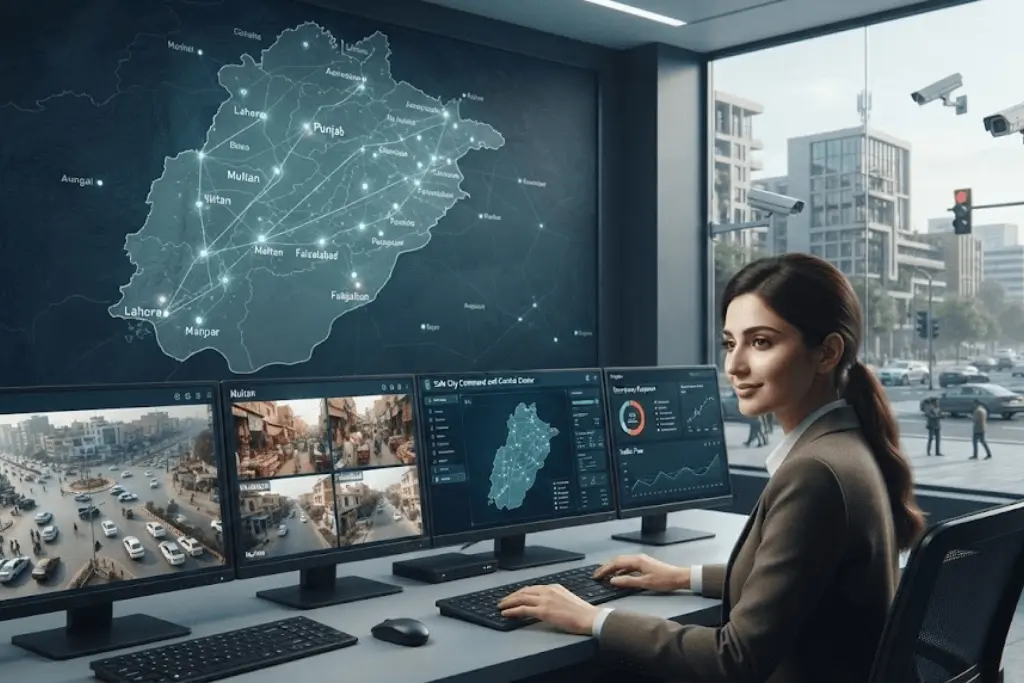
Punjab has launched the Punjab Safe City network in 43 cities, marking a major leap in the province’s use of technology to improve public safety. The system integrates surveillance, emergency response, traffic management and civic monitoring into a connected system created to improve the way authorities identify and respond to urban risks.
This is part of a wider push in Pakistan to harness technology for public administration. Artificial intelligence, automated number plate recognition, strategically positioned cameras and improved emergency dispatch facilities can provide authorities with faster access to information as well as more coordinated responses to incidents.
Punjab’s Integrated Safe City Network Includes 43 Cities
In Punjab, the integrated Safe City network has been rolled out in all 43 districts and key tehsils. The Punjab Safe Cities Authority is supporting the system by creating a province-wide framework, instead of limiting smart surveillance capabilities to major metropolitan centres.
The wider geographical coverage is important as security challenges differ between densely populated cities, smaller urban areas and peripheral communities. A network system can monitor local events within a broader provincial security architecture.
AI Surveillance Could Change How To Spot Urban Dangers
Artificial intelligence is one of the most important elements of the new security network, and high-resolution cameras are being integrated with smart analytical capabilities to detect security threats and abnormal behaviour.
The technology has facial recognition and weapon detection capabilities; such capabilities could potentially allow security personnel to identify individuals or situations that require attention without having to rely on manual monitoring.
Automated Number Plate Recognition Boosts Vehicle Surveillance
Another important feature of Punjab’s Safe City network is automatic number plate recognition. The technology enables cameras to capture and record vehicle registration information as vehicles drive through monitored areas.
Such systems can assist in investigations relating to stolen vehicles, suspicious movement and other cases where vehicle identification is critical. It can help authorities find the right cars quicker if they can get to the registration information quicker.
15 Connected Technology Could Help Emergency
Surveillance systems will be integrated with upgraded Emergency 15 dispatch hubs to improve coordination of emergency response. Access to real-time information when incidents are detected can allow emergency personnel to understand the situation before arriving at the location.
The public safety ecosystem also includes the strategic placement of panic buttons. These facilities could provide residents with another means to contact authorities when they require immediate assistance.
Adding Private CCTV Can Expand Security Coverage
The Safe City model in Punjab also allows authorised business and private cameras to be integrated into the central network through a dedicated registration application.
Private CCTV systems are already in place in commercial areas, residential communities and business premises. Connecting approved cameras to a larger security system can potentially broaden the physical reach of law enforcement. Following phased Safe City deployments, officials have reported dramatic drops in emergency calls as well as vehicle thefts and open street robberies. Such reports suggest that technology-aided surveillance might help to improve public security.
Visible surveillance can also affect criminal behaviour by increasing the perceived likelihood of detection. Having cameras on key roads and in public spaces would make it harder for potential offenders to operate without attracting attention.
Monitoring Could Make Previously Unsafe Areas Safer
The extension of surveillance to remote and riverine areas could help cover areas that had been considered difficult to monitor round the clock. Improved coverage would allow authorities to be aware of incidents beyond the traditional urban centres.
Officials say the wider surveillance system has helped improve access and safety for the general public in areas that once faced security issues. Continuous surveillance can allow authorities to gain better insight into activity at locations where traditional policing resources are scarce.
Safe Cities: Civic Monitoring Expands The Scope
What makes Punjab’s model unique is that it emphasises both civic infrastructure and crime. AI-enabled monitoring is intended to detect hazards such as open manholes, smoke and garbage overflow.
This approach is capable of expanding the security network to a larger urban management platform. A camera system that can detect infrastructure problems could help city officials spot hazards before they cause injuries or major disruptions.
Better Traffic Management Improves Urban Mobility
Another element of the integrated Safe City framework is traffic management. The authorities can obtain information about road conditions, congestion and incidents affecting traffic flow through surveillance and automated monitoring.
Focused traffic management systems could coordinate better in case of accidents or major disruptions, and faster awareness means resources can be redirected and impacted routes better managed by authorities.
Data-Driven Policing Can Make Public Administration Better
A connected Safe City network can generate huge amounts of data on incidents, traffic and public infrastructure. When analysed correctly, this type of data can help authorities to recognise patterns and allocate funds more efficiently.
The initiative is also tied to technologies such as predictive policing tools. These systems can look for patterns to help authorities determine where security resources might be most needed.
As Technology Continues To Evolve, Strong Oversight Will Continue To Be Important
The expansion of AI-enabled surveillance also implies that governance becomes a central component of the Safe City model. Large-scale monitoring systems require clear operational procedures so that technology is deployed for legitimate purposes of public safety.
Surveillance information needs to be tightly controlled. Strong institutional controls can help ensure that sensitive information is handled responsibly and that authorised personnel adhere to established procedures.
Punjab’s Safe City Model May Shape Pakistan’s Urban Future
Punjab has an opportunity to develop an integrated network to approach urban security in a more integrated manner. It can create a common framework for surveillance, emergency response, traffic systems and civic monitoring and lay the foundation for smarter public administration.
Coverage in 43 cities also offers an opportunity to see what advanced technology can do in a variety of communities. Lessons learned from implementation can help identify the systems that provide the most value and where additional resources may be needed.
Safe City Network Can Improve Urban Security In Punjab
The integrated Safe City network of Punjab is a major leap toward technology-powered urban security in Pakistan. The authorities now have a wider range of tools to help them tackle the challenges of modern cities, with AI surveillance, automated number plate recognition, emergency dispatch, panic buttons and dedicated safety platforms.
The potential of the system is further expanded with the inclusion of civic monitoring and traffic management. The ability to detect security incidents and hazards to infrastructure could lead to a more responsive public administration.