Adeel Hassan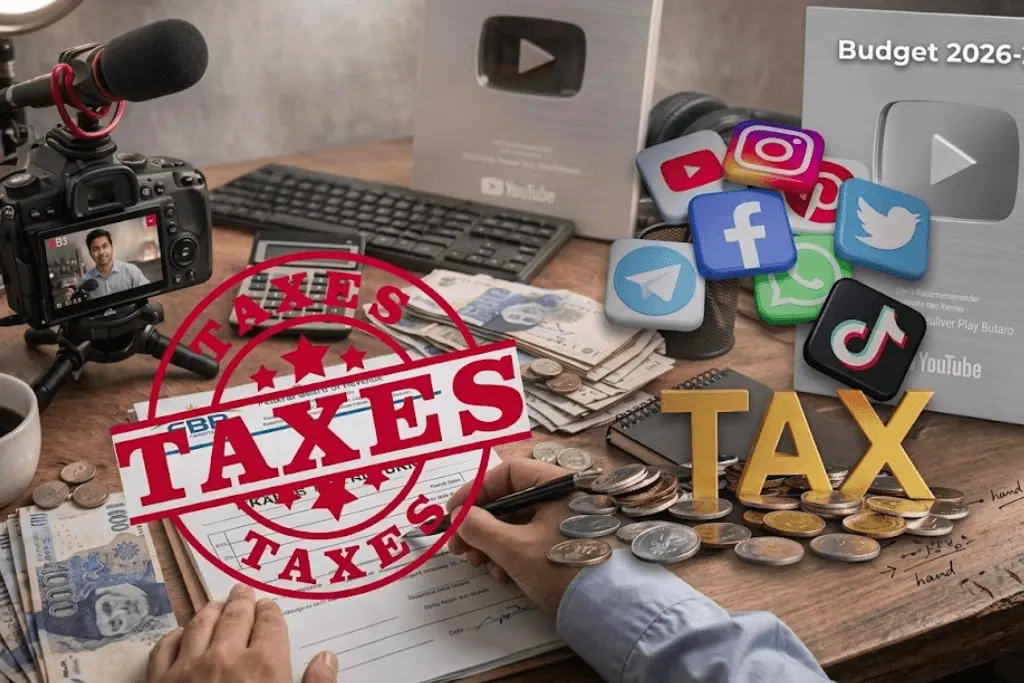
The Pakistan YouTube tax 2026 proposal in the Finance Bill 2026 will introduce a major regulatory change to Pakistan’s growing digital creator economy. The government has introduced a new 5% withholding tax on income earned from social media and digital platforms like YouTube, TikTok, Facebook and Instagram.
The move is intended to legitimise earnings from digital platforms, broaden Pakistan’s tax base and give a clearer legal footing to the emerging industry of online content.
How Does The Automatic Tax Deduction Work?
Under the proposed mechanism, tax at source will be deducted directly by banks and financial institutions. So, for every payment that a monetised platform makes to a creator’s bank account, the bank involved in the transaction will automatically deduct 5% and credit the rest.
That means creators who earn money through YouTube ads, TikTok monetisation programs, Facebook content initiatives, or Instagram partnerships may have deductions taken out as soon as they get the money.
The intention is to make the collection simpler and to make sure taxes are picked up without the need for separate withholding procedures.
Section 154b: New Legal Framework
The proposed tax regime falls under the purview of section 154B of the Income Tax Ordinance. This provision establishes a distinct category for social media and digital platform income, separate from traditional information technology exports.
The distinction recognises the growing size of Pakistan’s creator economy and acknowledges the monetisation of digital content as a key source of income for thousands of people.
The policymakers are trying to establish a particular framework to make the taxation more organised and transparent for the earnings made online.
Impact On Digital Creators In Residence
For Pakistani residents, the proposed 5% deduction will be a minimum tax and not a final settlement. However, content creators and influencers will still be required to file annual income tax returns with the Federal Board of Revenue. That is, it is still important for Pakistani creators earning money through global platforms to have good documentation and tax compliance.
Now that content creation is being viewed as a full time profession, it is expected that keeping financial records and following FBR requirements will be in the limelight.
What Non-Resident Creators Need To Know
The proposed framework will have a different application for non-resident creators. For overseas Pakistanis and non-residents deriving social media income associated with Pakistan, a withholding deduction of 5% is expected to be considered as final tax.
This means that once the deduction has been made, no further liabilities would be incurred by Pakistan on that income stream.
The distinction provides greater certainty to foreign creators and simplifies tax administration.
What Platforms Will Be Affected?
The rules being proposed would affect a broad range of digital platforms and ways to earn money on the internet. The new measure is expected to cover earnings from YouTube, TikTok, Facebook, Instagram and other social media services.
When the provisions become effective, any revenue earned from advertisements, sponsored content, creator funds, platform payouts and other such monetisation arrangements could be subject to withholding deductions.
With the growth of Pakistan’s digital ecosystem, a larger number of people are turning to social media platforms as their main sources of income. The new policy is an attempt to bring the fast-growing sector into the formal economy.
Why The Tax Is Being Introduced By The Government
The authorities consider the creator economy as one of the upcoming economic sectors of Pakistan. As thousands of Pakistanis earn income from videos, live streaming, digital marketing and online influence, policymakers are looking for ways to build documentation and improve tax compliance.
The proposal also fits into wider efforts to widen the tax net and improve revenue collection, without further burdening only traditional sectors.
Meanwhile, the rapid ascension of Pakistani content creators stands as proof of the country’s expanding influence on the international digital stage. A large number of the creators have developed international audiences and attracted sizeable inflows of foreign exchange, thereby contributing positively to Pakistan’s digital economy.
The Proposal And Its Consequences For Pakistan’s Creator Economy
The new withholding system, while improving compliance, is also an indication that the authorities recognise the importance of digital entrepreneurship. The emergence of YouTube channels, TikTok celebrities and social media influencers has turned content creation into a viable career option for many young Pakistanis.
Digital income streams are increasingly important to the national economy and are recognised as such in the 2026 Finance Bill.