Farhan Qureshi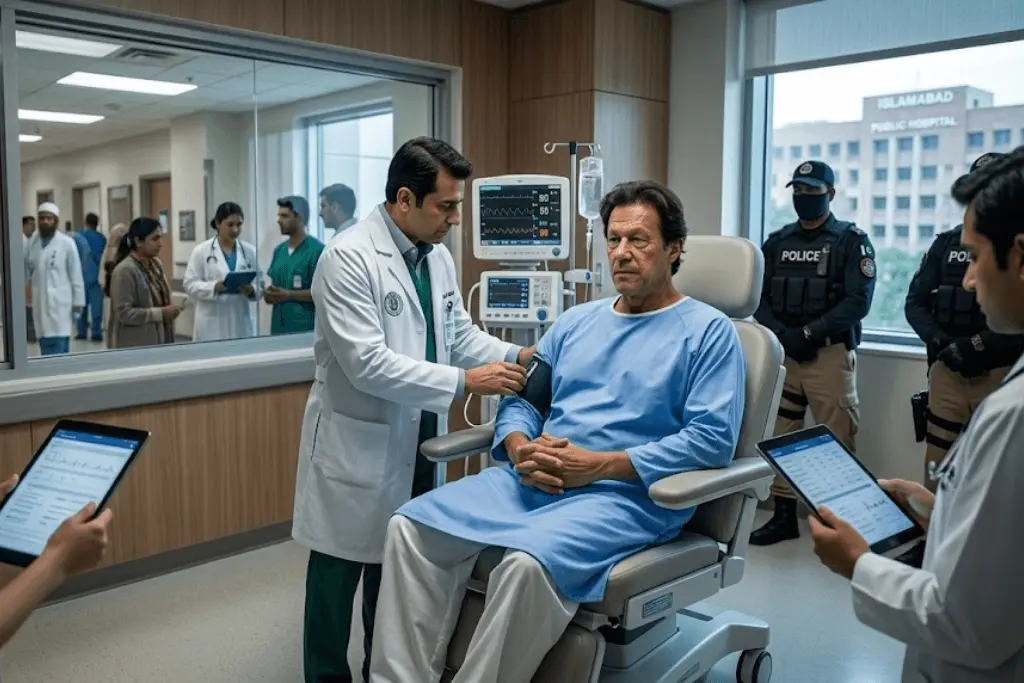
The Supreme Court of Pakistan has directed the transfer of former Prime Minister Imran Khan from Adiala Jail to Shifa International Hospital in Islamabad for medical examination and treatment, highlighting once again the issue of Imran Khan health and healthcare provisions for prisoners and prominent detainees. The decision on August 18, 2026, came after repeated concern for Khan’s health by his family, political party and supporters.
The 73-year-old former prime minister has been imprisoned since August 2023, with ongoing legal cases while in detention. Reuters said his health had worsened, with major problems involving his vision in his right eye.
Pakistani Supreme Court Orders Imran Khan Hospital Transfer
The Supreme Court has ordered the authorities to shift Imran Khan from Adiala Jail to Shifa International Hospital in Islamabad for a thorough medical check-up. The court’s ruling is expected to be conveyed within two days, according to reports.
The ruling is a landmark judicial intervention in what had become an increasingly visible issue in Pakistan’s political and public discourse. Khan’s party and family had repeatedly called for him to receive specialised medical care and for the government to ensure he was given appropriate healthcare in detention.
The court’s decision emphasises a professional medical evaluation. Instead of allowing the conversation to become primarily political, an assessment in a hospital environment can allow specialists to look at the health problems being reported and determine the appropriate treatment plan.
Khan was ordered to stay in hospital until at least September 16, Reuters reported, providing a long window for medical evaluation and treatment.
Health Concerns Bring New Focus To Medical Care
Khan’s health has been a cause of concern, with reports of high blood pressure, heart palpitations and stress, and a significant loss of vision in his right eye. Former president Arif Alvi has also expressed concern over medical reports and has advised hospital treatment.
The vision problem that has been reported has become one of the most prominent features of the health debate. Lawyers and Khan’s family members have previously expressed concern about a deterioration in his eyesight while in detention, and so an assessment by a specialist ophthalmologist is especially important.
The symptoms as described would need to be evaluated by a medical professional before any definitive conclusions can be drawn. A full work-up at a specialty hospital can help identify the underlying causes and whether treatment or additional testing is needed.
So the Supreme Court’s involvement provides a chance for medical questions to be resolved through established healthcare processes, rather than political claims. This could help to bring greater clarity to an issue that has generated considerable public concern.
Shifa International Hospital To Offer Specialised Assessment
The decision to shift Khan to Shifa International Hospital puts him under specialist medical care in Islamabad. The hospital should be able to provide access to relevant specialists and diagnostic facilities required for a full assessment.
If a prisoner develops health problems that require specialist advice or diagnostic tests that are not available in a correctional facility, hospital treatment can be especially important. The transfer can also enable medical professionals to monitor the patient continuously when necessary.
Reports say Khan’s sister and personal doctor are expected to be involved in his medical examination and treatment.
The engagement of medical professionals outside the prison setting can facilitate independent clinical attention to health concerns. Then the doctors can make medical decisions based on examinations, diagnostic findings and professional assessments.
Family And PTI Raised Medical Concerns Repeatedly
Khan’s family and Pakistan Tehreek-e-Insaf have raised concerns about his health and access to medical care repeatedly. The calls for hospitalisation were especially loud as reports surfaced of deteriorating eyesight and other health symptoms.
Khan’s detention has been politically motivated, and medical issues are sensitive. PTI has argued that it is important to monitor his condition and to ensure transparency around treatment to be able to access the right doctors and family members.
The Supreme Court order settles the immediate medical question, but not necessarily the broader political controversies surrounding Khan’s imprisonment. Conversely, the hospital transfer offers a formal medical process to evaluate his health.
A specialist assessment can also provide a clearer basis for subsequent decisions about treatment, continued hospitalisation or future medical monitoring.
Medical Care Should Be Non-Political, Government Says
The federal government has described the transfer as a humanitarian act, and a medical panel will oversee Khan’s care. Government representatives also urged political parties not to make the health issue another political confrontation.
Separating medical treatment from political disagreement may help to keep the healthcare process intact. Health problems can be evaluated on clinical rather than political lines by a medical board.
This approach would also contribute to the larger public debate in Pakistan. Independent medical assessment can assist in reducing uncertainty and in managing health information about a detainee responsibly. The reported position of the government also reflects the importance of ensuring that prisoners, regardless of their political status, have access to appropriate medical facilities.
Supreme Court Involvement Highlights Judicial Supervision
The Supreme Court decision emphasises the importance of Pakistan’s judiciary in scrutinising issues relating to the rights and welfare of persons in custody. The order makes clear that the authorities are required to provide specialised medical care.
In particular, judicial oversight can be important in cases of disputes between political parties, families and prison authorities on the adequacy of medical treatment. Such disputes are resolved through a formal mechanism provided by a court order.
The decision also points to the need for healthcare access for those within Pakistan’s correctional system. Prisoners shall continue to receive appropriate medical attention when health conditions require specialised treatment.
The case could therefore have implications beyond Khan himself. More attention to prison health care can also lead to stronger institutional standards, better access to specialists and more effective systems for monitoring detainee health. The case has garnered attention because Khan is a former prime minister and still carries political weight.
But the problem of access to appropriate medical care is more pervasive. There needs to be a mechanism within prison healthcare systems that can identify serious conditions, arrange specialist referrals and respond promptly when medical needs exceed the facilities available.
Pakistan’s judicial intervention provides an opportunity to restate those principles. A transparent medical process can show that health problems are dealt with within established institutions and not by political considerations.
The move could also lead to more scrutiny of documentation and independent assessment in future cases involving prisoners with complex medical needs.
Medical Board Expected To Steer Treatment Decisions
The Supreme Court’s order also includes a thorough medical examination, with a medical board expected to be central to evaluating Khan’s condition. Such a process may help to understand the reported symptoms in an evidence-based manner.
Existing records can be reviewed by a medical board that can conduct examinations and recommend treatment based on clinical findings. This is especially important when more than one health concern is being reported simultaneously.
The approach can also help in providing continuity of care. Medical advice may be documented and conveyed to prison authorities, family representatives and other appropriate officials, to the extent that this is permitted by law.
A formal assessment may therefore alleviate competing claims about Khan’s condition. Clear medical findings can help determine whether continued hospitalisation, special treatment or regular monitoring are necessary.
Right Eye Vision Problems Continue To Be Closely Monitored
The decline in vision in Khan’s right eye has become a main topic of conversation about his health. His family and legal team have previously raised concerns about the extent of vision loss.
A specialist hospital eye examination will determine the nature and severity of the problem. The case underscores the duty of Pakistan’s healthcare and prison systems to provide an adequate standard of medical care to persons in custody. Detention centres may not be equipped to take care of prisoners with serious or complex conditions.
A working referral system can help to identify health problems at an early stage and to refer patients to hospitals when they need the attention of a specialist. Such systems are important no matter what a prisoner’s political stance or public profile is.
The Supreme Court’s order is an example of the use of judicial oversight to ensure access to specialist care. Reinforcing such systems may enhance confidence in the wider prison healthcare system in Pakistan.
Medical Process Continues; Political Debate Continues
Khan’s health issues cannot be divorced from the broader political context in Pakistan, where his incarceration is a key political concern. His party continues to claim that his arrest and treatment were politically motivated, and the authorities have defended the legal process.
The Supreme Court’s hospital order does not settle those bigger disputes. Instead, it establishes a distinct clinical pathway for managing acute medical issues.
Separating medical care from political differences can help make sure that doctors can concentrate on their clinical work. This distinction is particularly relevant in high-profile cases, where medical information can quickly become part of public political debate.
Hospital Transfer Could Offer More Medical Clarity
The move to Shifa International Hospital may provide a chance to examine Khan’s reported health problems more closely. Specialist examinations may determine the degree of his vision problems, and clarify other issues involving blood pressure, cardiovascular symptoms and stress.
A full assessment may also help in deciding whether current treatment is adequate or whether further intervention is required. The findings could inform future decisions about his health in custody.
Reuters reports that Khan will remain in hospital until at least September 16, as per the court’s direction. The longer wait for medical attention may also allow doctors to check his condition more than once, rather than just one exam.
Pakistan’s Judicial System Has Institutional Safeguards
The Supreme Court’s ruling reinforces the role of Pakistan’s judiciary as an institutional safeguard in sensitive cases. The court’s ordering hospitalisation is a formal response to concerns that had previously been the subject of sustained public and political attention.
Court action can be used to ensure that detention does not prevent access to necessary medical treatment. It also places the responsibility on authorities for implementing the order.
The development underlines the significance of independent constitutional and legal institutions when considering the welfare of individuals. A clear judicial direction can help in reducing uncertainty and ensure that medical needs get their due attention.
For Pakistan, strong institutional oversight can help build confidence in the rule of law and in the ability of state institutions to handle complex cases.
Imran Khan Health Case Brings Focus Back On Prison Healthcare
The Supreme Court’s order for shifting Imran Khan to Shifa International Hospital has now shifted the immediate attention to medical assessment and treatment. The decision follows ongoing concerns about his alleged health issues and pleas for specialist attention.
The case also offers Pakistan a chance to raise standards for the health care of persons deprived of liberty. Transparent medical assessments, referral to specialists and judicial oversight can help promote stronger institutional practices.
The case has drawn unusual attention due to Khan’s political prominence, but the principles involved are bigger than any one person. Appropriate health care, professional medical assessment and humane treatment continue to be important aspects of a credible correctional system.
Medical findings are expected to become central to decisions about Khan’s continued care as the hospital assessment continues. That intervention by the Supreme Court means that specialist health care is now a formal part of that process.