Sana Khalid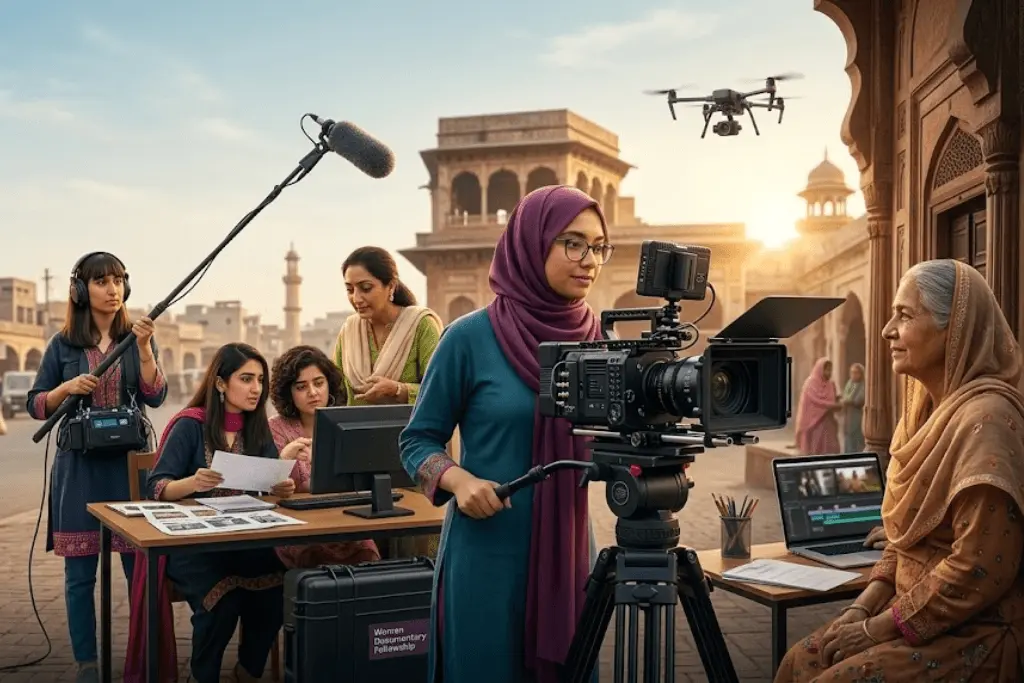
Fellowship programs for women filmmakers are providing valuable opportunities for greater representation in Pakistan’s growing film industry. One such effort is the Pakistan Women Documentary Fellowship, supported by initiatives like Patakha Pictures, created by Academy Award-winning director Sharmeen Obaid-Chinoy and international partners including the British Council and the Scottish Documentary Institute. The fellowships offer funding, mentorship and professional development to support women in completing documentary ideas as films of national and international scope.
Pakistan Women Documentary Fellowship To Boost Emerging Women Storytellers
The Pakistan Women Documentary Fellowship was created to encourage women to tell authentic, impactful and socially relevant stories, and to strengthen the country’s documentary filmmaking community.
The fellowship offers professional mentorship to participants throughout the filmmaking process, from the development of a first concept to the completion of a finished documentary.
The program does more than just offer financial assistance. It includes creative mentorship, production support, technical training, and exposure to the industry to help participants build sustainable careers in documentary filmmaking.
An important aim of the fellowship is to increase representation in Pakistan’s creative industries by providing opportunities for women from diverse educational, cultural and geographic backgrounds.
We welcome applications from large cities and remote areas alike, which would bring diverse experiences and perspectives that reflect the country’s social and cultural richness. The fellowship supports the continued growth of Pakistan’s independent documentary sector through structured professional support and inspiring storytelling.
Eligibility Criteria Are Aimed At Women Filmmakers From All Over Pakistan
The main audience for this fellowship is women who meet the basic eligibility requirements for the program. Applicants usually must be Pakistani citizens or permanent residents.
Most fellowship cohorts intentionally look for women in different provinces, smaller towns, and underserved areas to bring a diversity of voices to the documentary community. The program is open to both emerging filmmakers and seasoned independent creators.
Some fellowship streams may be open to students who are just beginning their filmmaking journey, while others may be looking for applicants with some experience in visual storytelling, photography, journalism, video production or other creative fields.
Most fellowship opportunities are open to applicants age 18 or older. Some programs that target youth may have an upper age limit, typically up to about 29 years, depending on the goals of each cohort.
Thematic priorities include, but are not limited to, the following documentary ideas, which applicants are expected to propose. Projects often focus on issues such as climate change, women’s empowerment, identity, resilience, community development, social change, arts, culture or other topics that foster meaningful public dialogue.
Those applicants who meet these eligibility requirements will be eligible to compete for professional development opportunities geared specifically toward women documentary filmmakers.
Look For Strong Documentary Concepts In The Application Process
The application process is designed to assess the applicant’s creative potential and the strength of the proposed documentary project.
Fellowship cohorts may have application windows at different times of the year depending on program timelines, though often the spring months of March and April are popular application windows.
The applicant typically fills out an online application form, which requests information about personal background, previous creative experience, and the documentary project they would like to pursue.
The documentary proposal constitutes one of the most important parts of the application. Applicants typically have to outline the main story, the intended audience, the aims of the documentary and the wider social or cultural implications of the projected film.
Most Applications Will Also Require Documentation To Support It.
These typically include a professional resume, a short video introducing the filmmaker and the documentary idea, and an estimated production budget detailing projected costs for shooting. Clear, realistic and well-structured information allows evaluators to assess fairly the feasibility of the project and its creative value.
The selection process usually includes a thorough review of the submitted documents, and potential candidates are invited for interviews or additional assessments.
The Selection Process Favours Originality And Meaningful Storytelling
Originality is often an important consideration when selecting winners of documentary fellowship competitions, because competition is generally fierce. Review panels typically assess proposals on the originality of the story, the emotional impact, the documentary value, and the filmmaker’s ability to convey the intent of the project.
Good documentary ideas are typically real stories backed by solid research and a clear filmmaking vision. These fellowships are designed to support storytelling and projects that seek to highlight underrepresented communities, critical social issues, cultural preservation, environmental issues, or inspiring personal journeys.
Shortlisted applicants will be invited to discuss their creative approach, outline their production plans and demonstrate their commitment to completing the proposed documentary at interview stages.
Selection committees may also consider the applicant’s willingness to take part in mentorship sessions, collaborative workshops, and professional training activities during the period of the fellowship.
This careful vetting process helps to identify projects that are artistically meritorious and have a positive impact on the public.
Participants Receive Funding, Mentorship And Professional Training
The Pakistan Women Documentary Fellowship provides the huge benefit of both financial support and professional guidance. Participating filmmakers will receive seed funding to aid in various phases of documentary production.
Funding helps a filmmaker take a project from its earliest development stages, through shooting, editing and ultimate completion. Another core element of the fellowship is professional mentorship that continues.
Participants will have the opportunity to work closely with experienced filmmakers, producers, editors, cinematographers and documentary professionals from Pakistan and international creative organisations. Training sessions typically involve documentary research, camera operation, cinematography techniques, interview techniques, sound recording, editing, story structure, pacing, and post-production workflows.
These experiential learning opportunities develop technical and creative decision-making abilities throughout the filmmaking process. Interaction with other participants, instructors and industry professionals also creates networking opportunities that help filmmakers to build valuable long-term professional relationships in Pakistan’s growing creative sector.
International Exposure Opens Long-Term Filmmaking Opportunities
Besides documentary production, fellowships also help foster career development more generally. Finished documentaries are often packaged for submission to international film festivals, documentary markets, broadcasters and cultural exhibitions.
Participants will be provided with professional guidance throughout the submission process to help them understand the festival requirements, distribution strategies, audience engagement and international presentation standards.
By attending global documentary events, Pakistani filmmakers are able to tell local stories to international audiences, which in turn strengthens Pakistan’s cultural footprint in the global creative community.
Participation in internationally sponsored fellowship programs also enriches professional portfolios and opens doors to future grant opportunities, collaborative productions, educational programming and independent film projects.
The Pakistan Women Documentary Fellowship is an important investment in the creative future of the country by encouraging women to contribute meaningful stories through documentary cinema. These initiatives are still providing opportunities to women filmmakers, while strengthening the documentary industry of Pakistan through a mix of funding, mentorship, technical training and international networking opportunities. With more women gaining access to the professional resources of filmmaking and global platforms, Pakistan’s diverse voices, cultural heritage and contemporary stories are likely to reach wider audiences both at home and abroad.