Farhan Qureshi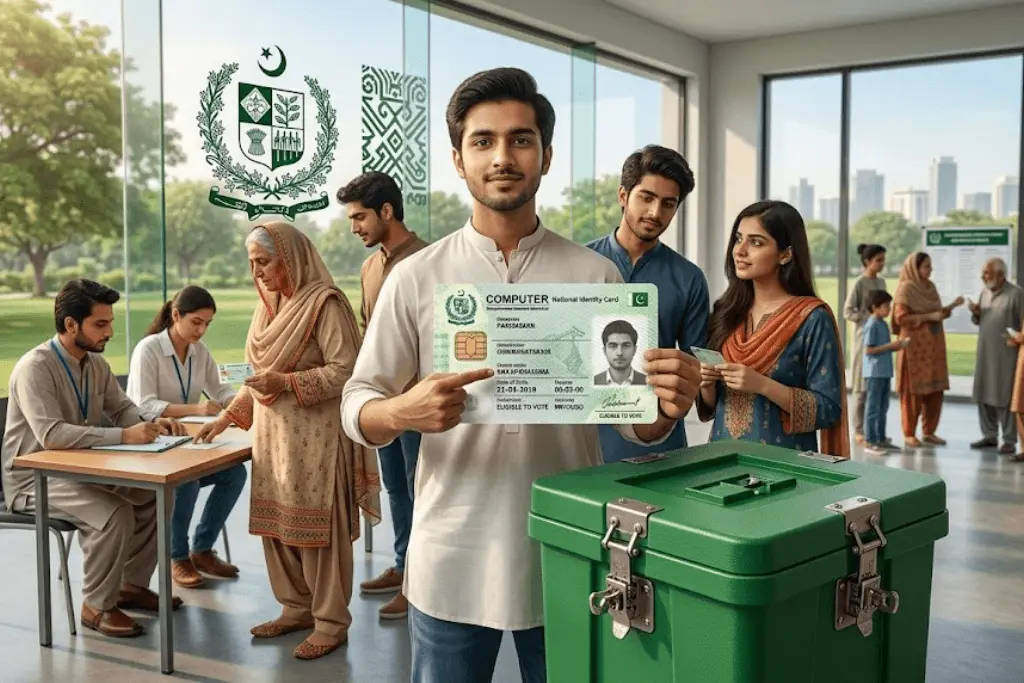
The government’s Pakistan voting age 25 proposal to raise the minimum voting age from 18 to 25 years through a possible constitutional amendment has heated political debate nationwide. The proposal, according to sources, emerged from internal discussions within the ruling coalition, where policymakers reviewed electoral reforms, youth participation and long-term political stability.
The debate drew national attention after comments attributed to senior political figures such as Rana Sanaullah about wider constitutional reforms and electoral restructuring. No final legislation has been introduced yet, but the proposal has already ignited debate among lawmakers, legal experts, youth groups and political analysts across Pakistan.
The move would have a profound impact on the electoral terrain of Pakistan if adopted, as the demographic of the 18-24 age group presently makes up a large chunk of the registered voter base across the country.
More Than 22 Million Young Voters Could Be Affected
More than 22 million Pakistanis aged between 18 and 24 have voting rights, according to provisional figures released by the Election Commission. This demographic makes up almost 18 per cent of the country’s total electorate ahead of future general elections, it is said.
In the recent elections, urban centres in Punjab and Khyber Pakhtunkhwa saw particularly high youth turnout, with analysts noting increased political participation among first-time voters. Digital platforms such as TikTok, X and other social media networks have played a growing role in influencing political engagement and mobilisation of campaigns among young citizens.
Proponents of the proposed age increase say older voters may have more economic awareness, civic understanding and life experience before engaging in national political decision-making.
But critics say limiting voting rights for younger citizens could lead to reduced democratic participation and weaken representation for a generation that comprises a large part of Pakistan’s population.
Constitutional Amendment Would Require Complex Approval Process
Legal experts say changing Pakistan’s minimum voting age would need a constitutional amendment process that requires several stages of approval.
Any move to alter rules on eligibility to vote would need the assent of both houses of Parliament and ratification by the provincial assemblies. In Pakistan, amending the constitution is a legal and political challenge because it requires broad political consensus.
Analysts say any attempt to change voting rights would also be subject to judicial review and public consultation before it could be implemented.
This debate reflects larger conversations in Pakistan concerning political maturity, civic education and the role of young voters in deciding future elections, and reformist lawmakers cite concerns over political instability and the growing influence of social media on voting trends in younger age cohorts.
Education and Civic Awareness Debate Continues
Proponents often cite education and civic readiness as among the main reasons to raise the voting age, and recent education data show that a large section of citizens in the 18-24 age group are not completing higher secondary education.
Proponents of reform say more years before being able to vote could mean more exposure to civic education, financial literacy and understanding of national policy. Some policymakers hope this will result in better-informed voting in future elections.
But at the same time, the youth groups and opposition voices are very strong against restricting participation based on age. Critics argue that young Pakistanis are active contributors to the economy, higher education system, entrepreneurship sector and digital innovation landscape, hence their political representation is equally important.
Hence, the debate has become a bigger national debate on democratic inclusion, youth empowerment and electoral modernisation in Pakistan.
Pakistan’s Youth Remain a Powerful Political Force
As Pakistan has one of the youngest populations in South Asia, youth participation will matter more and more for the future political and economic development of Pakistan. Young voters are still leading the conversation on jobs, education, tech, inflation and digital governance.
In recent years, political parties in Pakistan have also increased youth-oriented campaigns, acknowledging the rising influence of younger demographics in urban and semi-urban constituencies.
While the debate on electoral reform continues, there has been no final decision on the amendment to the constitution on the voting age. Government officials say they will continue talking before any formal proposal goes before parliament for review.
However, the ongoing debate also sheds light upon the shifting political structure of Pakistan and the key role of youth participation, constitutional discourse and democratic engagement in shaping the future governance structure of the country.