Urooj Niazi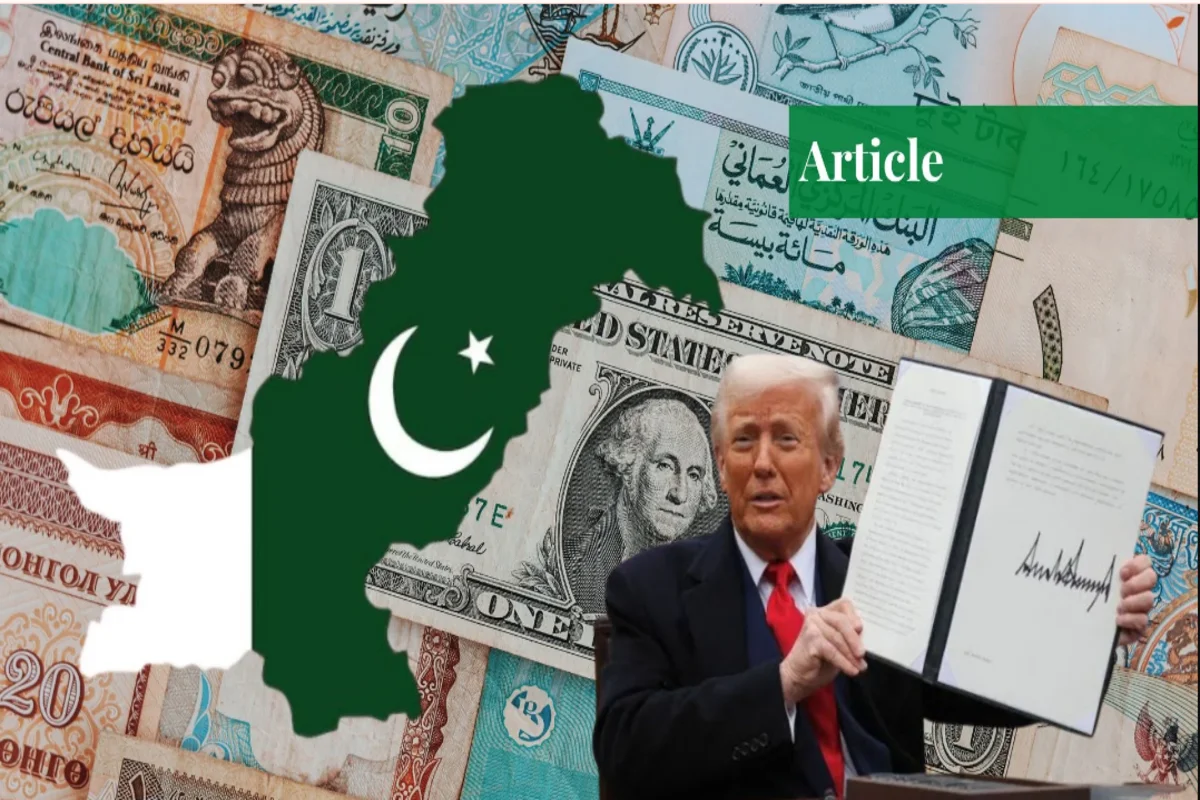
While several Asian nations were hit hard by the Trump administration’s sweeping tariffs in April 2025, Pakistan negotiated a strategic bilateral agreement that buffered it from the full economic fallout, especially in the precious metals sector.
As the U.S. imposed steep tariffs on countries with significant trade surpluses or high-volume exports of gold and jewelry, many economies in Asia and Africa experienced immediate price volatility.
Pakistan, however, pursued a trade stabilization framework with Washington, agreeing to revised export caps, compliance audits on gold purity standards, and digital tracking of bulk shipments in exchange for reduced tariff exposure. This maneuver proved vital in softening the impact of the global gold rally and stabilizing local inflation trends.
Breakdown: Trump’s Tariff Terms with Pakistan
While the U.S. imposed standard 15% tariffs on gold and jewelry exports for countries like India and Vietnam, Pakistan negotiated a lower rate of 7.5%, conditional upon:
- Export limits not exceeding $3.2 billion annually in precious metals.
- Compliance with traceability and sourcing regulations.
- Inclusion of digital customs documentation on every consignment.
In return, Pakistan secured preferential access to select American retailers for certified jewelry and avoided full-spectrum trade restrictions. Though not entirely immune to price shifts, this deal offered critical breathing room to Pakistan’s exporters and financial regulators.
Gold Price Trends in Pakistan (Past Three Weeks)
Pakistan’s gold market saw moderate fluctuations, largely echoing international benchmarks but with less volatility than neighboring countries:
- July 20, 2025:
- 24K gold: PKR 232,000 per tola
- 22K gold: PKR 212,500 per tola
- 24K gold: PKR 232,000 per tola
- July 27, 2025:
- 24K gold: PKR 229,800 per tola
- 22K gold: PKR 210,100 per tola
- 24K gold: PKR 229,800 per tola
- August 3, 2025:
- 24K gold: PKR 234,750 per tola
- 22K gold: PKR 215,000 per tola
- 24K gold: PKR 234,750 per tola
This reflects a 1.1% increase overall during the period, with minor dips mid-July attributed to a stronger rupee and controlled exports under the trade deal.
Inflation Analysis: A Mixed Bag for Consumers and Traders
Despite the favorable trade terms, inflationary pressures in Pakistan have remained a concern, though relatively moderate compared to other regional economies. The modest 1.1% rise in gold prices over the last three weeks was primarily driven by global investor behavior and minor rupee depreciation rather than local supply chain disruption.
Urban inflation for non-essential luxury goods, including jewelry, rose by 2.3%, with retailers citing increased international gold rates and transport costs. However, food and energy inflation remained stable, helping to keep overall Consumer Price Index (CPI) growth in check at 6.8% year-on-year, down slightly from 7.1% in June.
For traders, the controlled rise in gold prices allowed continued business without sharp pricing shocks. Wholesale buyers benefited from the U.S. trade exemption, which helped stabilize import costs and shielded retailers from significant cost transfers. However, middle-class consumers showed reduced discretionary spending, opting for smaller quantities or silver-based jewelry alternatives.
Meanwhile, the State Bank of Pakistan maintained a cautious but steady policy outlook, choosing not to adjust interest rates during the mid-quarter review, acknowledging the global volatility but crediting the tariff agreement with providing short-term insulation.
Pakistan’s approach to the U.S. gold tariff crisis of 2025 was one of preemptive diplomacy and measured compromise. By securing a reduced tariff rate and committing to transparent trade practices, Islamabad successfully shielded its gold sector from major shocks that destabilized markets in other parts of Asia and Africa.
Though local inflationary pressure exists, it remains manageable, and Pakistan’s gold market appears resilient in the face of global uncertainty. As prices stabilize, the country’s short-term gains must now be converted into long-term reforms to ensure continued access to global markets and sustainable economic growth.