Farhan Qureshi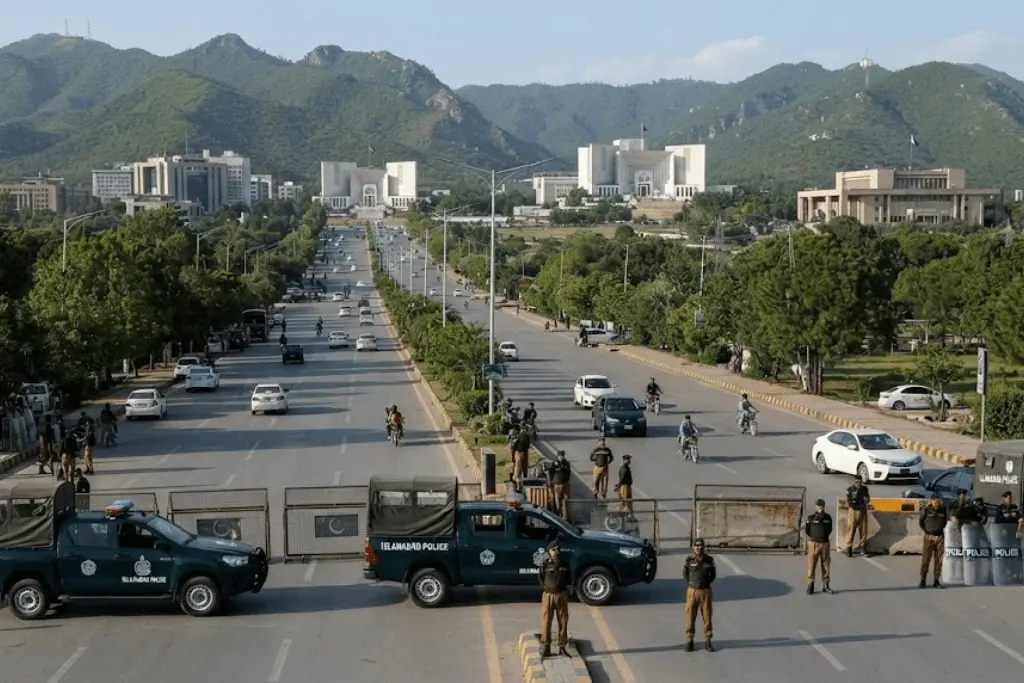
In Pakistan, security preparations have been stepped up in and around the capital, Islamabad, ahead of planned Pakistan protests by opposition groups. More than 22,000 security personnel are expected to be deployed in the federal capital, while more than 30,000 personnel are being positioned in Attock district, a key route between Punjab and Khyber Pakhtunkhwa.
The preparations follow announcements by several groups of demonstrations or marches toward Islamabad. Pakistan Tehreek-e-Insaf (PTI) has announced a countrywide protest and march on September 27 demanding the release of party founder Imran Khan, while Jamaat-e-Islami (JI) has launched a separate mobilisation against the petroleum levy. The Kissan Ittehad has also announced a protest for relief for farmers.
More Than 22,000 Personnel Ready For Islamabad
The security plan involves personnel from Islamabad and adjoining districts, and more than 22,000 security officials are likely to be posted in the capital under the command of eight deputy inspectors general. More than 30,000 personnel are also available for security duties related to the protest situation, and further deployments are also underway in Attock.
Separately, Rawalpindi police have requested thousands of additional personnel to help local forces. The authorities are also preparing containers and other physical barriers, with reports suggesting that about 30 entry points into the twin cities are expected to be blocked or restricted if protest movements escalate.
Road Restrictions Designed To Deter Protest Movement
Authorities have set up containers around highways and open spaces, preparing to seal off Islamabad during heightened protest activity. The measures are intended to prevent large gatherings in sensitive areas and protect major roads and government installations from disruption.
The Islamabad High Court has also given its verdict on the legal aspects of the proposed PTI protest. In a detailed judgement, the court emphasised the need to balance the right to protest with the fundamental right of citizens to go about their business freely and without illegal obstruction.
Government Issues Warning Over Public Order
Mohsin Naqvi, the interior minister, said the government would foil any attempt to march into Islamabad in violation of the court’s directions. Officials have also warned organisers they could face legal action if demonstrations lead to obstruction, violence or disruption of public movement.
Information Minister Attaullah Tarar has also said groups trying to create disruption would not be allowed to block roads or prevent citizens from moving through the capital. The government’s position has been focused on maintaining public order and ensuring that commercial and everyday activity can continue during the period of heightened political mobilisation.
PTI To Stage Protest In Islamabad On September 27
PTI has announced September 27 as the date for nationwide protest and mobilisation in Islamabad. The party has associated the protest with the demands for the release of Imran Khan and supremacy of the Constitution.
Extensive security preparations have already been made for the planned mobilisation. Dawn quoted police officials as saying that Islamabad police arrested several PTI activists ahead of the protest under different provisions of the Pakistan Penal Code. The arrests followed allegations over meetings about the planned protest on September 27.
J.I. March Adds Another Pressure Point
The security situation is not confined to PTI activity. Meanwhile, the Jamaat-e-Islami has arranged a long march toward Islamabad against the petroleum levy, and the mobilisation has started from Karachi and is on its way to the federal capital.
The separate protest adds to the logistical headache for authorities, with a range of political groups mobilising around different policy and political demands. That means the government has had to prepare for a number of potential protest routes and demonstrations, not just one.
Disruption’s Economic Cost Is Highlighted By Government
Finance Minister Muhammad Aurangzeb warned that the government’s research shows that the protracted protests, sit-ins and road closures could lead to economic losses of around PKR 120 billion a day. The estimate is provided as a warning of what a prolonged disruption might do to economic activity.
The services sector is likely to take a big chunk of the disruption, with road closures affecting retail, transport, hospitality, logistics and other activities. Meanwhile, food businesses in Rawalpindi have appealed to authorities to protect commercial activity from unnecessary closures and restrictions during the period of protest.
Court Ruling Focuses On Rights, Public Movement
The Islamabad High Court decision has become a significant reference point in the controversy over the September 27 protest. Political groups have the right to organise legal activity. Citizens have rights relating to movement, business and access to public facilities. The court’s decision underscores the need to reconcile these interests within the constitutional structure.
The capital city of Pakistan is preparing for a surge in political activity, with PTI, JI and other groups planning to hold separate protests and rallies. The government has increased security in Islamabad and surrounding districts with heavy deployment, physical barriers, legal warnings and emergency preparedness.
The immediate policy problem is to reconcile public safety and the uninterrupted movement of people and vehicles with a response to planned political activity within the legal framework. The scale of preparations reflects the government’s expressed concern about violence, road blockades and disruption to economic activity, while the court proceedings underscore the importance of constitutional and public rights.