Farhan Qureshi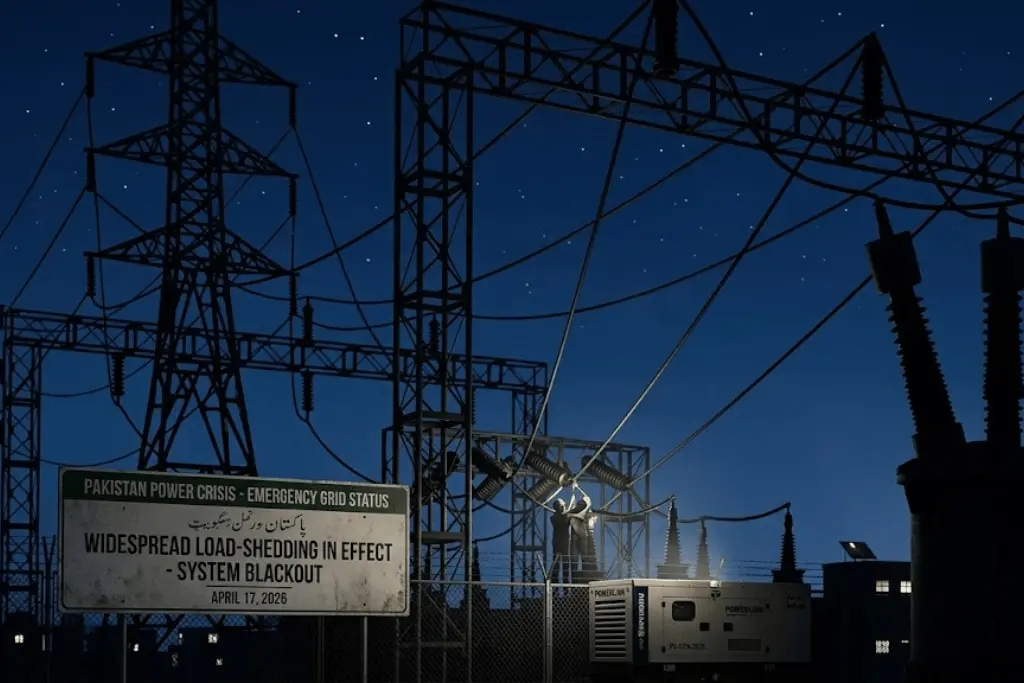
In Pakistan, the present global upheaval associated with the prevailing crisis in the Middle East is creating a temporary but substantial Pakistan power crisis 2026, as fuel supplies and electricity generation are impacted. The government has even admitted that some of the country is undergoing up to six to seven hours of load management, mostly during the peak evening periods. Although this has proven to be a challenge when such outages occur, authorities have highlighted that the situation is currently being proactively dealt with via a combination of strategic planning, resource optimisation, and demand control.
The problem of low power supply (around 3,400 megawatts) was discussed openly by the Power Minister Awais Leghari, who pointed out that the gap is mainly caused by the external factors as opposed to a certain internal system breakdown. This is a key difference because it shows how Pakistan is even more resilient in the global turbulence. The country is striving to stay stable with a diversified energy mix and flexible policy responses in an ever-more complex global energy environment.
Key Factors Behind Pakistan’s Current Power Shortfall
One of the major causes of the present power shortage has been the recent high electricity demand. The demand was highly fluctuating in April alone, between approximately 9,000 megawatts and approximately 20,000 megawatts in a few days. These high growth rates put the national grid under a lot of pressure, particularly where the capacity to generate is also limited.
The break of the liquefied natural gas (LNG) arrivals has been among the greatest limitations. Currently, LNG-powered power plants with a potential of about 6,000 megawatts can only generate about a fraction of this amount- about 500 megawatts- with current fuel availability and high global prices. This loophole has been one of the things that has led to the load management that is currently being witnessed.
There is also a fall in hydropower generation, which contributes to the strain. The current output is about 1,600 megawatts, with the water releases by reservoirs being regulated well to cater to agricultural irrigation. Such a juggle between food security and energy production highlights the multicomplexity of policy-making in a limited resource environment.
Nevertheless, governments have made sure that the downtimes are mainly limited to peak times. Electricity is still fairly constant during the day, and the businesses, schools, and other important services can continue to operate without appreciable inconvenience. This strategic way of doing things is an attempt to reduce the extended economic effect of the energy deficit.
Government Strategy and Measures to Address the Crisis
To address the changing circumstances, the government has introduced a variety of measures that can help to stabilise the power supply and minimise the length of outages. Among the key measures has been the delay in planned maintenance of the critical power plants, such as the nuclear ones. This choice ensures that the capacity for maximum generation is not lost during high-demand time.
It is also in the process of seeking other fuel supplies. The diplomatic lines have been opened to negotiate on the supply of LNG, but the world market conditions and limitations on foreign exchange remain problematic. Nonetheless, the government is also concentrating on long-term contracts, instead of costly spot purchases, indicating that it has a more sustainable approach to energy purchases.
Another key tool has become demand-side management. Closing up markets early has been effective in cutting peak demand by around 1,200-1,400 megawatts. This decrease has also contributed much to the prevention of even further outages and is a show of how well policy interventions are organised.
The diversified energy composition in Pakistan is also emerging as a significant strength. This is because the nation is dependent on a blend of coal, hydropower, solar, wind and nuclear power, and this factor serves as a buffer against disruption in any of the mentioned. Although this has led to the problem of LNG shortages in generation, there are other sources that are still stabilising and sustaining the grid.
Improvement of transmission and distribution is also being given priority. Mitigation problems Limitations in transmitting electricity between generation hubs in the south have long been a concern in efficiency, and continuing upgrades are needed to resolve these bottlenecks. Such disruptions have already been noticed in the relatively lesser number in urban centres such as Karachi and Hyderabad, which reinforce the advantages of the application of infrastructure management.
The government has also been open-minded in its communication to the population. By recognising the problem and giving its causes, officials are developing trust, whilst motivating people to embrace energy- saving habits. A combined action of consumers to control demand has been encouraged by reducing unnecessary consumption of electricity, especially at peak times.
Although short-term problems of the present power outages exist, it reflects positively on Pakistan’s capability to react positively to external disruptions on the international stage. This process of strategic planning, diversified energy sources and proactive governance is enabling the country to survive the turbulent times that it is passing through.
Pakistan is likely to balance its energy sector as the world stabilises and its supply chains are enhanced. Meanwhile, the calibrated and responsive reaction of the government shows a desire to preserve the stability, facilitate economic activity and make sure that the effects on people are as minimal as possible.