Farhan Qureshi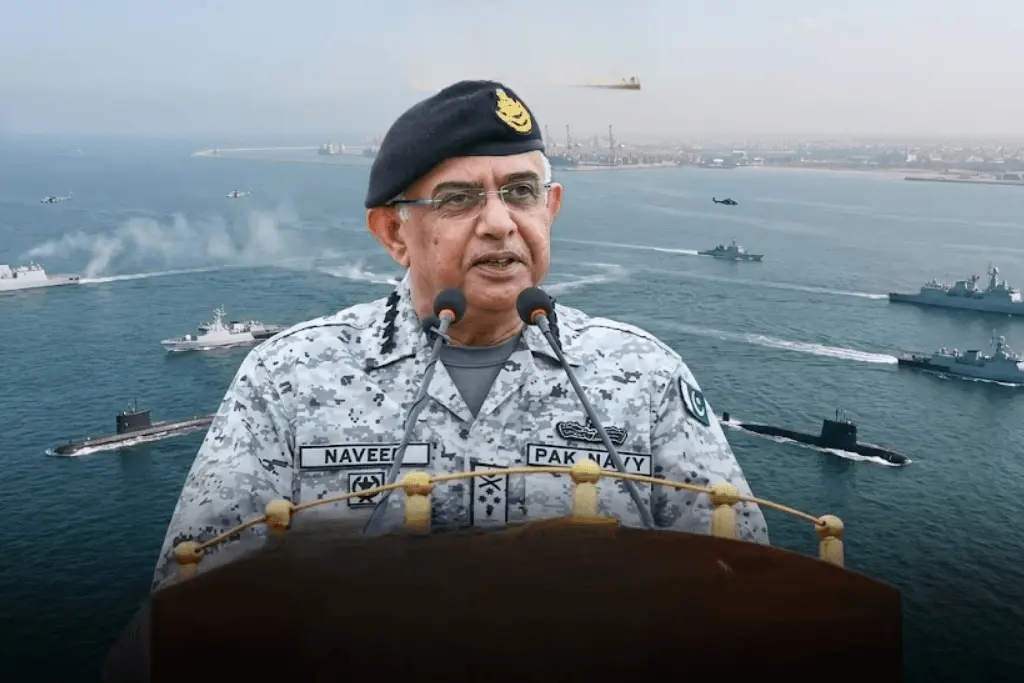
Pakistan Navy has started SEASPARK-2026, a major maritime drill in Karachi aimed at enhancing operational readiness against conventional and emerging security challenges. The opening brief was chaired by the Naval Chief, and senior officers of different services of Pakistan’s Armed Forces attended it.
SEASPARK-2026 also reflects Pakistan Navy’s focus on maintaining a high level of readiness in an environment where threats can emerge from multiple domains. It is meant to enhance decision-making, coordination and operational effectiveness, while making sure that maritime capabilities respond to established and emerging challenges.
SEASPARK-2026 Tests The Combat Readiness Of The Pakistan Navy
A key goal of SEASPARK-2026 is to assess the combat readiness of Pakistan Navy formations. The integration of these capabilities gives the Pakistan Navy the ability to evaluate how different assets can effectively work together.
The exercise also highlights personnel’s ability to respond quickly as the situation changes. The need for speed in processing information, co-ordination between forces and maintaining operational continuity in maritime security is on the rise. SEASPARK-2026 is thus an important test of readiness for Pakistan’s naval forces.
Joint Operations Bolster Pakistan’s Defence Coordination
The presence of Army and Air Force elements indicates the growing importance of tri-service integration in Pakistan’s defence planning. Modern operations are rarely limited to a single service, and it is therefore increasingly important to integrate the maritime, air and land capabilities.
SEASPARK-2026 will give different branches of the Armed Forces the chance to train joint operational procedures and improve communication. Such coordination may improve the ability to respond to situations that call for naval, aerial and land-based capabilities working toward common objectives.
Naval Exercise Is Based On Multi-Domain Operations
SEASPARK-2026 is largely Multi-Domain Operations-oriented, combining maritime, air, land, cyber and space-enabled capabilities in a connected operational construct. It is a reflection of the changing nature of modern conflict where activity in one domain can directly affect operations in another.
The information environment can impact decision-making before and during kinetic operations. Even where physical assets are still available, operational difficulties can arise from misleading information, disrupted communications or compromised data. The exercise therefore assesses the ability of the forces involved to operate effectively under inform
New Maritime Capabilities Of Unmanned Systems
Technology’s growing role in maritime operations is reflected in SEASPARK-2026’s inclusion of unmanned systems. Unmanned platforms can provide additional options for forces operating over large maritime areas in support of surveillance, reconnaissance and other missions.
Their integration with traditional naval assets may improve the ability to monitor activity and develop a broader operational picture. Coordinating unmanned systems with ships, submarines and aircraft also enables forces to explore how emerging technologies can complement established capabilities.
Pakistan Navy Reviews Operational Readiness
The Chief of Naval Staff visited the Pakistan Navy Fleet units and reviewed ongoing operations before the inauguration of SEASPARK-2026. “The exercise was an opportunity to take stock of operational activity and reinforce expectations on preparedness across naval formations.
SEASPARK-2026 gives the Pakistan Navy a structured opportunity to evaluate force responses to a broad spectrum of conventional and emerging maritime threats. The focus on adaptability is a recognition of the need to prepare for circumstances that may develop in ways other than established operational assumptions.
Karachi Still Vital To Pakistan Maritime Security
SEASPARK-2026 began from the city, emphasising the significance of the city for Pakistan’s maritime and naval infrastructure. Being a major coastal centre, Karachi has had long-standing links with naval operations, commercial activity and national economic interests.
The exercise combines advanced maritime capabilities in a setting directly relevant to Pakistan’s broader maritime security responsibilities. The presence of ships, aircraft, submarines and specialist forces shows the range of capabilities available for maritime operations.
The integration of specialised forces and naval platforms enables the Pakistan Navy to undertake missions that require close interaction between the personnel and supporting assets. Such training can enhance interoperability and ensure specialised capabilities are ready to respond to complex operational demands.
Space-Enabled Capabilities Enable Modern Naval Operations
The space-enabled aspects of the exercise illustrate the increasing technological reliance of modern military operations. Space-based systems can support communications, navigation, surveillance and broader situational awareness and thereby support forces operating over large geographical areas.
A capable and ready navy can help to establish a secure maritime environment where commercial activity can go forward with greater confidence. The combination of traditional naval platforms, unmanned systems, specialist forces and joint service participation provides a wide canvas for testing contemporary operational methods.
Multi-domain operations and information-environment activities expand the exercise scope. These aspects enable the parties involved to tackle problems that cannot be resolved by the use of classical naval means only.
Pakistan Navy Enhances Readiness Through Major Exercise
Pakistan Navy’s current maritime training priorities, SEASPARK-2026, are centred around operational readiness. Its mix of ships, submarines, aircraft, unmanned systems, Marines, Special Forces and joint Army and Air Force elements offers a full framework for testing national defence coordination.
The exercise’s emphasis on multi-domain operations, cyber capabilities, information activities and space-enabled systems reflects the evolving nature of maritime security. The Pakistan Navy is using the exercise to improve adaptability and to sustain the effectiveness of existing capabilities against new technologies.