Farhan Qureshi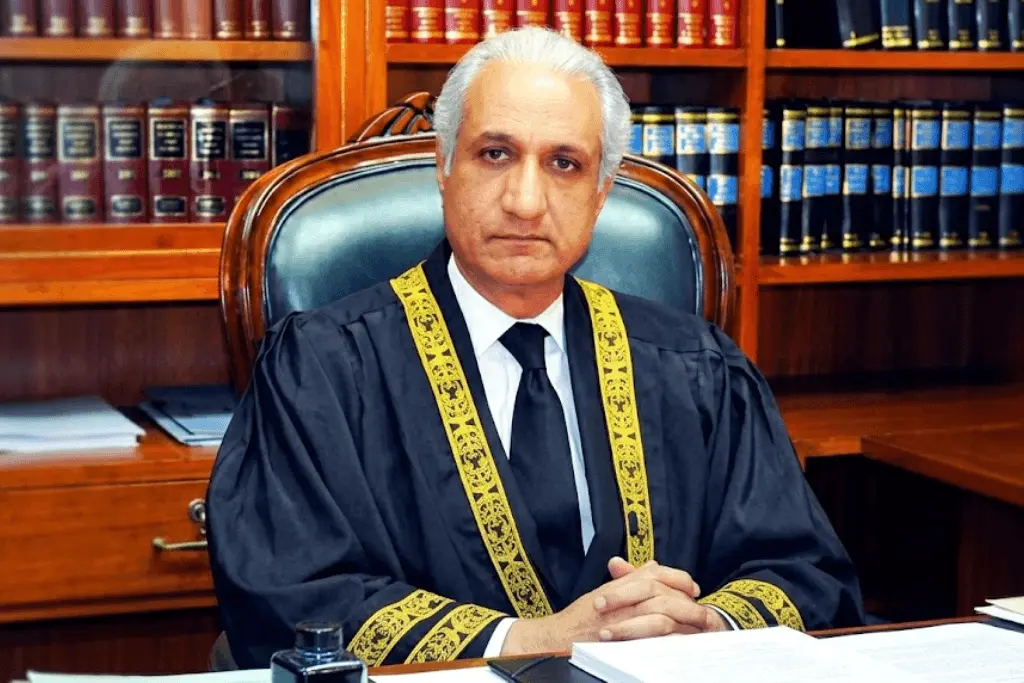
Justice Sheikh was appointed to the Lahore High Court on May 7, 2021, and was due to serve until January 2036. His resignation has drawn renewed attention to the Pakistan justice system and ongoing concerns over judicial independence. So his departure is a big personal and professional decision after more than five years of judicial service and is coming at a time of wider discussion about the future direction of Pakistan’s legal institutions.
In his resignation letter to President Asif Ali Zardari, Justice Sheikh said the decision should not be viewed as a rejection of judicial service. Instead, the judge pointed to a desire to more generally engage with legal scholarship, policy research and comparative judicial practice, indicating a desire to contribute to the legal field outside the traditional courtroom structure.
Judicial Resignation Adds To Pakistan Legal Debate
However, the resignation has sparked a national debate over the future of Pakistan’s justice system. Justice Sheikh cited academic and personal evolution as the main reasons for his departure from the bench, but the decision has inevitably been viewed in light of other recent developments impacting the judiciary.
In recent years, the legal system in Pakistan has undergone significant institutional changes, with constitutional reforms redefining the responsibilities of the country’s top courts. Such changes inevitably generate debate among judges, lawyers, legal scholars and society broadly on the way judicial authority should be organised to ensure effective constitutional governance.
27th Constitutional Amendment Transformed Pakistan’s Judiciary
One of the most important developments impacting the current debate has been the 27th Constitutional Amendment, passed in late 2025. The reform transferred the power over constitutional issues to a new Federal Constitutional Court and changed the constitutional tasks of the Supreme Court.
The restructuring was a major overhaul of the judicial architecture of Pakistan. For proponents of institutional reform, specialised constitutional adjudication might offer a route to simplify complex constitutional cases. For opponents, issues have been raised as to the impact that the reallocation of authority might have on the traditional equilibrium between different judicial institutions.
Former Senior Judges Resign Over Constitutional Changes
Justice Sheikh’s resignation follows the earlier resignations of senior members of Pakistan’s higher judiciary. Justice Syed Mansoor Ali Shah and Justice Athar Minallah resigned from the Supreme Court after the constitutional changes, and their resignations were part of a larger legal discussion about judicial authority and institutional independence.
The subsequent resignation of Lahore High Court judge Justice Shams Mehmood Mirza further reflected the heat of the debate. His resignation was specifically linked to his opposition to the constitutional amendment, which was not the stated reason for Justice Sheikh’s resignation from the bench.
Lahore High Court Still At The Heart Of Legal Governance
The Lahore High Court is a vital component of the Pakistani justice system, serving one of the largest provinces in the country and handling a broad spectrum of constitutional, civil, and criminal cases. Thus, any such changes relating to its judges may attract considerable attention from lawyers, litigants and institutions across Punjab.
The resignation of Justice Sheikh offers another occasion to ponder the role of the Lahore High Court in the evolving judicial architecture of Pakistan. The court continues to be an essential institution for safeguarding legal rights, reviewing administrative decisions and interpreting laws that impact millions of citizens.
The Lahore High Court continues to function as another sign of the robustness of Pakistan’s judicial institutions. Individual changes in the personnel of the judiciary can be dealt with by existing constitutional and administrative mechanisms so that the courts can continue to perform their essential functions while the larger questions of reform are being addressed.
Judicial Independence Still Matters For Pakistan
The independence of the judiciary continues to be a key pillar of a well-functioning constitutional system. The courts need enough institutional independence to interpret legislation and constitutional provisions without undue influence, and judges must also function within the constitutional framework that governs their appointments, responsibilities and conduct.
Justice Sheikh also mentioned his desire to pursue legal scholarship and policy research as part of his decision to resign. Judicial experience can give useful insights into the functioning of the law in practice, making former judges potentially valuable contributors to legal education, comparative research and debates on institutional policy.
The core question for Pakistan is still how to create an accessible, credible, and responsive justice system to address constitutional and legal issues. Strong institutions require clear mandates, professional judicial administration and consistent application of constitutional principles, combined with mechanisms that allow for legitimate reform.
Rule Of Law Still Key To Pakistan’s Institutional Progress
The rule of law remains closely tied to Pakistan’s larger economic, social and democratic development. Constitutional reforms can reset responsibilities, but implementation that preserves clarity, accountability and confidence in the justice system is critical to their long-term success.
Pakistan has an experienced judiciary, an active bar association, a large academic community and a well-developed legal profession that can contribute to this process. Bringing these perspectives together can help to design reforms that meet the needs of the institution and at the same time preserve the core values that are expected of an independent and competent judiciary.