Ali Raza Khan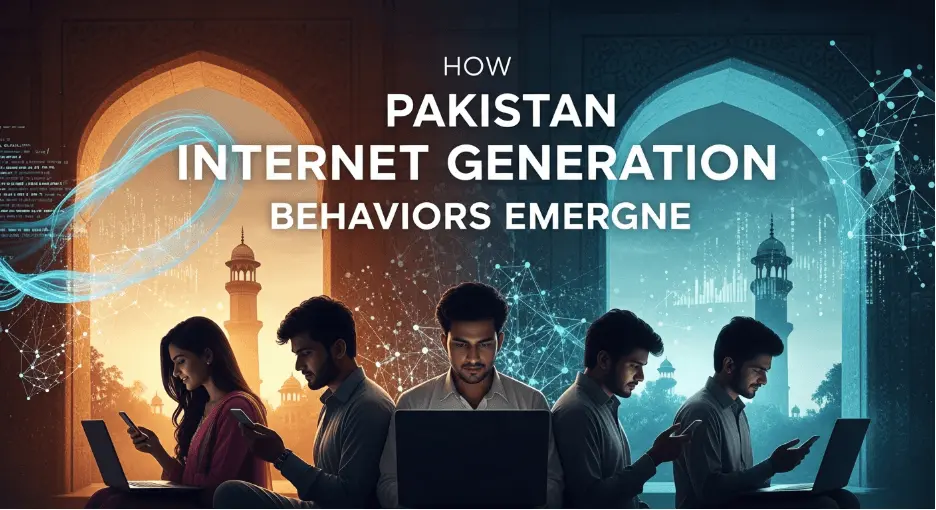
The phone buzzes at a chai dhaba, and five heads tilt down at once. That small scene explains Pakistan Internet Generation Behaviors better than any slogan. Pakistan’s internet generation lives on screens, mainly mobile screens, shaping online behaviors around speed, price, and convenience. And yes, it feels like real work sometimes.
Mobile-First Habits Shaping Daily Online Use
Across Pakistan, daily internet use begins on a handset, not a laptop. People scroll while waiting for a bus, while standing in a pharmacy queue, while sitting on a warm rooftop at night. Data packs get watched closely. Battery percentage gets watched too.
Quick tasks dominate. Short searches, quick messages, fast video clips, and payments when the signal stays steady. On shaky network days, users keep a second SIM ready, or switch spots in the room like it is normal, because it is.
Social Media as the Core of Youth Culture in Pakistan
Social media sits at the centre of youth culture. It is entertainment, hangout, gossip corner, and newsfeed, all packed into a palm. Short videos win attention because they match the rhythm of daily life, noisy streets, crowded homes, mixed schedules.
There is also a harsh truth. Social platforms reward speed, not accuracy. A rumour travels faster than a correction. People still share, still comment, still react. Sometimes they regret it later. That part does not get said enough.
The Boom of Social Commerce and Online Shopping
A large slice of online shopping in Pakistan begins inside social apps. A product video appears, a seller replies in chat, a payment plan gets discussed, delivery gets promised. It moves fast, and it feels personal, even when it is not.
Many buyers still prefer cash on delivery. Trust remains the main currency. And shoppers keep simple rules in mind: check reviews, ask for real photos, confirm return policy, and keep messages saved. Those small steps prevent headaches.
| Common Purchase Path | What People Do | Usual Pain Point | Typical Fix |
| Social post to chat | DM seller, ask price, negotiate | Fake listings | Video call proof, COD |
| Marketplace browsing | Compare sellers, check ratings | Hidden charges | Ask total cost upfront |
| Quick checkout link | Pay via wallet, confirm address | Late delivery | Confirm dispatch time |
Information-Seeking Behaviour Among Pakistan’s Internet Generation
Search behaviour in Pakistan often looks practical. Students hunt notes and past papers. Families check clinic timings. Job seekers scan listings, then message recruiters on apps. People also search for “how to” solutions, because calling a helpline rarely ends well.
News consumption has shifted too. Many readers first see headlines in social feeds, then confirm via multiple outlets, or they do not confirm at all. That choice shapes daily public mood, especially during tense political or economic weeks.
Streaming, Gaming, and Digital Entertainment Trends
Evenings in Karachi carry a salty breeze, and screens light up along the coastline. In Lahore, winter fog thickens, and phones keep playing. Streaming and short videos fill idle time, replace cable for many homes, and set the tone for pop culture.
Gaming is not limited to consoles. Mobile gaming is everywhere, often tied to friends, group chats, and quick competition. It is also tied to data use, so players learn to manage downloads, updates, and settings like a routine.
Digital Expression, Identity, and Online Communities
Language online in Pakistan is messy in a good way. Urdu, English, Roman Urdu, Punjabi, Pashto, Sindhi, Balochi, all show up. Captions change tone depending on the audience. A serious post in English, a joke in Roman Urdu, a family update in Urdu. Normal.
Online communities also form around cricket, dramas, study groups, fandoms, and local neighbourhood pages. People find belonging there, even if they never meet offline. Feels strange sometimes, but it works.
Privacy Awareness, Online Safety, and Changing Risk Behaviour
Online safety is no longer an abstract topic. Scam calls, fake job posts, copied store pages, and suspicious links have pushed people to be careful. Many users now double-check unknown numbers, avoid clicking random links, and keep accounts private.
Some also use VPNs during access problems, or for privacy. Still, risky habits remain. Password reuse is common. Screenshots get shared too freely. And public Wi-Fi still tempts people, even when it should not.
Impact of Government Regulations and Platform Restrictions
Platform restrictions and policy changes have a direct effect on behaviour. When an app slows, users shift to another. When a platform gets blocked, workarounds spread quickly in friend groups and offices. It becomes a street-level tech support network.
For creators and small sellers, these disruptions carry real cost. A delayed livestream means lost sales. A blocked platform means a broken audience pipeline. People adapt, but the adjustment is never smooth.
The Rise of Digital Learning, Remote Careers, and Tech Skills
Online learning has grown in Pakistan because it solves a simple problem: access. Students in smaller cities can watch the same lectures as students in major hubs, assuming the internet stays stable. Many also learn skills for remote work, then hunt gigs online.
Freelancing, content services, coding, design, and virtual assistance have become common paths. Families may not fully understand the work at first. Then a payment arrives, and attitudes change. That is how it goes.
Pakistan Internet Generation Behaviors and Future Digital Culture
These online behaviors show a generation trained by constraints. Limited time, mixed connectivity, tight budgets, and constant platform change. The result is a practical digital culture: quick decisions, heavy reliance on peers, and strong focus on convenience.
Brands, educators, and public institutions that communicate clearly and keep processes simple will earn trust. Those who complicate steps or hide terms will lose people fast. Pakistan’s internet generation does not wait patiently.
FAQs
1) What are the top online behaviors defining Pakistan’s internet generation today?
Mobile-first browsing, heavy social media use, social commerce buying, short video streaming, and online learning habits show up repeatedly across urban and semi-urban users.
2) Why does mobile internet dominate online use in Pakistan?
Phones cost less than computers, data packs stay accessible, and daily life happens outdoors, in transit, and in shared homes, so mobile use fits better.
3) How does social media influence shopping patterns in Pakistan?
Many buyers discover products in reels or posts, negotiate inside chats, ask for proof photos, then choose cash on delivery to reduce risk.
4) What safety habits are becoming common among Pakistani internet users?
People save receipts and chats, avoid strange links, verify store pages, use stronger privacy settings, and warn friends quickly when scams circulate.
5) How is digital learning changing youth career plans in Pakistan?
Students use online courses to build practical skills, apply for remote gigs, and develop side income, especially in design, writing, marketing, and tech support. Get Pakistan’s latest scoop and interesting facts https://thepakistan.pk/ !