Urooj Niazi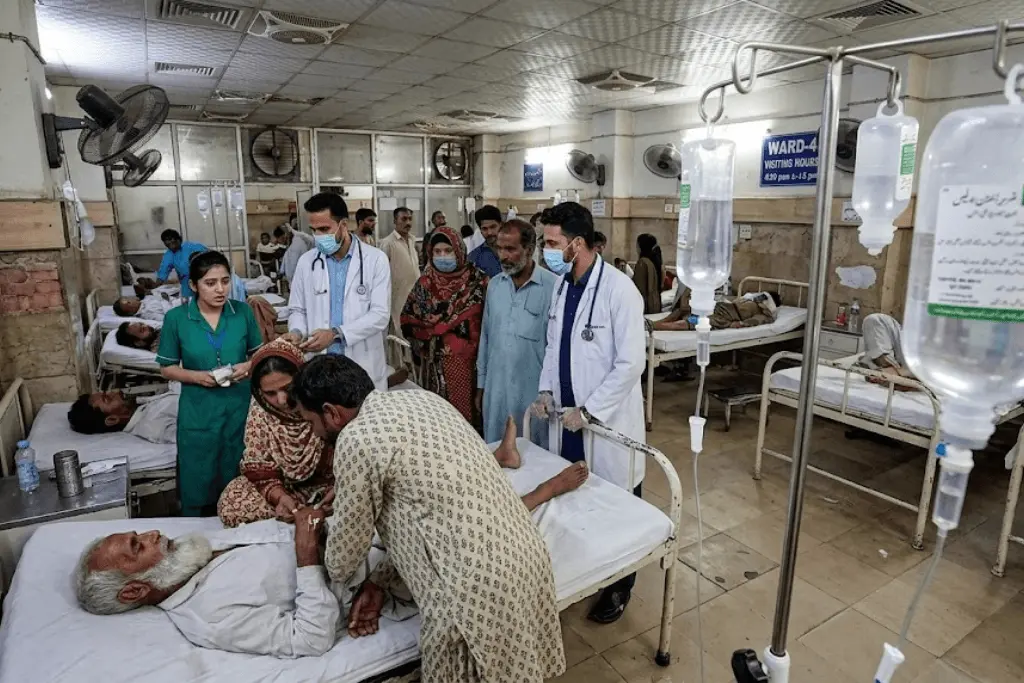
Pakistan’s health system is facing a mix of financial, environmental and structural pressures that could worsen existing Pakistan health system challenges. The underfunding, repeated climate shocks and heavy reliance on hospital-based treatment have heavily burdened healthcare infrastructure, especially in communities with limited access to essential services.
The urgency has increased with the convergence of floods, extreme heat, infectious diseases and food insecurity. Reviews by academic institutions and human rights organisations have warned that climate-related emergencies can exacerbate frailties in healthcare provision, making the move toward prevention, preparedness and resilient infrastructure all the more critical.
Climate Change Intensifies Health Hazards Across Pakistan
Climate change has emerged as a serious threat multiplier for the health system of Pakistan. Standing water can also lead to conducive conditions for mosquito populations, which can raise the risk of diseases such as malaria in the affected communities.
One of the most persistent problems that Pakistan’s health system faces is the limited public health expenditure. Public health spending has been estimated in previous research to be about 0.84 to 1.2 per cent of gross domestic product, much lower than the average reported for lower-middle-income countries. If resources are focused on busy urban hospitals, rural and remote communities might be unable to access timely primary and preventive care.
Primary Care Deserves More National Attention
Pakistan’s health system has historically been orientated toward curative and hospital-based care. While tertiary hospitals will remain a critical part of the treatment of complex medical conditions, over-reliance on centralised facilities can leave communities exposed when transportation, infrastructure or hospital capacity is compromised.
Primary healthcare offers the chance of diagnosing illnesses sooner and cutting the need for costly emergency treatment. Basic health units, rural health centres and community health workers can play a big role in vaccination, maternal care, disease prevention, nutrition support and health education. Improving facilities, especially in places regularly hit by flooding or extreme heat, can be achieved through better drainage, stronger building standards, reliable backup power and safe water supplies.
Digital Surveillance Could Help Detect Disease Earlier
Pakistan can also improve public health through better disease surveillance and use of technology. In the event of a disaster, poor connectivity or limited access to health care can also make it difficult for traditional reporting systems to detect outbreaks in time. Information from clinics, laboratories, weather stations and local communities has the potential to provide a broader picture of where disease risks are on the rise.
Health emergencies often cross administrative boundaries, so institutions must work with each other. Pakistan’s Ministry of National Health Services and National Disaster Management Authority can work together to prepare for and respond to health emergencies related to climate change.
Better coordination between health and disaster management authorities could speed the deployment of medicines, medical personnel, emergency equipment and public information. Therefore, Pakistan’s health resilience partly depends on stronger WASH systems, including water, sanitation and hygiene. Hospitals need reliable clean water to care for patients, to sterilise equipment and to maintain sanitation, and communities need safe supplies to prevent the spread of disease.
Health Budgeting Can Move To Prevention
In the long run, this will mean giving priority to healthcare resources in a different way. Investment in large urban facilities is still important for specialised treatment, but there is room for more resources in primary healthcare to provide greater protection against preventable diseases and climate-linked emergencies. Immunisation, maternal and child health care, nutrition support, disease screening and health education all contribute to building community resilience.
Pakistan Can Build A More Resilient Future Of Healthcare
Pakistan faces serious health challenges, but the pressures also provide an opportunity to modernise the national healthcare model. Climate risks, underfunding and gaps in primary care have revealed vulnerabilities that can be countered through coordinated investment and better long-term planning.
A resilient system would combine prevention and treatment and provide better access to front-line services for rural communities. With climate-adapted facilities, secure medicine supplies, strengthened immunisation programs and improved disease surveillance, healthcare can be more responsive to emergencies before they escalate.
Urgent Reform Could Prevent A Greater Health Catastrophe
Pakistan’s health system is under several interconnected pressures, but a proactive strategy can reduce the likelihood that these will escalate into a broader humanitarian crisis. Climate shocks, infectious disease risks, malnutrition and limited healthcare resources together call for action before emergencies overwhelm existing capacity.
The best answer is to strengthen the basics of health care and not to depend mostly on emergency hospital treatment. Protection begins right from the beginning of the risk with improved primary care, increased vaccination coverage, climate-resilient infrastructure, more reliable medicines and stronger community health networks.