Sana Khalid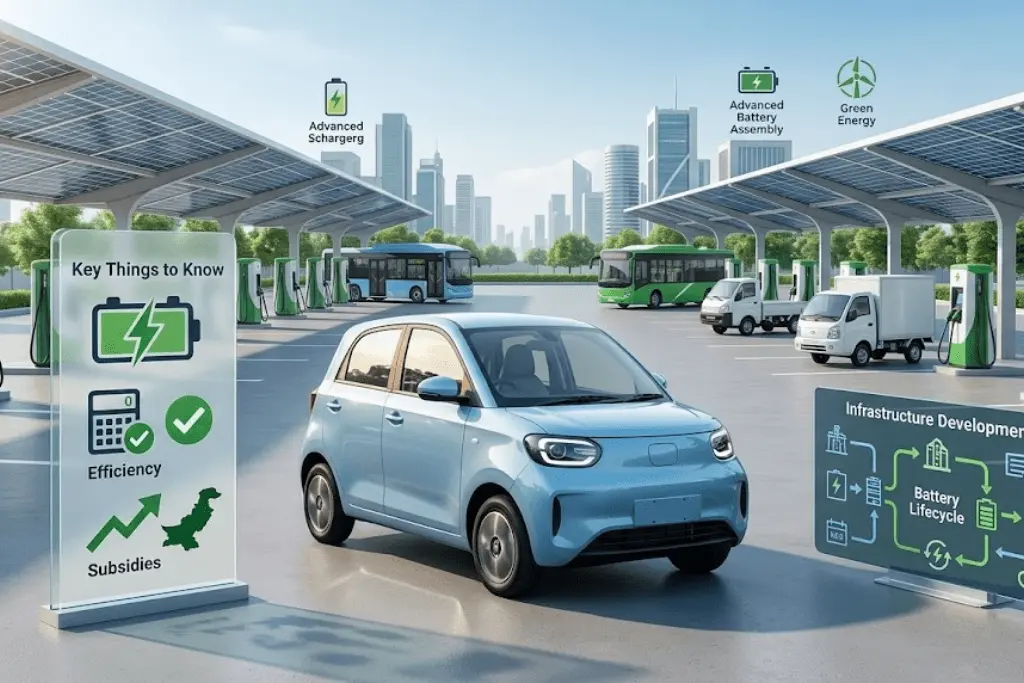
The auto industry of Pakistan is in transition as Electric Vehicles (EVs) are gradually gaining popularity. The increasing awareness about the environment and the incentives offered under the Pakistan EV policy are pushing consumers towards electric mobility. The country’s New Energy Vehicle (NEV) policy is a part of a wider vision to decrease reliance on imported fuels and boost domestic manufacturing.
The roadmap is ambitious as authorities have targeted 30% EV penetration by 2030, but the change is gradual and gradually more models are becoming available, making EVs a more viable choice for Pakistani motorists.
New EV Policy Of Pakistan For Long-Term Development
The New Energy Vehicle policy is one of the most important policies in the Pakistani automobile sector, and the target of the policy is to boost production in the country, cut down fuel import and encourage the use of eco-friendly vehicles. Special incentives have been given to manufacturers assembling vehicles in Pakistan to promote investment and technology transfer.
Tax Policy Affects The Price Of Cars
One of the biggest things prospective buyers need to know is that EV pricing can vary based on fiscal policies and yearly budgets. Changes in the general sales tax, import duties and concessions may affect the total cost of ownership. Economic reforms will continue, and tax systems will be tweaked from time to time to achieve other fiscal goals.
These are very different, but the long-term trend in government policy continues to be in favour of electric vehicle adoption and local manufacturing.
Also, increased competition among manufacturers is expected to make things cheaper over time.
More EV Models Are Coming
Many international brands have launched electric vehicles in Pakistan, ranging from compact cars to luxury SUVs.
Manufacturers such as BYD, MG, Hyundai and Audi have fortified the country’s EV landscape with products serving different consumer preferences.
With the growing presence of these brands, the after-sales services, and the availability of spare parts are expected to improve, making ownership more convenient in the future.
Hybrid Vehicles Offer Another Choice
Also, attention is turning to plug-in hybrid models besides full electric vehicles. They combine a conventional engine with an electric power system, improving fuel economy and reducing dependence on charging infrastructure.
As Pakistan advances towards cleaner transport, the installation of plug-in hybrid vehicles in some preferential tax categories has created debate but also provided the public with more choices.
Hybrids are also usually looked at as a middle path for shoppers who want to cut their fuel costs but aren’t ready to take the plunge into battery-powered cars.
Charging Infrastructure Is Growing Across Pakistan
Charging infrastructure remains one of the most important factors for prospective EV owners. Public charging networks are still evolving, meaning EVs are still best suited to city commuting and shorter journeys. But major progress is underway.
Charging At Home Can Save You A Lot Of Money
Today, most electric vehicle owners in Pakistan charge their vehicles at home. Charge them conveniently overnight and save a ton of money compared to traditional fuel costs. Soft financing options and direct financial support have gotten more consumers thinking about eco-friendly transport.
Further reductions in the cost of ownership are also being explored by the authorities. These include exemption from registration fees, annual token taxes and toll charges on motorways on locally manufactured EVs.
These measures could provide further incentives for drivers thinking about switching away from conventional vehicles.
Higher Upfront Costs Can Be Offset By Long-Term Savings
The relatively high cost of the electric vehicle purchase is one challenge, and EVs also may cost more up front than gas-powered vehicles, but it all translates to long-term savings with decreased maintenance costs and lower energy bills.
Electric motors are more compact with fewer moving parts. Therefore, they need less servicing and are less expensive to maintain. With lower fuel costs as well, electric vehicles are a financially attractive option for many consumers.
The long-term benefits can be more than the initial cost of purchase for those who plan to keep their cars for several years.
The Future Of EVs In Pakistan Looks Brighter And Brighter
Pakistan’s journey into electric mobility is still in its infancy, but the progress has picked up considerable pace. As more manufacturers enter the market, as more support is given to local assembly and as charging networks expand, electric vehicles are likely to become more common on Pakistani roads.
For consumers who want to switch to greener mobility, Pakistan’s latest push for electric vehicles is an encouraging step towards a cleaner, more efficient and technologically advanced transportation future.