Sana Khalid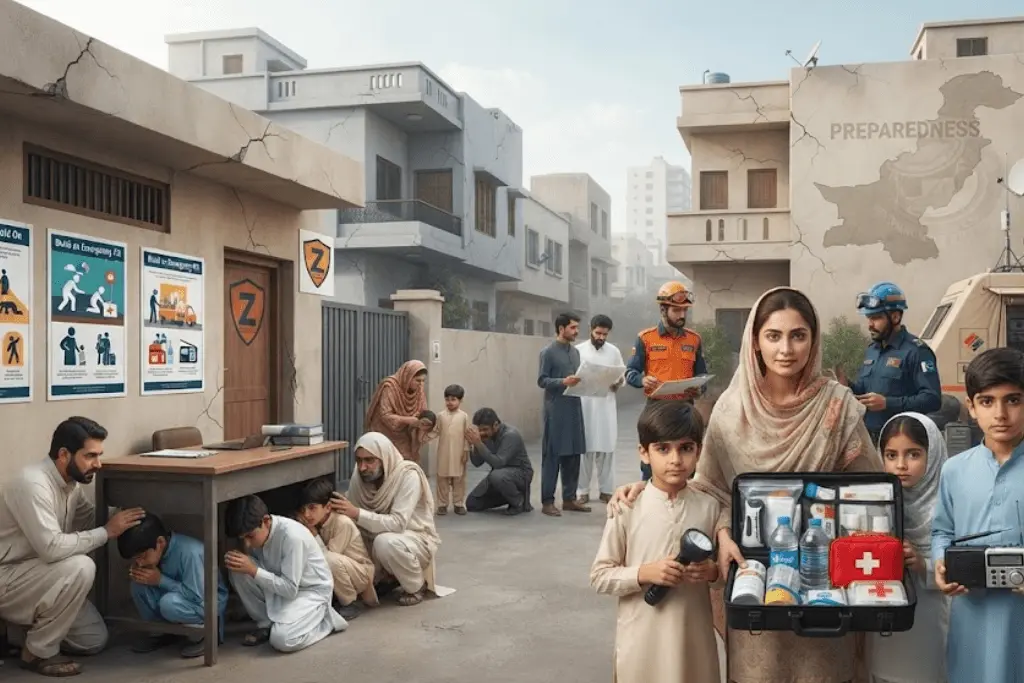
Earthquakes cannot be predicted, but the impact can be greatly reduced through Pakistan earthquake preparedness, public awareness, emergency planning, and timely safety actions. National institutions such as the National Disaster Management Authority (NDMA) are still advocating practical safety measures that enable individuals, families, schools and communities to prepare and respond effectively before, during and after an earthquake.
Importance Of Earthquake Preparedness In Pakistan
The last few decades have witnessed several devastating earthquakes in Pakistan, and this has highlighted the need for preparedness at all levels of society. Pakistan lies close to the meeting point of the Indian and Eurasian tectonic plates, and is therefore naturally prone to seismic activity. The mountainous north and the western provinces are more prone to earthquakes. This is due to active fault systems beneath the surface.
Stronger tremors can affect urban areas with lots of people and remote mountain villages, but smaller tremors are happening all the time. Knowledge of these risks, therefore, encourages households to take preventative action, rather than just relying on emergency response after a disaster.
Make Your Home Earthquake Resistant
Securing household items before the shaking begins is one of the most effective ways to reduce earthquake injuries. Heavy furniture such as cupboards, bookshelves, wardrobes and cabinets should be securely anchored to walls. Ceiling fans, water tanks above, hanging light fittings and storage racks all need proper fixing.
Large appliances should be stable so they do not tip over during strong ground shaking. Put heavy household items on lower shelves rather than in high storage areas where they could fall out unexpectedly. Such precautions greatly reduce the chances of injuries caused by falling objects.
Make A Family Emergency Plan
Every family needs to have a simple plan to respond to earthquakes. Family members should identify safe areas in each room such as beneath heavy tables or along interior structural walls, away from glass windows.
Make An Emergency Kit
Emergency supplies can be especially useful after an earthquake if electricity, communications or transportation are cut off. A basic emergency kit should include clean drinking water, non-perishable food, first-aid supplies, prescription medications, flashlights, spare batteries, power banks, hygiene products, and a battery-powered radio.
Follow The Drop, Cover And Hold On Principle
For most earthquakes, the safest immediate response is still the internationally recognised “Drop, Cover and Hold On” technique. Individuals should immediately get down on their hands and knees to prevent falls. If they can, they should get under a sturdy desk or table and use their arms to protect their head and neck. If furniture moves during heavy shaking, clinging to the shelter helps keep you protected. Stay where you are until the shaking stops. This will reduce the chance of being hit by falling stuff.
Stay Safe Indoors During Shaking. Stay Safe Inside During Shaking
Most earthquake injuries occur when people attempt to run during ground shaking. If you are already inside a building, stay inside. Don’t rush toward exits while buildings are still shaking. Stay away from windows, mirrors, glass doors, hanging fixtures and heavy furniture that can cause significant injury. Doorways aren’t necessarily the safest places in modern buildings unless they’re designed as reinforced structural supports. Making decisions while staying calm and patient helps keep you safe until the ground stops moving.
Outdoor Earthquake Safety
If you are outside, go to an open area if you can. Do not stay under buildings, boundary walls, electrical poles, trees, bridges, advertising billboards and overhead cables, as these may fall or shed debris when subjected to strong shaking.
Never Use Elevators
Following any significant seismic event, building managers must inspect lifts prior to restoring normal public usage. If you wait for official clearance, you minimise the unnecessary risk of damaged equipment. To this day, it is still one of the most common safety tips regarding earthquakes.
Respond Prudently After An Earthquake
Once shaking stops, attention should be turned immediately to personal safety and assessment of immediate surroundings. Family members should check one another for injury before checking buildings for visible structural damage.
Gas lines, electrical wiring and water systems should be carefully checked for leaks or damage before putting them back into use. Utilities should be shut off and remain off in the event of suspected gas leaks or electrical problems until inspected by qualified personnel. Be careful around cracked walls, unstable roofs, damaged staircases and partially collapsed structures. Emergency officials typically advise residents to stay on guard until engineering assessments are done. It helps to stay on your toes to prevent more injuries after the main quake is over.
Community Preparedness Builds National Resilience
Earthquake preparedness isn’t just for individual homes. Schools, hospitals, businesses, residential communities and public institutions all have important roles to play in improving disaster readiness through regular training, evacuation planning and public awareness campaigns.
Citizens who understand basic safety procedures before an emergency strikes help community emergency volunteers, local authorities, rescue services and disaster management agencies do a better job. Large-scale disasters are less stressful on emergency response systems, and communities recover more quickly if they are prepared.
Coming Soon
Earthquakes will always be a natural hazard in Pakistan, but their human impact can be reduced greatly through preparation, awareness and responsible planning. One of the most effective protective measures that disaster management authorities continue to recommend is securing homes, preparing emergency kits, practising family response plans, and following the principle of “Drop, Cover and Hold On.”