Urooj Niazi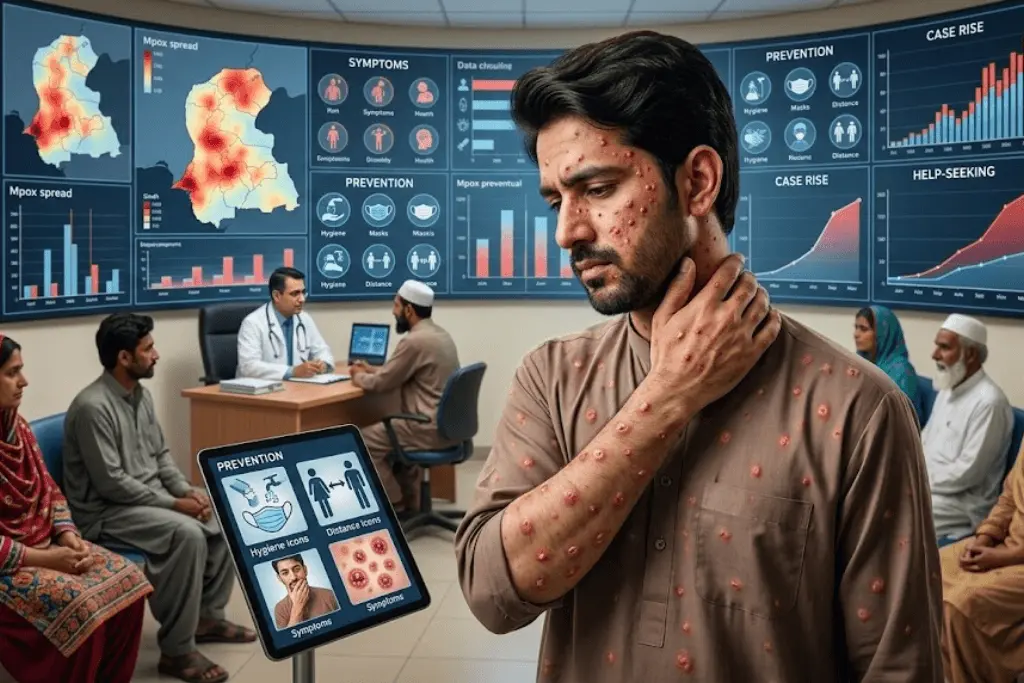
Mpox cases Sindh have prompted health authorities to step up surveillance and response activities after the province reported infections and deaths linked to the disease.. The clade Ib variant has emerged, and medical experts have raised concerns, and hospitals and infectious disease centres have begun to prepare and set up isolation facilities.
What Is Mpox And How Does It Spread?
Mpox (previously called monkeypox) is a virus that is spread primarily through close physical contact. It is mainly transmitted through direct contact with infected skin lesions or body fluids, and contaminated objects such as bedding or clothing. Disease persons in close contact with or caretakers of the disease are at higher risk of catching the disease if appropriate precautions are not taken.
The recent cases reported from Sindh highlight the need to identify the cases early and isolate them early to avoid their spread.
Early Phase Symptoms Usually Appear First
The illness of mpox usually lasts two to four weeks. Symptoms generally progress in stages. Each stage starts with a prodromal stage, where a range of flu – like symptoms are present.
Patients commonly present with high fever, severe headaches and intense body aches. Muscle aches and back pains are common complaints at this time. You may also develop severe fatigue, which causes weakness and lower energy levels.
Swollen lymph nodes are a hallmark of mpox and help differentiate mpox from some other viral infections. These swollen glands are usually in the neck, armpit and groin areas.
Recognising these early symptoms can help people get medical help before the disease progresses.
The Characteristic Rash Comes Later
Skin lesions usually begin to appear in one to three days after the first fever stage. The rash usually begins on the face and spreads to other parts of the body.
The palms of the hands, soles of the feet and genital areas may also be involved. Lesions go through a few stages, beginning as flat spots and progressing to raised bumps. Eventually, fluid-filled blisters develop, crust over, dry out gradually, and fall off.
The rash you can see is still one of the most characteristic signs of mpox. In this stage, the patients can suffer from discomfort and irritation, and it is particularly important to maintain good hygiene in order to avoid secondary infections.
Close Physical Contact Still The Biggest Risk Factor
Medical experts say one of the main ways it is passed from person to person is through skin-to-skin contact. Sharing towels, bedding and personal items with infected people can raise the chances of contracting the virus.
People living in the same household with an infected patient should be especially careful. Viral spread may be facilitated by continuous exposure and frequent physical interaction.
Those deemed especially vulnerable are people with compromised immune systems, newborn babies and elderly patients who require additional protection.
Hand Hygiene Still Among Best Defences
Washing your hands often is one of the best ways to prevent mpox. Wash your hands with soap and water for at least 20 seconds to help lower your risk of infection. If soap and water are not available, use an alcohol-based handrub with at least 60% alcohol. Good personal hygiene has long been recognised as a key to the prevention of infectious diseases, and this is no different for mpox.
Reducing Close Contact And Wearing Masks Can Reduce Transmission
The virus is distributed by respiratory droplets, especially during prolonged contact with infected persons. Medical masks also provide some extra protection in crowded places and health-care settings.
Exposure risk can be dramatically reduced by minimising unnecessary physical contact with symptomatic individuals. If symptoms are suspected, hugging, prolonged direct face-to-face contact and direct skin contact are still advised against.
Environmental Cleaning Reduces Risks
Regular disinfection of frequently touched surfaces is important to reduce contamination. Regularly disinfect door handles, work surfaces, mobile phones and communal items.
Clothing, towels and bedding of infected persons must be treated carefully and washed thoroughly. Cleaning homes and healthcare facilities helps to break the chain of transmission and protect family members from accidental exposure.
Public awareness of environmental hygiene is still not sufficient to prevent disease all over Pakistan.
Special Attention For Vulnerable Groups
Older people and those with certain underlying health conditions are at higher risk of developing serious illness. Families caring for such individuals are warned to be more cautious.
Healthcare professionals emphasise that early intervention can prevent complications and improve outcomes for high-risk patients.
When To See A Healthcare Provider
Anyone who develops a fever, swelling of the lymph nodes or suspicious skin lesions should see a doctor without delay. Early diagnosis allows health care providers to manage patients and contain the spread in the community.
Sindh Enhances Isolation, Diagnostic Facilities
Sindh health authorities have set up isolation wards and improved response mechanisms to tackle the situation. Some public hospitals and specialised infectious disease facilities have enhanced their ability to treat patients safely.
Suspected cases can be referred to Dow University of Health Sciences and Aga Khan University Hospital for diagnostic services.
Sindh Infectious Diseases Hospital has also emerged as an important institution in the management of infectious diseases and in support of public health efforts.
Public Awareness Is Still Important
Timely information and responsible behaviour are still crucial factors in the control of infectious diseases. Awareness of symptoms, prevention practices, and medical guidance supports communities to respond more effectively.