Farhan Qureshi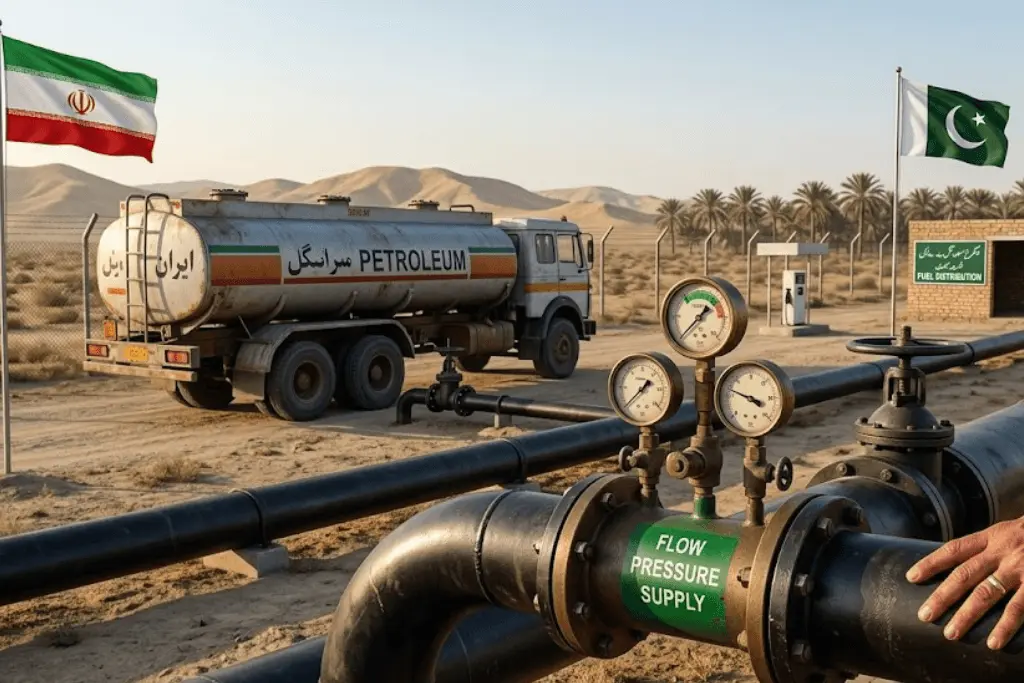
The energy sector of Pakistan is one of the most important pillars of the national economy, and Iranian oil Pakistan discussions are increasingly becoming part of the broader energy debate. Global oil markets directly influence transportation costs, industrial production, electricity prices and inflation levels throughout the country.
As international prices for energy continue to yo-yo, the discussion about other sources of crude oil is picking up steam again. One of the most discussed options is to import more oil from neighbouring Iran.
Supporters argue that local energy resources would dramatically reduce import costs and make fuel more affordable. Others cite international legal constraints and financial intricacies that still make this a very complicated issue.
Why Is Iranian Oil Drawing Attention In Pakistan
Geography is an important determinant of international trade in energy. Iran has a large border with Pakistan, making transportation distances much shorter than shipments from the Middle East, Africa or other parts of the world.
Generally, the shorter the shipping distance, the lower the freight charge, the lower the insurance costs and the quicker the delivery. These advantages have made many analysts think of Iranian crude as a possible attractive option for Pakistan’s energy needs.
Lower Import Costs May Aid Economic Stability
One of the strongest arguments for Iranian oil is the possible savings on import costs. Studies and estimates frequently point to potential annual savings for Pakistan in the hundreds of millions of dollars through lower transportation costs and more competitive crude prices.
Such savings, on the order of hundreds of millions of dollars’ equivalent in PKR per year, could provide useful fiscal space for other sectors of the economy.
Petrol Prices Could Fall
Lower-priced crude oil often has effects that go far beyond the petrol stations. Fuel prices affect transportation costs, agricultural production costs and industrial operating costs throughout the economy.
Lower costs of doing business for logistics companies in general, and if fuel prices fall, that can slowly trickle down to lower transportation costs in many industries.
The agriculture sector could also see some gains from lower diesel costs for machinery and irrigation systems. Lower energy costs benefit manufacturing industries and can improve competitiveness and productivity.
Formal Trade Can Replace Informal Channels
Another often cited benefit concerns the formalisation of energy trade. From time to time, there have been reports of informal cross-border movement of fuel in border regions, as a result of price differences between neighbouring markets.
Informal trade often takes place outside the tax systems and formal regulations, thus lowering the government’s revenue and causing distortions in legal markets. State-Level Agreements and Regulated Imports Can Channel These Activities Into Transparent Commercial Channels.
The Biggest Obstacle Remains International Sanctions
The biggest obstacle is still international sanctions, and there are still international sanctions despite the potential economic benefits. Iran is subject to complex restrictions affecting banking transactions, trade settlements and international commercial agreements.
Countries participating in restricted transactions may be subjected to financial penalties or restrictions involving international financial systems. These problems lead to a cautious approach by policymakers when negotiating long-term energy deals with sanctioned sectors.
Payment Mechanisms Compound Difficulties
Conventional commercial transactions are frequently very difficult due to international banking restrictions. In different international contexts, alternative arrangements such as barter agreements, local currency settlements or third-party payment systems have been discussed. However, these approaches are often characterised by administrative complexity and increased regulatory oversight.
The energy trade depends very much on efficient financial systems to handle large international transactions. Economically attractive contracts can still be hard to implement in practice without reliable payment channels.
The energy considerations are therefore just as important as the banking dimension.
Refinery Operations Matter Too
“Buying and moving supplies is not as simple as importing crude oil. Refineries also need to have the technical capability to process particular grades of crude efficiently. Industry experts said Pakistani refineries generally have the capacity to process Iranian crude.
However, some refinery configurations might produce relatively high volumes of furnace oil as a by-product. Furnace oil demand has dropped in recent years due to the move to alternative energy sources.
Can International Conditions Change In The Future?
Geopolitical events are often a driver of energy market moves. Changes in diplomatic relations, international agreements or sanction policies can change the feasibility of previously restricted trade arrangements.
Temporary waivers and negotiated exceptions have appeared intermittently in global energy markets under certain circumstances.
What Does This Mean For Pakistan’s Energy Future?
The fight over Iranian oil, in the end, is a proxy for a bigger fight over energy security and economic resilience. Pakistan is still seeking ways to diversify energy sources and reduce its dependence on international price shocks.
The success of such arrangements will depend not only on economics but also on diplomacy, international rules and the changing picture of global energy markets.