Ali Raza Khan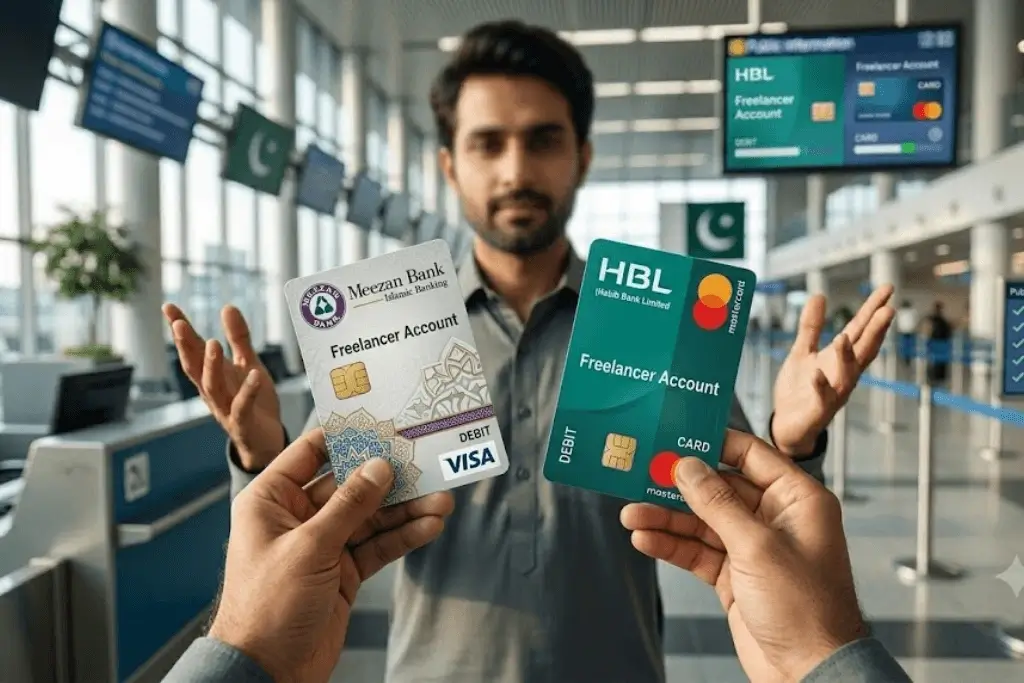
As Pakistan’s freelance economy continues to grow, banks have started offering specialized freelancer account Pakistan options designed for remote workers, IT professionals, content creators, and online service providers. These accounts are tailored to receive international payments, manage foreign remittances, and simplify day-to-day banking for freelancers.
The good news is that most major banks now allow applicants to open freelancer accounts entirely online through their mobile apps, eliminating the need for repeated branch visits.
Documents Required to Open a Freelancer Account
Before starting the application process, freelancers should prepare a few documents that help verify both identity and profession. Most banks require:
- Valid CNIC or Smart National Identity Card (front and back)
- Proof of freelancing activity
- Income evidence for the last three months
- Supporting project documents or client correspondence
Proof of profession can include Upwork earnings screenshots, Fiverr income records, project agreements, contracts, offer letters, client emails, or freelancing certificates.
Banks may ask for different supporting documents depending on the type of account being opened.
Why an NTN Can Be Useful for Freelancers
Although not always mandatory during account opening, obtaining a National Tax Number (NTN) through the Federal Board of Revenue (FBR) is strongly recommended.
An NTN helps establish your freelance activity as a recognized business source of income. It can also be useful when filing taxes, documenting earnings, and claiming eligible business-related expenses.
Many experienced freelancers choose to complete their NTN registration early to avoid future compliance issues.
SBP Rules Allow Freelancers to Retain Foreign Currency
One of the biggest advantages available to freelancers today comes through State Bank of Pakistan (SBP) regulations. Freelancers can open an Exporter’s Special Foreign Currency Account (ESFCA) alongside their regular PKR account.
Under current rules, freelancers can retain:
- Up to $5,000 per month, or
- 50% of total export earnings,
whichever amount is higher.
This facility allows freelancers to keep a portion of their earnings in foreign currency instead of converting everything into Pakistani rupees immediately.
What Can ESFCA Funds Be Used For?
Money held inside an ESFCA can be used for various international business expenses. For example, freelancers can pay for:
- Software subscriptions
- Web hosting services
- Cloud storage platforms
- International digital tools
- Business-related online services
However, domestic spending and cash withdrawals within Pakistan generally require conversion of those funds into PKR.
Popular Freelancer Accounts Offered by Pakistani Banks
Several banks have launched products specifically targeting freelancers and digital professionals.
Meezan Bank offers a Digital Freelancer Account that can be opened through the Meezan Digital App.
HBL provides an HBL Digital Freelancer Account with online onboarding and facilities designed for international earners.
Bank Alfalah also offers a Freelancer Digital Savings Account that supports both local banking needs and foreign remittance management.
Many of these accounts include features such as digital account opening, debit cards, internet banking access, and low or zero minimum balance requirements.
Opening an Account Has Become Much Easier
A few years ago, freelancers often struggled to explain their income sources when opening bank accounts. Today, the process is significantly simpler.
With a valid CNIC, proof of freelancing income, and supporting documentation from platforms such as Upwork or Fiverr, many applicants can complete the onboarding process directly from their smartphones.
Combined with SBP’s foreign currency retention policies and specialized banking products from institutions like Meezan Bank, HBL, and Bank Alfalah, freelancers now have far more flexibility in managing both local and international earnings.