Sana Khalid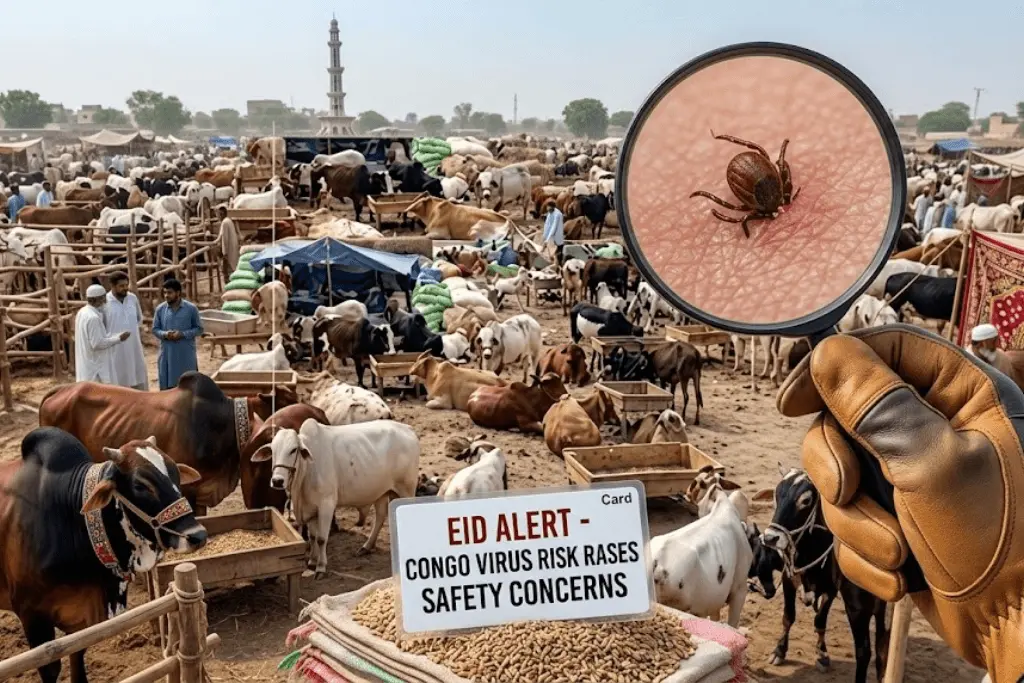
A countrywide alert has been sounded by health experts across the country for Crimean-Congo hemorrhagic fever (CCHF), also called Congo virus, under Congo fever Pakistan 2026 ahead of Eid-ul-Azha. The advisory comes as the movement of livestock and handling of animals peak during the Eid season, increasing the chances of transmission.
CCHF is a serious tick-borne viral disease, which can be fatal in complicated cases. Transmission is by tick bites or contact with the blood and tissues of infected animals. The authorities have focused on awareness and preventive care to reduce exposure during sacrifice activities and cattle markets.
Safety Measures For The Handling And Marketing Of Livestock For Eid
Pakistan authorities issue comprehensive safety guidelines for cattle markets and sacrificial practices. Visitors should use insect repellent before entering crowded animal markets and wear light coloured clothing to make ticks easy to spot.
Farmers are advised to spray animals with anti-tick sprays and to avoid touching the ticks with bare hands. During the sacrifice procedures, protective clothing (gloves, masks and covered clothing) is strongly recommended.
The most important measures of prevention consist of correct disposal of animal excreta, timely cleaning of surfaces and frequent washing of hands with soap. These steps will immensely lessen the risk of infection during the Eid preparations.
Symptoms And Warning Signs Of The Congo Virus
Symptoms can appear from 1 to 14 days after exposure, medical experts say. Initial symptoms include high fever, intense headache, muscle pain, red eyes and fatigue.
Advanced cases may develop vomiting, jaundice, agitation and internal or external bleeding from gums or nose. These warning signs need immediate medical attention.
Health authorities recommend an immediate consultation at healthcare establishments if symptoms develop after attending livestock markets or contact with animals. Early detection is still crucial for successful treatment and prevention of complications.