Farhan Qureshi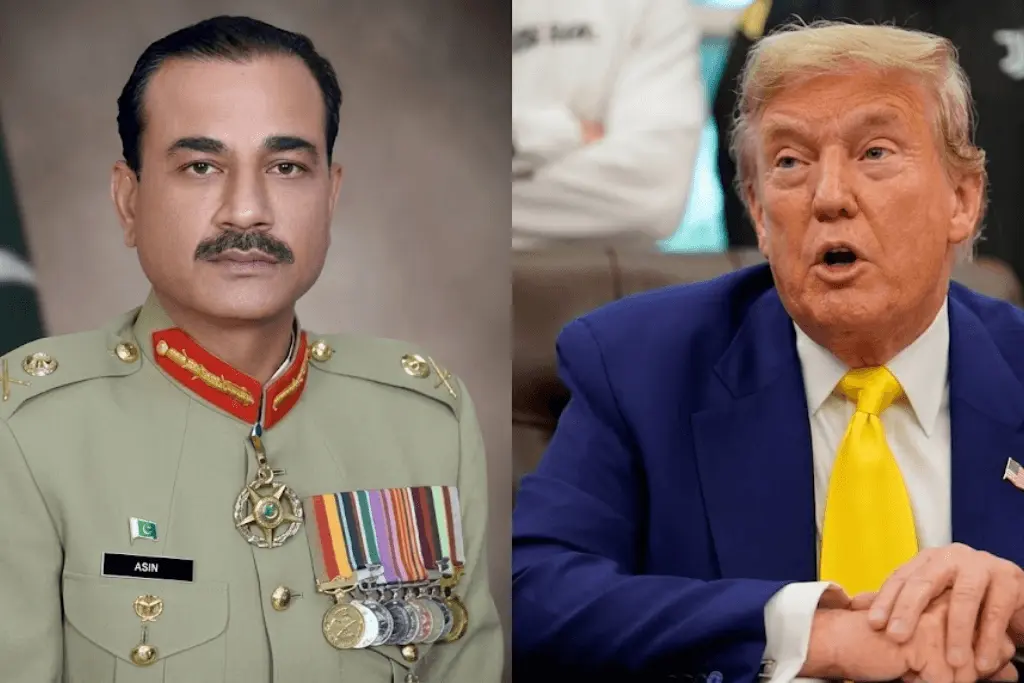
Pakistan’s Army Chief Field Marshal Asim Munir spoke with U.S. President Donald Trump last week before heading to Tehran, in what was reported as an Asim Munir Trump call. The conversation reported puts Pakistan at the centre of renewed diplomatic efforts to ease tensions between Washington and Tehran.
Asim Munir And Donald Trump Talk Iran Before Visit
Pakistani sources said that the call to Munir by Trump came before the visit of the Pakistan army chief to Tehran. The US asked Pakistan for help convincing Iran to come back to the negotiating table, one source said.
The White House did not immediately comment on the reported conversation, and details of the discussion were limited. However, the account underscores the diplomatic importance of Pakistan’s relations with Iran and its capacity to speak across regional and international divides.
Pakistan Places Tehran Visit In Context Of Stability In The Region
Interior Minister Mohsin Naqvi and Munir arrived in Tehran on Monday. Pakistan’s military said the visit was part of efforts to promote regional peace and stability.
The visit provides an opportunity for Islamabad to emphasise dialogue over escalation. Pakistan shares a long border with Iran, and it has important economic links with Iran; as such, instability in the region is a direct threat to Pakistan’s security and economic interests.
Pakistan Aims To Bridge A Big US-Iran Trust Gap
A Pakistani source said Munir is expected to focus on reducing a significant trust deficit between Washington and Tehran during the Tehran talks.
The challenge is immense, with the two sides still divided on sanctions, security arrangements, military actions and Iran’s regional relationships. Economic and military pressure has been increased. Diplomatic communication has become more difficult.
Earlier Mediation Efforts In Pakistan Still Relevant
Pakistan’s latest diplomatic outreach comes after earlier efforts to mediate between the U.S. and Iran. Those efforts helped produce an interim peace agreement reached in June before fighting resumed and undercut the deal.
The experience shows both the potential and the limits of third-party diplomacy. Regional mediators can help facilitate communication, but lasting agreements are the product of decisions by the primary parties.
US Pressure On Iran Ups The Ante For Pakistan
Trump has warned that there will be economic consequences for countries that give Iran support or economic lifelines. The warning adds another layer of complexity for Pakistan, which maintains trade relations with Tehran.
Pakistan and Iran have been trying to increase bilateral trade, but economic cross-border exchanges remain crucial for communities and businesses. So any broader sanctions campaign could pose problems for Pakistan’s economic interests.
Pakistan-Iran Relations Assign A Strategic Role To Islamabad
Pakistan and Iran have a long border, strong cultural connections and substantial economic interests. These relations make Tehran an important neighbour for Islamabad.
For Pakistan, border stability is especially important as instability in Iran can have implications for trade, movement, security and communities in adjoining Pakistani areas.
Also Including Saudi Arabia And Regional Security
The Tehran talks are not confined to the current Washington-Tehran scuffle. A Pakistani government source said that Munir was also expected to discuss recent attacks on Saudi Arabia by Iran-aligned Houthi fighters.
Saudi Arabia is a major partner of Pakistan and, hence, Gulf security is an important component of Islamabad’s regional policy.
Pakistan’s Strategic Alliances Enhance Diplomatic Engagement
Pakistan’s ties with Saudi Arabia and Turkey have taken on greater importance in its overall foreign and security policy. Iran engagement adds yet another layer to that regional network.
Maintaining communication across different strategic groupings can afford Pakistan more diplomatic space. It can promote dialogue among competing security-concerned states while pursuing national interests.
Stability In Region Vital To Pakistan’s Economic Interests
For energy markets and international shipping, the bigger picture is the escalation between Washington and Tehran. This implies that a diplomatic easing of tensions would have economic benefits for parties outside the immediate context.
The significance given to Pakistan’s regional relationships is illustrated in the reported Trump-Munir conversation. Pakistani sources say direct contact from the U.S. president indicates acknowledgement of Islamabad’s leverage with Tehran.
It is also a reflection of Pakistan’s ability to keep channels open with countries that have sharply differing positions toward each other. Such diplomatic flexibility can offer mediation opportunities when traditional channels become difficult.
Pakistan’s Peace-Centric Diplomacy Highlighted In Tehran Trip
Reportedly, Asim Munir had a conversation with Donald Trump before leaving for Tehran, and the subsequent diplomatic engagement is indicative of Pakistan’s growing presence in regional peace efforts.
The reported U.S. request for Pakistan to nudge Iran back to the negotiating table puts a special responsibility on the diplomatic channels of Islamabad. Pakistan’s existing relationships with Iran, Saudi Arabia, Turkey and the United States offer a broad platform for engagement.