Farhan Qureshi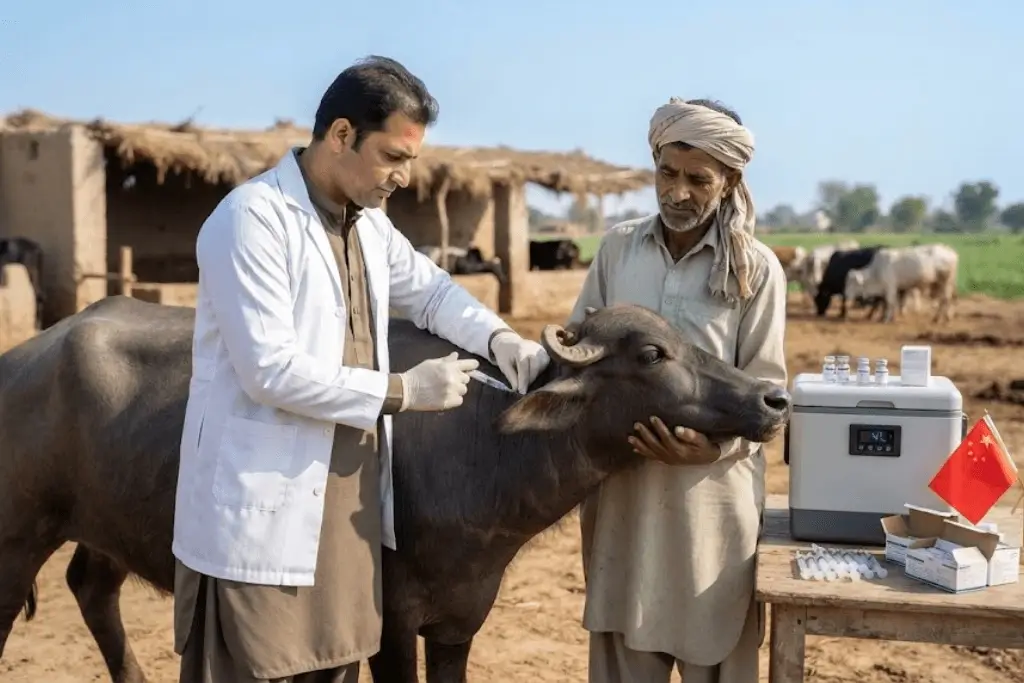
China’s supply of 300,000 doses of veterinary vaccine is boosting Pakistan’s China Pakistan vaccine assistance efforts to control lumpy skin disease and Brucella melitensis. The vaccines are meant to support disease prevention through appropriate cold-chain management, monitoring and coordination with provincial livestock authorities.
The assistance is critical because livestock is still Pakistan’s largest agricultural subsector. The Pakistan Economic Survey 2025-26 noted that the livestock sector was responsible for 62.45% of agricultural value addition and 14.64% of GDP, with a growth rate of 3.75% during the year.
Disease Prevention Safeguards Farmers And Food Security
Diseases in livestock can lower milk yields, affect fertility and lead to reproductive losses, putting pressure on farming households. Brucellosis also poses public health risks, as it is transmissible to humans, so effective animal-health measures are important for rural livelihoods and food security as well.
Pakistan’s large livestock population further heightens the importance of prevention, and the 2024 Agricultural Census reported 55.86 million cattle, 47.74 million buffaloes, 44.59 million sheep and 95.83 million goats, demonstrating the scale of assets exposed to animal disease.
Pakistan Needs Stronger Surveillance, Vet Services
The vaccine assistance can lay the basis for a broader disease-control system that includes surveillance, diagnostic testing, animal identification and sound vaccination records. As part of broader One Health initiatives, Pakistan is also developing a new and improved electronic Animal Disease Reporting and Surveillance System.
It is still relevant for farmers to have access to veterinary services based in villages, especially if they might face shortages of vaccines and limited professional assistance, and better disease surveillance and targeted vaccination could help authorities identify hotspots and respond more quickly to outbreaks.
Working With China Can Build Long-Term Capacity
The assistance is part of broader Pakistan-China agricultural cooperation, including animal health cooperation under CPEC Phase II, and in May 2026, the two countries also signed a Letter of Exchange on animal vaccines.
Working together in the future can help with modern diagnostics, laboratory development, disease modelling, technology transfer and ultimately greater domestic vaccine-production capacity. Better animal-health infrastructure would help Pakistan protect farmers, improve livestock productivity and strengthen food security.
Better vaccination, traceability, testing and veterinary certification could also help Pakistan’s ambitions to export livestock and meat by improving compliance with international animal-health requirements and opening opportunities in overseas markets.