Sana Khalid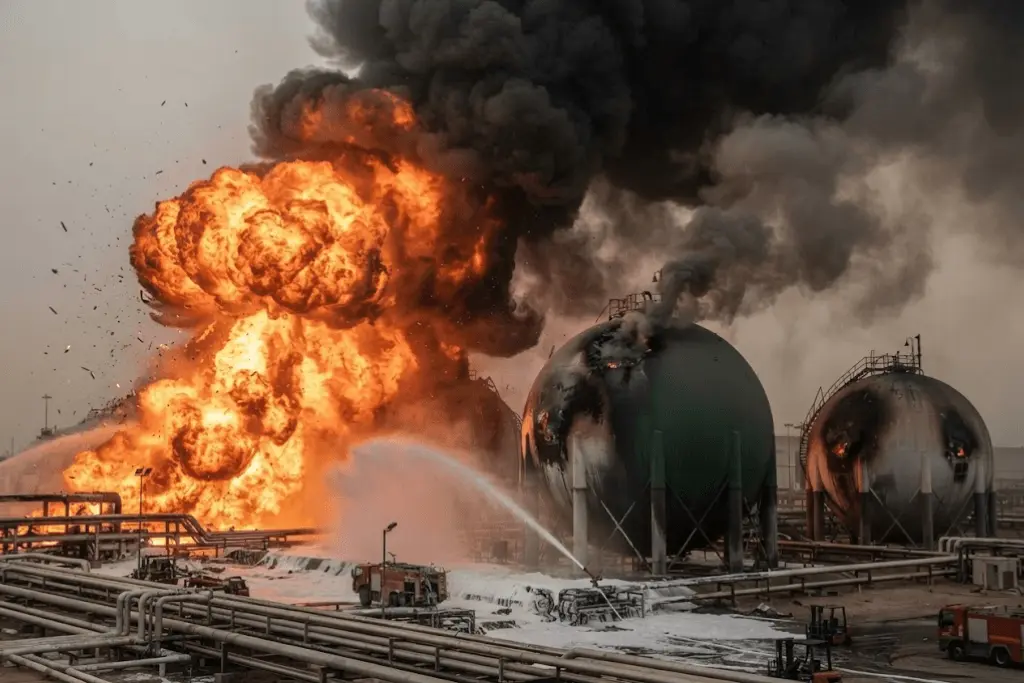
As fighting in Yemen escalates, Yemen’s Houthi movement has claimed responsibility for the Houthi Saudi Aramco attack, involving missile and drone attacks on Saudi Aramco facilities in Riyadh and the Khurais area. The group said the attacks, which caused major fires, were in retaliation for a series of Saudi-led coalition strikes on Houthi targets in Yemen. The allegations have not been independently confirmed, and the latest flare-up has raised concerns about Saudi security and the regional energy infrastructure.
Houthis Claim Attack On Aramco With Missiles, Drones
The Houthi movement said it fired ballistic missiles and drones targeting Saudi Aramco facilities in Riyadh and the Khurais area. The group said the attacks caused widespread fires and said they were in retribution for what it said were 50 Saudi-led air and missile strikes on Yemen over 12 hours.
Separate reports said smoke and fire were seen near an Aramco facility in Riyadh after the claimed attack. The full extent of any damage caused by the strikes was not known at the time of reporting because Saudi authorities and Aramco had not officially confirmed it.
Fighting In Yemen Rages Around Strategic Areas
The latest Aramco claims came after a major announcement by Yemen’s internationally recognised government about military operations against Houthi-held areas. President Rashad al-Alimi urged forces to carry out planned operations to retake territory, and reported that Houthi advances around Taiz have apparently added to pressure on key supply routes.
The escalation is significant because Yemen is strategically located near the Bab el-Mandeb Strait and important shipping routes in the Red Sea. Armed groups can gain greater influence over movement at sea by controlling coastal territory, while fighting can raise the dangers for commercial vessels and regional supply chains.
Pakistan Reiterates Support For Saudi Arabia’s Security
Pakistan has repeatedly expressed support for Saudi Arabia’s sovereignty, territorial integrity and security, as Houthi attacks have increased. Islamabad denounced the September strikes on civilian and economic targets in Abha, Khamis Mushait, Jazan and Najran as a threat to regional peace and efforts for a lasting settlement in Yemen.
Pakistan’s Foreign Office has condemned attacks on Saudi infrastructure, including reported drone attacks on the East-West Pipeline in the Riyadh and Madinah regions. Islamabad said attacks on civilian infrastructure violated international law and created wider risks for regional stability.
Saudi Arabia’s Energy Infrastructure Under Rising Threat From Security Risks
Saudi Aramco’s facilities remain central to the kingdom’s economy and the broader global energy market. Any confirmed damage to major oil infrastructure could impact production and exports, investor confidence and energy market expectations, especially when regional supply routes are already under threat of disruption.
The latest claims thus add to existing concerns about the vulnerability of energy infrastructure in times of regional conflict. Previous attacks on Saudi oil facilities have shown how quickly security incidents can attract international economic attention, even when the physical damage is localised.
Pakistan Fears Red Sea Tension Could Threaten Trade
The renewed fighting also puts more focus on the Red Sea and Bab el-Mandeb, which are important commercial shipping routes. Attacks or threats against vessels can raise insurance costs, force diversions and lengthen journeys between Asia, the Middle East and Europe.
Pakistan has already highlighted the importance of freedom of navigation and safe commercial shipping in the region. The Foreign Office said Houthi threats against Saudi Arabia and Red Sea shipping can undermine regional security and global trade.
Pakistan And Saudi Arabia Continue Strategic Coordination
The latest development comes at a time when Pakistan and Saudi Arabia are moving forward to strengthen security and diplomatic coordination. Pakistan has reiterated its support for Saudi Arabia in earlier Houthi assaults and kept engaged with regional partners on measures to contain the wider conflict.
The consultative meeting of the foreign ministers of Pakistan, Saudi Arabia, Türkiye and Egypt in September also highlighted the significance of ongoing coordination on regional developments. The four countries condemned attacks against Saudi Arabia and called for dialogue and diplomacy as the way forward toward sustainable regional stability.
Makkah Security Stresses The Importance Of Regional Stability
There are also concerns about Saudi Arabia’s holy sites with the recent activity of the Houthis. Pakistan condemned in the strongest words an alleged Houthi drone attack on Makkah in September and expressed solidarity with Saudi Arabia in its efforts to defend the Two Holy Mosques and protect pilgrims, residents and citizens.
Islamabad also condemned an attack on a civilian power facility in Madinah that supplies electricity to the Prophet’s mosque. Pakistan condemned the incident as a serious threat to regional peace and reiterated its support for Saudi Arabia’s sovereignty and security.
Pakistan Backs Dialogue As Tensions Rise In Yemen
Pakistan’s policy on the Yemen crisis remains rooted in security concerns and diplomatic engagement. Islamabad has supported Saudi Arabia, but also urged the need to avoid further escalation and build conditions for a lasting political settlement.
“Pakistan will continue its efforts for durable peace and stability in the region,” the Foreign Office said. This approach allows Islamabad to bolster the security of a key strategic partner, while keeping the focus on diplomatic mechanisms that can address the root causes of the conflict.
Thus, the latest Aramco claims are a complex regional challenge. Even if individual claims are not substantiated, the possibility of attacks on energy assets can increase uncertainty in regional markets and reinforce concerns about the durability of Gulf supply networks.
The oil markets have already been reacting to wider Middle East instability. Brent crude was holding above $100 a barrel despite rising regional exports and a planned release of emergency reserves by G7 countries, reflecting the continuing sensitivity of energy prices to developments around the region, Reuters reported.