Farhan Qureshi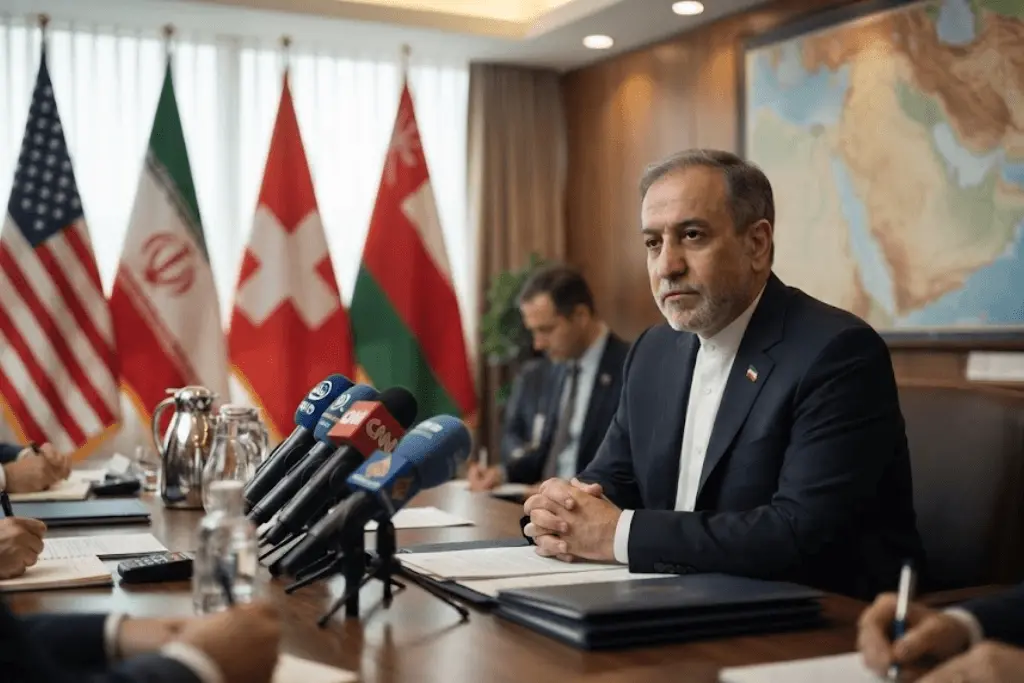
Iran’s foreign minister Abbas Araghchi calls for a diplomatic solution to the Iran US conflict with the United States, arguing that military action or more sanctions cannot solve the crisis. Negotiations based on justice, fairness and diplomatic dignity are the path to ending the conflict, Araghchi told foreign ambassadors and diplomatic representatives in Tehran.
Araghchi: Military Solution Is Not The Answer, Talks Needed
Araghchi said there was no military solution to the conflict and that more sanctions would not guarantee a long-term settlement. His remarks came as uncertainty continued to surround talks between Tehran and Washington, which have different positions on the issues that need to be resolved before a wider deal can be struck.
The focus on negotiations is in line with Islamabad’s long-standing position that disputes in the region should be resolved through dialogue. Pakistan’s Foreign Office has reiterated sustained diplomacy as the feasible way forward to resolve the Iran-US confrontation and restore stability in the region.
Pakistan Helps Broker Diplomatic Engagement Between Iran And US
Pakistan has been engaged in diplomatic efforts to defuse tensions between Iran and the United States in recent years. Islamabad has engaged with both sides and supported the framework developed through the Islamabad Memorandum of Understanding, while urging the sides to resume technical talks.
Pakistan’s Foreign Office said on October 1 that Deputy Prime Minister and Foreign Minister Senator Mohammad Ishaq Dar discussed regional developments with Araghchi. The Pakistani position highlighted the direct consequences of the conflict for developing countries and global supply chains, emphasising the necessity of uninterrupted energy supplies and the safe and rapid passage of ships.
Islamabad Memorandum Offers Framework For Peace Efforts
An important part of Pakistan’s diplomatic engagement has been the Islamabad Memorandum of Understanding. The Foreign Office of Pakistan said the agreement was a basic framework for resolving the dispute, and called on Iran and the United States to continue talks on the basis of its provisions.
Earlier this year, Pakistan and Qatar issued a joint statement outlining a path for more technical talks and arrangements meant to avoid incidents and miscommunication involving commercial vessels. The framework also stressed continued diplomatic engagement and safe passage through the Strait of Hormuz.
Strait Of Hormuz Still At Heart Of Regional Tensions
The Strait of Hormuz remains one of the most important issues in the dispute due to its role in international energy and maritime trade. Iran has argued the waterway will not reopen fully until issues with the current understanding with Washington are addressed, while the US has kept up pressure with its own demands.
Iranian officials have conditioned the reopening of the waterway on the end of interference with Iranian maritime traffic and the lifting of sanctions. Tehran has also stressed that maritime security is the immediate priority, not resumption of a separate nuclear talks process.
Pakistan Says Regional Peace Depends On Safe Maritime Trade
Pakistan’s diplomacy is not limited to the immediate Iran-US dispute but extends to the overall security environment in the Gulf, Red Sea and Strait of Hormuz. Islamabad has repeatedly called for restraint and emphasised the need for freedom of navigation and protection of commercial shipping.
The Pakistani foreign office has said the consequences of confrontation are much wider than the countries directly involved, especially through pressure on energy supplies, international trade and food security. These concerns have prompted Pakistan to remain engaged with regional governments and international partners.
Pakistan’s stance also reflects its broader interest in making sure the conflict does not spread to other theatres. Previous diplomatic statements have underscored that the escalation between Iran and the United States should not spill over to the rest of the region, while continued dialogue remains key to Islamabad’s approach.
Iran, US Still Disagree On Way To Settlement
But although diplomatic contacts are continuing, the two remain far apart on major issues. Iran has emphasised sanctions, access to the sea and implementation of existing understandings, while US positions have included demands on more comprehensive security and nuclear issues. Recent reporting has said indirect talks have stalled over the sequence and substance of possible de-escalation steps.
Iran has kept the door open to diplomacy but has also said any deal must be on terms that its leadership considers fair and balanced. The military preparations and the warnings from both sides, at the same time, suggest that the possibility of renewed confrontation is part of the larger regional security environment.
Pakistan Prefers Dialogue Despite Continued Regional Tensions
Pakistan’s outreach has involved high-level political and diplomatic contacts with Iran and other regional states. Prime Minister Muhammad Shehbaz Sharif has engaged with the Iranian leadership, and Ishaq Dar has interacted with Araghchi and other foreign ministers as part of broader efforts to support de-escalation.
Pakistan has also been involved in diplomatic facilitation with Qatar and other nations. Earlier, a Pakistan-Qatar framework had laid down a road map for technical discussions and stressed the need to develop conditions for safe commercial navigation through Hormuz.
Diplomatic Resolution Still Vital To Pakistan’s Interests
Araghchi’s fresh push for talks has once more brought diplomacy back into the limelight in the Iran-US conflict debate. Although the positions of Tehran and Washington are still far apart, the fact that the negotiations continue to be mentioned means that the diplomatic doors have not been totally closed.
A peaceful settlement would have implications for Pakistan beyond the immediate political dispute. Lower tensions could lead to safer maritime trade, more predictable energy supplies and greater economic stability across the region. Therefore, Islamabad’s ongoing commitment to dialogue connects regional diplomacy with tangible national interests.