Adeel Hassan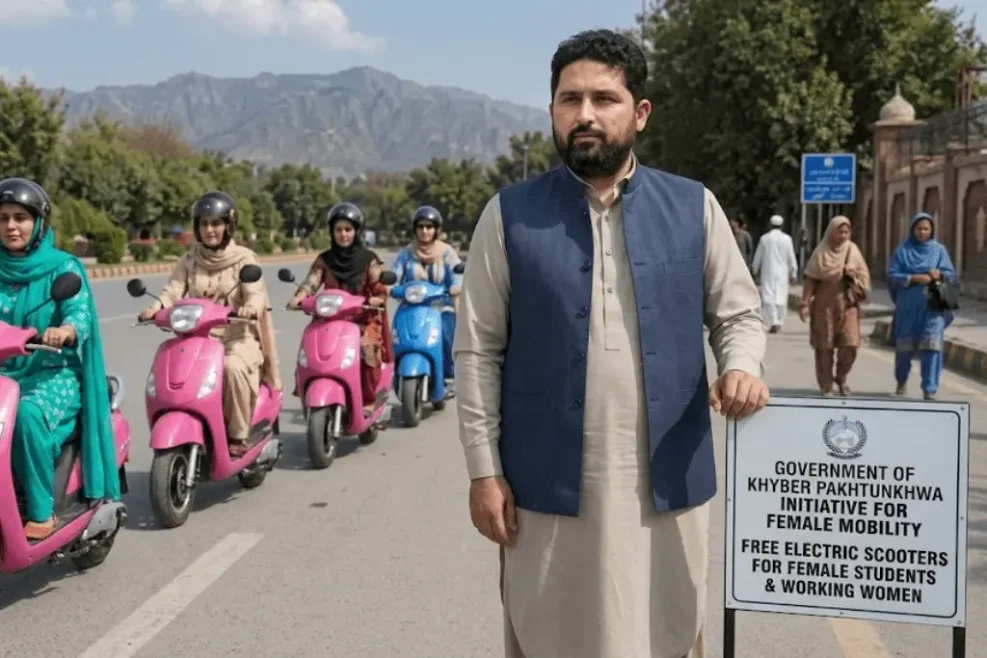
The first phase of the KP free electric scooters program will be for eligible female students and working women in Peshawar. The beneficiaries would be selected by a computerised balloting process, which would offer a structured approach to the distribution of scooters to the eligible applicants.
The provincial government’s decision makes women’s mobility part of a larger development agenda. The initiative also has an eco-friendly component with the use of electric scooters, facilitating and making it safer for women to reach educational institutions and workplaces, removing barriers that prevent them from doing so.
Peshawar To Roll Out First Phase Of Scooter Scheme
Peshawar has been selected for the first phase of the free electric scooter program, making the provincial capital the first to benefit from the program. The program will take into consideration female students and working women who qualify for the eligibility criteria through computerised balloting.
The first-phase approach would give authorities a chance to assess the program before it’s rolled out province-wide. The experience of implementation in Peshawar can help officials improve registration, eligibility verification, distribution, maintenance and grievance handling arrangements before the next phase.
The scheme is expected to tackle a real challenge for many women: dependable access to transport. The program can offer personal mobility options that can make daily journeys to universities, colleges and workplaces more manageable and support increased participation in education and economic activity.
Free Scooters May Widen Access To Education
Transportation can be a major factor in whether students are able to attend educational institutions regularly. Providing more access to education for young women, without the burden of transportation, can lead to higher rates of learning and skills development in their families and communities. Over time, better access can help create a more capable and economically active workforce in Khyber Pakhtunkhwa.
Mobility Of Working Women Could Increase
Access to employment is another core objective, with the program also targeting working women. Transportation is particularly important for workers who live far away from where their jobs are, or where they do not have good public transportation available to get them there.
Personal electric scooters could provide eligible women with increased flexibility for everyday travel. This can improve the convenience of commuting, while possibly reducing the reliance on transport arrangements that may be costly, unreliable or difficult to access.
Mobility improvements can also help women to achieve economic independence. If it were easier to get to workplaces, more women could stay connected to employment, pursue professional opportunities and take an active role in the provincial economy.
Women Empowerment Remains At The Core Of The Initiative
The scheme is a move for empowering women and making them independent, said Chief Minister Sohail Afridi. The emphasis on practical mobility support underlines the notion that empowerment can be enhanced through initiatives to eliminate everyday barriers to education and employment.
Women’s development is closely linked to access to economic opportunities. If transport restrictions are eased, women can enjoy greater liberty to access studies, employment and career development opportunities in accordance with their own situations.
So the initiative could be important for more than just the availability of electric scooters. It is an investment in mobility as a facilitator of participation, confidence and independence, and puts women at the heart of a provincial development metric.
Computerised Balloting For Selection Of Beneficiaries
Computerised balloting will be used for eligible applicants during the selection process. At the beginning, when the number of qualified applicants is larger than the number of scooters available, a transparent allocation mechanism is needed by authorities to manage demand.
A computerised system can also provide a structured basis for the selection of beneficiaries. Clear eligibility criteria and appropriate verification will remain important to ensure that the program reaches the intended groups of female students and working women.
The establishment of separate oversight bodies is another important piece of the implementation plan. It has directed to notify a steering committee, technical working group and grievance redressal committee to devise a separate mechanism for policy oversight, technical issues and grievances.
Kp Issues Immediate Implementation Measures
The chief minister has asked the authorities to take immediate steps to start giving scooters under the first phase. The project has also received full funding, suggesting a focus on moving the program from approval to implementation.
All major public mobility projects need funding. The steering committee can give overall direction, the technical working group can address operational requirements, and the grievance redressal committee can provide a mechanism for resolving beneficiary concerns.
A Grievance System Can Increase Public Confidence
A dedicated grievance redressal committee can go a long way in ensuring that there is an avenue available to the applicants and beneficiaries to raise concerns. Formal complaint mechanisms are useful in public schemes where eligibility and balloting can lead to questions being raised about applications, documentation and distribution.
A user-friendly grievance system can also help authorities identify practical problems in implementation. A defined institutional process could lead to a more efficient handling of issues such as registration, eligibility verification, scooter delivery, or technical support. A clear implementation framework can help build public trust in the scheme and help the provincial government improve it with experience gained from the first phase.
Electric Scooters Can Be Good For The Planet
There is also an environmental aspect to the initiative, as electric scooters don’t run on traditional petrol engines when they are in motion. The province’s government has promoted the scheme as one that can help reduce air pollution while supporting women’s mobility.
As cities grow and traffic levels increase, cleaner forms of urban transport can take on increasing importance. Peshawar, the first location of the program, offers a chance to connect women’s mobility with wider discussions around sustainable transportation.
The environmental aspect adds a further dimension to the possible advantages of the scheme. With the rise of electric mobility, public policy can both improve access to transport and promote cleaner travel in cities. The provision of free vehicles combined with greater mobility could thus also bring economic benefits to households, supporting participation in education and work.
Scheme May Spread Beyond Peshawar
The free electric scooter program will be expanded to other districts of Khyber Pakhtunkhwa in the subsequent phases. The wider rollout could bring a significant increase in the number of women enjoying enhanced personal mobility.
The program could also be expanded to other settings with different transport conditions for women. Implementation at the district level may have to be modified depending upon road network, distances, educational institutions and employment patterns.
A phased approach could allow authorities to beef up the program before wider distribution. Effective monitoring of the first phase can help guide future systems of eligibility, technical arrangements and support services across the province.
Women’s Economic Participation Can Be Given A Boost
Improved mobility directly impacts economic participation since transportation influences how easily workers can reach jobs, training centres and business opportunities. For women, constraints on mobility can at times be particularly important in determining the kinds of jobs they take.
The KP initiative is designed to overcome one practical obstacle through personal transportation. Increased mobility may enhance women’s ability to consider a wider range of workplaces and maintain employment with greater independence.
Long-term impact will depend on effective implementation and continued access to safe roads, charging facilities and technical support. Programs in the provinces for electric mobility can help to raise awareness among the public and to create a greater acceptance of cleaner transport technologies. Providing students and workers with electric scooters on a practical basis can show how such vehicles can be integrated into everyday city transport.
The emphasis on women brings a social development dimension to the mobility transition. The KP scheme is not about electric transport as an environmental measure. Instead, it connects cleaner mobility with education, employment and economic participation. The extent to which the intended benefits reach the female students and working women will depend on eligibility rules, balloting, distribution, maintenance and grievance handling.
Once scooters roll out, technical support will also be important. Setting up a technical working group provides an institutional mechanism to address such issues. Ongoing monitoring may help authorities to identify gaps and make adjustments to the program as it moves into additional districts.
KP Initiative Reflects Hands-On Approach To Empowerment
The free electric scooter program at its heart is a practical form of support at the core of empowerment for women in Khyber Pakhtunkhwa. Rather than making sweeping policy promises, the initiative aims to tackle a day-to-day challenge that can have an immediate impact on access to education and employment.
The first phase in Peshawar will be a pilot of the program and an opportunity to develop an effective distribution framework. Computerised balloting, dedicated oversight bodies and a grievance redressal mechanism can support a more systematic implementation process.
The initiative may evolve into a larger provincial mobility program for women with planned expansion into other districts. Its mix of transport access, environmental concerns and economic empowerment provides Pakistan with another example of how public policy can overcome practical barriers to women’s participation in education and employment.
Free Scooter Scheme Opens Up More Opportunities For Women
Khyber Pakhtunkhwa’s decision to provide free electric scooters to working women and female students is a major step toward enhancing women’s mobility. Designed to improve access to educational institutions and workplaces for eligible beneficiaries and to promote cleaner modes of transport, the first phase of the project is in Peshawar,
The program also reflects a broader emphasis on women’s independence and economic participation. Reducing transport barriers could help women access opportunities that might be constrained by transport costs or limited transport options.
The planned expansion to other districts will increase the programme’s coverage and improve the long-term developmental impact. The KP electric scooter initiative, with adequate funding, transparent selection, reliable technical support and responsive oversight, can be a meaningful mobility and empowerment measure for women across the province.