Farhan Qureshi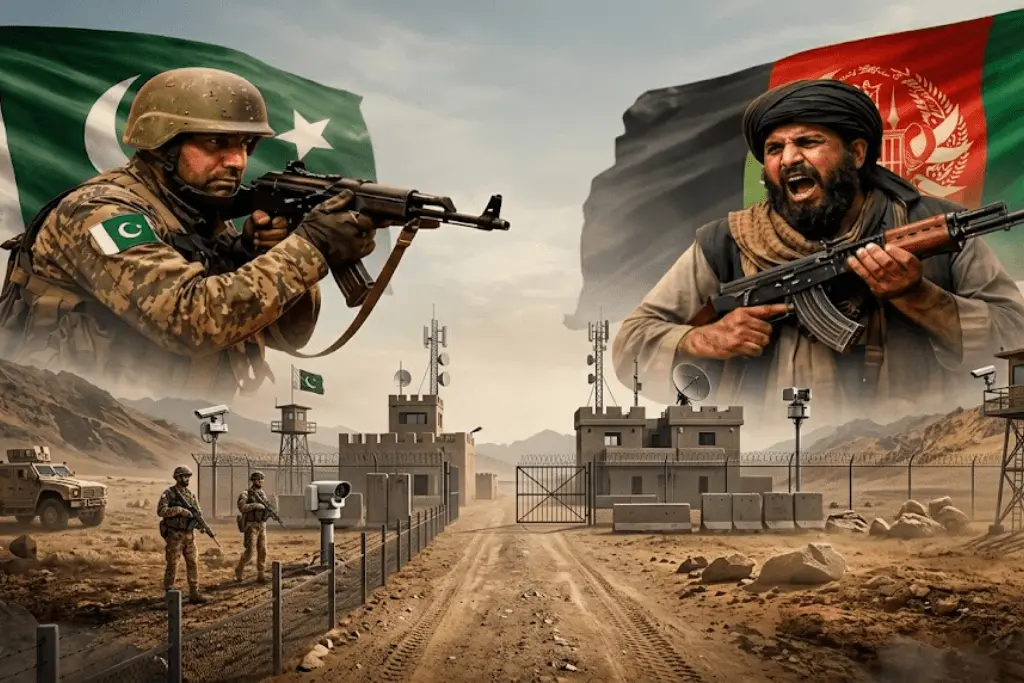
The Pakistan-Afghanistan border remains one of the most difficult security environments in South Asia, making Pakistan Afghanistan border security a major concern amid militant activity, disputed territorial questions, difficult terrain and recurrent tensions between security forces. Pakistan is under particular pressure as attacks emanating from or linked to the border region can directly affect civilian populations, security personnel, trade routes and communities in frontier provinces.
The frontier runs through rugged and mountainous country and is extremely difficult to monitor effectively. Decades of conflict in Afghanistan have also left the wider border region susceptible to weapons trafficking, militant movement, smuggling and irregular cross-border activity. This is the reason why Pakistan has made tighter border management and counterterrorism the core of its national security policy.
Pakistan Border Management Complicated By Durand Line Dispute
The Durand Line is still a major political and security issue between Pakistan and Afghanistan. The frontier, established in 1893, has been a long-running dispute for successive Afghan governments and adds another dimension to border management and bilateral relations.
Pakistan considers the Durand Line as the internationally recognised border and has spent heavily on fencing, surveillance and controlled crossing points. However, Afghanistan’s historical objections have resulted in repeated disputes, including those between border personnel and over construction and security measures.
TTP Remains A Key To Pakistan’s Security Concerns
The Afghanistan-Pakistan border remains a serious security concern because of the Tehrik-e-Taliban Pakistan. The Afghan Taliban administration denies the group used sites inside Afghanistan to plan or support attacks on Pakistani targets, but Pakistan has repeatedly accused it of such activities.
The issue has become particularly sensitive, as militant attacks can threaten security in all of Pakistan’s western provinces and create pressure for stronger military responses. Pakistan’s security establishment has therefore maintained pressure for effective action against groups accused of launching cross-border attacks.
Porous Borders Bring Bigger Security Headaches
The topography of the Pakistan-Afghanistan border presents considerable practical difficulties for security forces. Remote valleys and long-standing local movement patterns in
Illegal movement can include weapons, drug trafficking, militants and other contraband. Smuggling networks take advantage of remote areas and informal routes, presenting challenges not only for Pakistan but also for Afghanistan and its neighbouring countries.
Pak Beefs Up Border To Check Militancy
Pakistan’s border management strategy has increasingly concentrated on controlling movement across the frontier. Fencing and controlled crossing points are designed to limit uncontrolled movement, but also to create clearer conduits for legitimate travellers, traders and residents.
Such measures are of strategic importance, as uncontrolled border movement can provide routes for militant groups to move personnel and supplies. The organisation has conducted attacks in Afghanistan and is a threat to countries across the broader region.
The existence of ISIS-K illustrates the fact that the security challenge cannot be boiled down to one militant organisation or one bilateral dispute. Instability, weak governance and difficult terrain can be exploited by multiple armed groups, making coordinated counterterrorism efforts all the more critical.
Frontier Direct Risks From Clashes
Sometimes rising tensions over militant activity have led to direct clashes between Pakistani and Afghan forces. Pakistan has responded to security concerns with military strikes against targets inside Afghanistan, and there have also been retaliatory exchanges between Afghan border forces.
Such confrontations have risks that extend beyond the immediate battlefield. Military incidents can easily shake border communities, disrupt trade routes and sour diplomatic relations.
Pakistan’s Counter-Terrorism Dilemma
The environment in which Pakistan’s counter-terrorism policy is made is difficult, with security threats crossing an international border. The country has to protect citizens and security personnel, and manage the wider diplomatic fallout of operations related to Afghanistan.
Military capabilities continue to constitute an important element of counter-terrorism, especially in areas where militant organisations’ armed networks operate in difficult terrain. Intelligence operations, surveillance and targeted security measures can support conventional deployments.
Security Operations Are Vital, But Diplomacy Is Too
Pakistan has maintained its diplomatic efforts in parallel with its security measures. Dialogue allows the airing of concerns about militant activity, border incidents and the responsibilities of authorities operating on both sides of the frontier.
Regional states have also played roles in facilitating communication between Pakistan and Afghanistan. China, Qatar and Turkey have held diplomatic talks and initiatives to ease tensions and promote further stability in the region.
China Can Support Regional Security Cooperation
China has a keen interest in stability along the Pakistan-Afghanistan frontier, as insecurity in the region can affect trade, investment and large connectivity projects. Therefore, Beijing has supported the dialogue between Pakistan and Afghanistan and urged greater cooperation on counter-terrorism.
Pakistan’s close relationship with China provides another diplomatic channel for regional security concerns. Confidence-building can be supported through trilateral discussions and the creation of mechanisms to monitor commitments related to militant activity.
Border Security Affects Pakistan’s Trade And Connectivity
The Pakistan-Afghanistan border is not just a security frontier. Monitoring a long frontier takes people, technology, intelligence and sustained logistical support. The security environment is also rapidly changing as militant groups adapt their tactics and seek alternative routes. Counter-terrorism agencies must therefore remain agile and improve intelligence capabilities in parallel with physical border controls.
Regional Cooperation Can Reduce Threats Crossing Borders
No one country alone can tackle transnational militancy, trafficking and organised crime without co-operation from its neighbours. The security relationship between Pakistan and Afghanistan is therefore significant for the wider region.
Counter-terrorism capabilities could be improved through information sharing, coordinated border management and collaboration against financing and weapons networks. Regional organisations and diplomatic partners can also provide useful channels for dialogue in situations where relations between two states become strained.
Pakistan Seeks Security Without Extended Escalation
The primary challenge for Pakistan is to defend its territory without allowing the escalation of repeated border incidents into a larger and sustained conflict. While the security situation demands strong responses to militant threats, diplomacy is required to manage relations with Afghanistan.
A combination of border controls, intelligence cooperation, counter-terrorism operations and diplomacy provides a more sustainable framework than depending on any one instrument. The Durand Line dispute, TTP activity, militant networks, smuggling and difficult geography are among several intertwined factors driving the Pakistan-Afghanistan border security challenge. These issues have been a constant strain on bilateral relations and have put a lot of pressure on Pakistan’s security institutions.
Long-term progress will require sustained cooperation, reliable security commitments and effective regional diplomacy. Pakistan can continue to engage with Afghanistan, China and other regional partners to create opportunities for dialogue while its security forces remain vigilant against militant threats. A safer and better-managed frontier will enhance internal security in Pakistan and facilitate greater trade, connectivity and stability across the wider region.