Adeel Hassan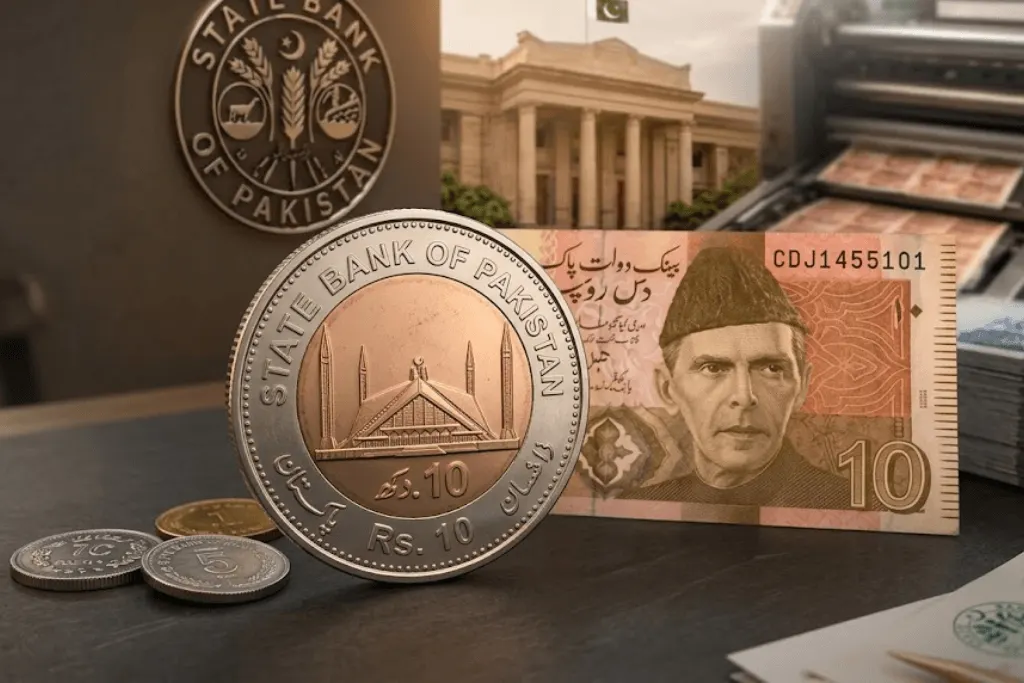
The State Bank of Pakistan (SBP) has proposed introducing the Pakistan Rs. 10 coin to replace the existing Rs. 10 banknote as part of an overall redesign of the country’s currency series. This proposal is a long-term approach to managing the cost and durability of low-denomination currency in circulation. The Rs 10 notes are very common in day-to-day dealings, and durability is a crucial element for the country’s cash-based economy.
Soaring Banknote Costs Spark Pakistan Currency Proposal
The proposal was driven largely by the fact that producing low-denomination paper currency is getting more expensive. Banknotes need special paper, printing, security features and regular replacement when notes are damaged or unfit for circulation. Low-value notes are particularly heavily handled as they are used frequently for small purchases, transport payments and day-to-day transactions.
One of the key arguments for the proposed change is the large difference in expected lifespan between paper money and coins. An average Rs. 10 banknote is said to have a circulation life of only six to nine months before it becomes worn out and damaged and needs to be replaced. Conversely, a Rs. 10 coin could be in circulation for 20-30 years, thereby extending the life of the denomination substantially.
Longer-Lasting Coins Could Save Pakistan Billions
If the expected durability benefits materialise, the proposed currency change can result in substantial long-term savings for Pakistan. Some reports quote estimates that replacing Rs. 10 notes with coins could save Rs. 40 billion to Rs. 50 billion in a period of 10 years.
This does not mean that all Rs. 10 banknotes will be immediately withdrawn due to the proposed change. There will be a gradual introduction of a new series of currency, and the existing notes will continue to circulate during the transition period. This could help ease the disruption for retailers, consumers, banks and other organisations who deal regularly in cash.
New Currency Series May Modernise Pakistan’s Cash System
The Rs. 10 proposal is part of a larger redesign of Pakistan’s national currency series. Central banks can use currency redesigns to update security features, increase durability and modernise the visual identity of banknotes and coins. The proposed series thus does not merely represent a change of a single denomination for Pakistan, but may also have implications for the broader management of physical currency.
Low-denomination currency goes through a lot of physical wear as it passes through many hands in the economy. With normal transactions, paper notes can get folded, torn, stained or otherwise damaged, leading to increased need for replacement.
Currency Switch Could Spell Changes For Businesses
Any significant shift in physical currency has to be calibrated across the country’s commercial infrastructure. The higher volume of Rs. 10 coins could mean a lot of space for retail businesses, banks, transport operators, vending systems and cash-handling companies.
Depending on the distribution and handling of the new denomination, cash registers and automated equipment may also have to be adjusted. Thus, the durability of commonly used denominations is of practical importance not only to consumers but also to the institutions responsible for currency management. A longer-lasting Rs. 10 coin could do away with the need for constant replacement of heavily circulated notes and at the same time keep a familiar denomination in circulation.
The State Bank’s proposal suggests a concern with the long-term economics of money production, not just the appearance of new notes and coins. A coin lasts 20 to 30 years, but a paper note lasts only a few months. That’s a strong case for changing the denomination, as far as durability goes. The potential savings over a decade make the economic case even stronger, especially if the costs of production and replacement continue to rise.
Phased Rollout Can Provide For A Smoother Transition
The phased introduction would mean the Rs. 10 coin would be introduced with existing banknotes, not a sudden change. Consumers would continue to be able to use existing Rs. 10 notes during the transition period as banks and businesses will gradually start handling the new coins. The authorities would also be able to monitor circulation patterns, public acceptance and operational requirements with such a process.
The method would weigh the potential monetary advantages of coins against the realities of altering a generally used denomination.
Pakistan Strikes A Balance Between Savings And The Needs Of Modern Currency
The Rs. 10 coin is a step in that direction, but it additionally points out the bigger challenge faced by central banks in making physical currency affordable and durable. From Pakistan’s point of view, Rs. 40 billion to Rs. 50 billion over ten years could be a big saving, and the longer life of coins could ease ongoing production pressure. The proposal is also part of a larger effort to retool the country’s currency series and boost the efficiency of its cash infrastructure.
The eventual introduction of a Rs. 10 coin might be a practical move toward a more durable and cost-efficient monetary system, as the State Bank of Pakistan proceeds with the currency redesign process.