Farhan Qureshi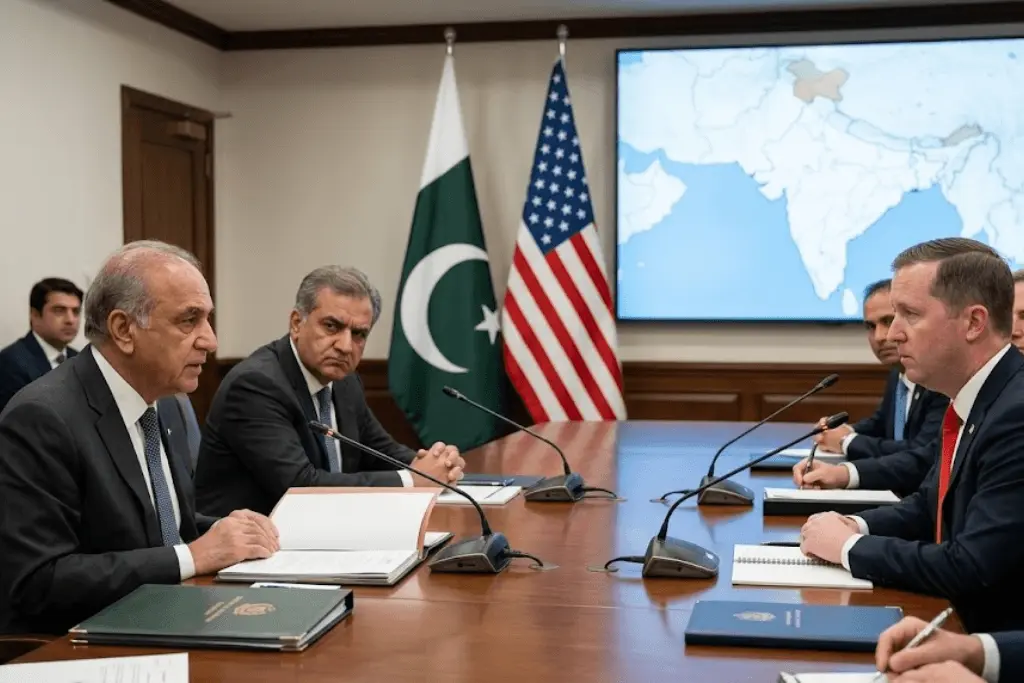
Pakistan has lodged a strong diplomatic protest with the United States over the remarks of the US Ambassador to India, Sergio Gor, on Jammu and Kashmir, raising concerns over US-Pakistan relations. Islamabad’s reaction is in line with its long-held stance that the Kashmir dispute is an outstanding international issue and has to be resolved through established diplomatic and legal channels.
The episode has added a new point of tension to Pakistan-U.S. relations at a time when both countries have important stakes in regional security, counter-terrorism, economic engagement and wider South Asian stability. Pakistan’s official reaction also highlights Islamabad’s determination to protect its expressed diplomatic stance through appropriate mediums.
Pakistan Protests Formal Comments On Kashmir
Islamabad summoned the US Chargé d’Affaires in Islamabad after Ambassador Sergio Gor said Jammu and Kashmir was an “important part of India” during a visit to Srinagar. The Pakistani Foreign Ministry denied the description and lodged a formal diplomatic protest.
Islamabad termed the remarks as “irresponsible and incorrect” and said the statement did not reflect Pakistan’s position on the disputed status of Jammu and Kashmir. The diplomatic response came through official channels, not through an escalation of rhetoric.
Pakistan Links Kashmir To International Law
Pakistan’s objection is closely linked with its stance on United Nations Security Council resolutions on Jammu and Kashmir. Islamabad says the final status of the region can only be decided by both sides.
The Pakistani foreign ministry said the description by the U.S. ambassador is inconsistent with the international framework Pakistan believes applies to the dispute. The reply therefore stresses legal and diplomatic principles rather than considering the statement as an isolated political remark.
Srinagar Sergio Gor’s Visit Adds Diplomatic Twist
The remarks by Sergio Gor during his visit to Srinagar were of added significance as visits by senior foreign diplomats to Jammu and Kashmir at the highest level usually draw close attention in both Islamabad and New Delhi.
Gor also said during the visit that Washington would review its travel advisories for the region. The visit, the remarks about Kashmir and potential changes in travel guidance combined to create a heightened focus diplomatically.
Pakistan Turns To Diplomacy For Clarity From Washington
The formal protest gives Pakistan a channel to seek clarity, while keeping the flow of its larger relationship with Washington. Differences in diplomatic relations do not preclude cooperation on other matters of mutual interest.
Pakistan and the United States have long-standing relations in the areas of security, trade, investment, education and people-to-people contacts. Regional stability is also a domain where communication between Islamabad and Washington can accrue broader strategic dividends.
Kashmir Remains A Central Issue In Pakistan’s Foreign Policy
Kashmir continues to be a core component of Pakistan’s foreign policy and national diplomatic narrative. Islamabad again stressed the need for a peaceful settlement and international engagement on the issue.
Pakistan’s diplomatic approach has often been based on international law, United Nations mechanisms and dialogue. The latest protest followed that pattern by challenging language Islamabad believes changes the recognised character of the dispute.
US-Pakistan Relations: A Diplomatic Balancing Act
The latest dispute is a test of diplomatic finesse for both Pakistan and the United States. Washington has key strategic interests in South Asia, and Pakistan is still a key regional state and plays a considerable role in security and geopolitical affairs.
A Kashmir dispute need not impede cooperation on other priorities. During the period of heightened attention, physical barricades and security measures were modified around the diplomatic premises.
Such developments can magnify perceptions of diplomatic tension, even if they do not necessarily represent a formal change in bilateral relations. Security-wise, the conditions under which diplomatic missions operate are sensitive, especially in times of high political tension.
Pakistan’s Diplomatic Posture Remains Peace-Oriented
Pakistan has responded to the remarks in a formal diplomatic protest, not a confrontational one. Pakistan’s interest in a rules-based diplomatic order is highlighted by the emphasis on international law and UN resolutions. All outstanding regional disputes, Islamabad has always maintained, should be resolved through political means and not through unilateral determinations.
Such an approach could bolster Pakistan’s overall diplomatic messaging by rooting its position in existing international frameworks. It also offers Pakistani officials an opportunity to express concerns to foreign governments, while leaving room for future dialogue.
The Kashmir Dispute And Regional Stability
That of Kashmir is linked to the stability of South Asia as a whole. Since Pakistan and India are important regional powers, whatever happens to their relations could affect neighbouring countries’ security calculations.
Thus, sustained diplomatic focus on peaceful engagement serves the wider regional interest. For Pakistan, the goal of preventing tensions from threatening regional stability remains tied to sustained international attention to the dispute.
The recent controversy also underscores the need for careful language by international representatives working in sensitive regions. Statements on disputed territories can have consequences far beyond their immediate context.
Ultimately, the dispute points out the necessity of diplomatic consistency in dealing with one of South Asia’s most enduring conflicts. By formally protesting, Pakistan has shown its readiness to defend its position through state institutions, while at the same time engaging with major international partners and making sure that an important diplomatic goal such as regional peace is maintained.