Farhan Qureshi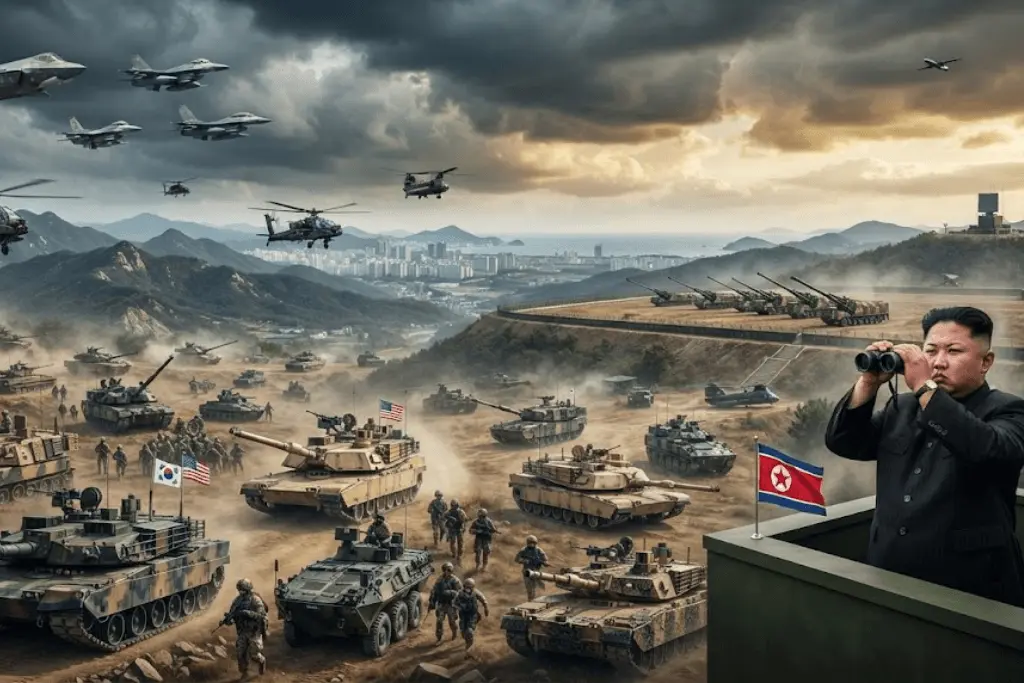
The Korean Peninsula is entering another round of security tensions, with the United States and South Korea preparing for their annual US South Korea military drills under the Ulchi Freedom Shield exercises. North Korea condemned the planned drills as a serious threat to regional stability and warned of a stronger military response.
The exercises, which are scheduled to take place Aug. 17 to 27, will include emerging battlefield challenges, such as drones, GPS disruptions and cyberattacks. Washington and Seoul say the drills are defensive in nature while Pyongyang continues to portray the activities as preparation for a possible invasion.
Us-South Korea Exercises To Start Amid Escalating Tensions
The Ulchi Freedom Shield exercise remains among the biggest annual military exercises conducted by the U.S. and South Korea. The 2026 drills are scheduled to take place from August 17 to August 27 and will bring together allied forces for training on contemporary security challenges.
The exercises are designed to bolster the two allies’ capacity to respond to rapidly evolving forms of warfare. Drone exercises, cyberattacks and GPS jamming underline the rising significance of technologies that may interfere with military communications, navigation and battlefield coordination.
North Korea Threatens Tougher Military Action
North Korea has strongly condemned the upcoming exercises and warned that the drills could push international security to the brink of nuclear confrontation. State media statements have blamed the United States for adopting military policies that could reduce the threshold for employing nuclear weapons.
Pyongyang has also threatened a “new level of a deterrent” in response. Such language suggests that the North Korean authorities are framing the exercises as more than just an annual military event, but part of a broader strategic confrontation.
Ballistic Missile Test Fuels Security Fears
Just before the scheduled exercises, North Korea fired a ballistic missile from the Wonsan area. The missile, which was reportedly fired toward the Sea of Japan, was the second such launch by the country in less than a week.
The timing has prompted more questions around the upcoming US-South Korea drills. Pyongyang has frequently used missile tests before or during allied exercises to show military strength and reassert political warnings.
Why Ulchi Freedom Shield Became More Complicated
More and more, today’s military exercises go beyond traditional battlefield operations. The 2026 exercises will likely feature drones, cyberattacks and GPS disruptions, all of which play a larger role in modern conflict.
Drones provide surveillance, targeting and battlefield intelligence, and cyberattacks may interfere with communications and critical infrastructure without conventional military strikes. GPS jamming could also disrupt military coordination and navigation.
North Korea Ties Drills To Nuclear Security Risks
The most serious criticism of North Korea is regarding the nuclear aspect of regional security. State media have accused Washington of pursuing strategies that could lower the threshold for use of nuclear weapons.
The charge is a reflection of Pyongyang’s larger argument that US military cooperation with South Korea should be matched by an equivalent increase in North Korean deterrence capabilities. This cycle creates a difficult security environment in which the defensive preparations of one side are perceived as offensive threats by the other.
Russia-North Korea Military Cooperation: Another Layer
Current strains are also playing out as North Korea deepens military cooperation with Russia. Pyongyang was also rumoured to have had military experience with Moscow related to the war in Ukraine, adding to strategic considerations for the United States and South Korea.
The relationship has broadened the international context of North Korea’s military posture. Developments involving Pyongyang are no longer seen only in the traditional context of relations between North Korea, South Korea and the United States.
Seoul And Washington Face A Hard Security Balance
The challenge for South Korea is to keep credible defence readiness without escalating unnecessarily. The annual drills remain a centrepiece of the alliance’s military readiness, especially as North Korea continues to build up its missile and other military capabilities.
The drills show continuing security commitments to South Korea from Washington. Maintaining operational coordination can reassure Seoul and enhance the ability of allied forces to respond to a potential crisis.
Korean Peninsula Remains Key Global Security Flashpoint
The latest flare-up only reinforces the Korean Peninsula as one of the world’s most sensitive security environments. The mix of nuclear capability, development of ballistic missiles, military alliances and conflicting interpretations of defensive actions poses serious risks.
The situation also has economic repercussions for the region as a whole. South Korea is a major industrial and technology hub in the world, and Northeast Asia is still important in global manufacturing, shipping and supply chains.
Pakistan’s Regional Outlook: Dialogue And Stability Are Key
Increased tensions between the world’s leading military powers can result in broader economic and security pressures internationally.
Pakistan has traditionally followed an approach to diplomacy based on dialogue, multilateral engagement and peaceful resolution of international disputes. A reduction of tensions on the Korean Peninsula would help create a more stable environment for the world and reduce the risk of simultaneous security crises in different parts of the world.
Diplomatic Channels Could Keep Further Escalation At Bay
The immediate task is to stop the military exercises and missile activity from spilling over into a wider confrontation. Maintaining open lines of communication between the relevant governments in times of increased military activity can reduce the probability of miscalculation.
Global Security Is Preventing A Broader Crisis
The North Korean warning illustrates just how fast military exercises can turn into a broader geopolitical standoff. Tensions have been heightened by planned US-South Korea military exercises, North Korea’s missile activity and Pyongyang’s nuclear rhetoric.