Farhan Qureshi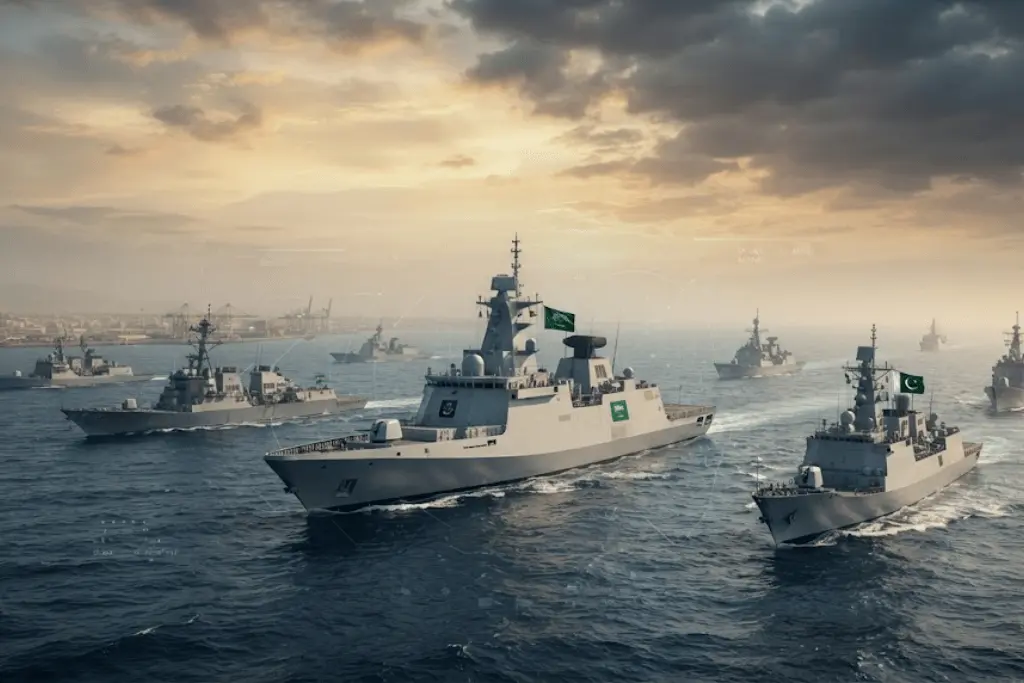
Saudi Arabia has advanced the Saudi-led maritime coalition toward operational capability with the conclusion of key arrangements for its multinational command structure. The announcement about the development came at the coalition’s third planning meeting hosted at the Western Fleet Command in Jeddah.
The meeting was attended by representatives of 39 countries, which is a reflection of the broad international interest in the new maritime security framework. Preparations are underway to embed officers and personnel from participating countries into command, maritime and intelligence operations.
Pakistan Gets A Key Role In Maritime Command
Pakistan has been accorded a prominent place in the coalition’s emerging command structure, with the first deputy commander to be a Pakistani. Saudi Arabia’s Rear Adm. Abdullah bin Salem Al-Shehri has already been appointed as the commander.
The appointment provides Pakistan with a significant institutional role in a multinational maritime security initiative. It is also a symbol of the decades-old defence and strategic partnership between Pakistan and Saudi Arabia.
Coalition Sees Growing International Participation
The membership of the coalition is expanding. Fifteen countries have signed its joint statement so far, with 13 having completed the additional domestic procedures to formally become members.
Other participating countries are following their own national procedures before formally joining. Further applications indicate that the coalition seeks to develop a wide membership, rather than remaining restricted to a small number of regional states.
Red Sea Security Remains A Top Priority
The coalition will focus on maritime security in the Red Sea, the Bab El-Mandeb Strait and the Gulf of Aden. These waters link the world’s great commercial markets in a number of regions and are of vital importance to international commerce.
Such a framework could be particularly important as international shipping faces more complex maritime security threats. “Multinational cooperation may improve the ability to monitor threats and respond to incidents in the coalition’s area of responsibility.
Cooperation On Maritime And Intelligence To Broaden
The new command structure will include personnel from member states in maritime and intelligence operations. The idea is to better coordinate coalition members.
For Pakistan, membership in these structures could provide opportunities for deeper professional and operational cooperation with the regional and international maritime forces. The country’s position in the command structure places its personnel in a broader multinational security architecture.
Saudi Arabia Seeks Long-Term Stability In The Seas
After a meeting in Riyadh with representatives of 43 countries, Saudi Arabia announced the formation of the coalition. The initiative was launched as part of efforts to bolster collective maritime security against growing concerns over commercial shipping and strategic waterways, it said.
The emphasis on sustainability also accounts for the focus on formal command arrangements, headquarters, organisational structures and operational planning. These steps are aimed at moving the coalition from political consensus to operational capabilities.
Operational Framework And Coalition Headquarters Created
As part of its organisational development, the coalition has established a headquarters and adopted an official logo. It also has the planning frameworks in place to start operational activities.
The next step is to achieve operational readiness and perform the assigned missions. This phase will now test the ability of the participating countries to translate organisational agreements into coordinated maritime activity.
Coalition Goals Include Freedom Of Navigation Up Front
One of the main objectives of the coalition is to protect freedom of navigation. The principle is especially pertinent to global trade as large shipping routes carry energy supplies, manufactured goods, foodstuffs and industrial materials between continents.
This makes maritime security a shared international responsibility. Rather than pointing the finger at one state, the framework hopes to align multiple states toward common maritime goals.
Pakistan-Saudi Defence Cooperation Enters Wider Realm
Pakistan’s role in the coalition is another aspect of its defence relationship with Saudi Arabia. Both states have had wide-ranging military cooperation, and the appointment of a Pakistani officer as first deputy commander provides a new institutional platform for collaboration.
Participation in this forum is one aspect of Pakistan’s wider engagement in regional security mechanisms. Pakistan can also play a role in maritime stability through multinational cooperation, while remaining aligned toward defensive, international security initiatives.
Why The Coalition Is Important For Regional Trade
The stability of the seas is directly related to the stability of the economy. Commercial vessels rely on well-travelled and safe routes to move goods between important centres of production and consumption.
Participation in such a framework can also complement Pakistan’s broader interest in regional connectivity and trade. Maritime security improves the flow of goods and fosters a more conducive environment for economic cooperation.
Saudi Officials Underscore Defensive Nature
Saudi officials have emphasised that the coalition is a defensive effort and not directed against any particular country, organisation, or alliance. The stated focus continues to be the protection of maritime navigation and strategic waterways.
It can further contribute to increasing trust and confidence among participating States and international maritime stakeholders. Clear operational principles can reduce uncertainty around the coalition’s responsibilities and encourage more cooperation.
Coalition Approaches Operational Capability
The latest planning meeting is a big step in the development of the Saudi-led maritime coalition. We now have the command arrangements, the headquarters, organisational planning and leadership appointments, so the initiative is moving closer to practical implementation.
The next challenge will be to translate the organisational arrangements of the coalition into effective operational readiness. The success of the coordination will depend on communication, intelligence sharing, training, clarity of responsibilities and sustained cooperation among the participating countries.
Pakistan Can Enhance Its Regional Maritime Role
Pakistan’s involvement puts the country in a good position to contribute to wider efforts to safeguard maritime commerce and regional stability. The first deputy commander role places Pakistan in a significant position within the evolving command structure of the coalition.
Ultimately, the Saudi-led framework reflects growing recognition that maritime security is an issue that requires international coordination. With Pakistan in a senior command position, it is well placed to contribute positively to efforts for the protection of navigation, commercial shipping and regional stability.