Farhan Qureshi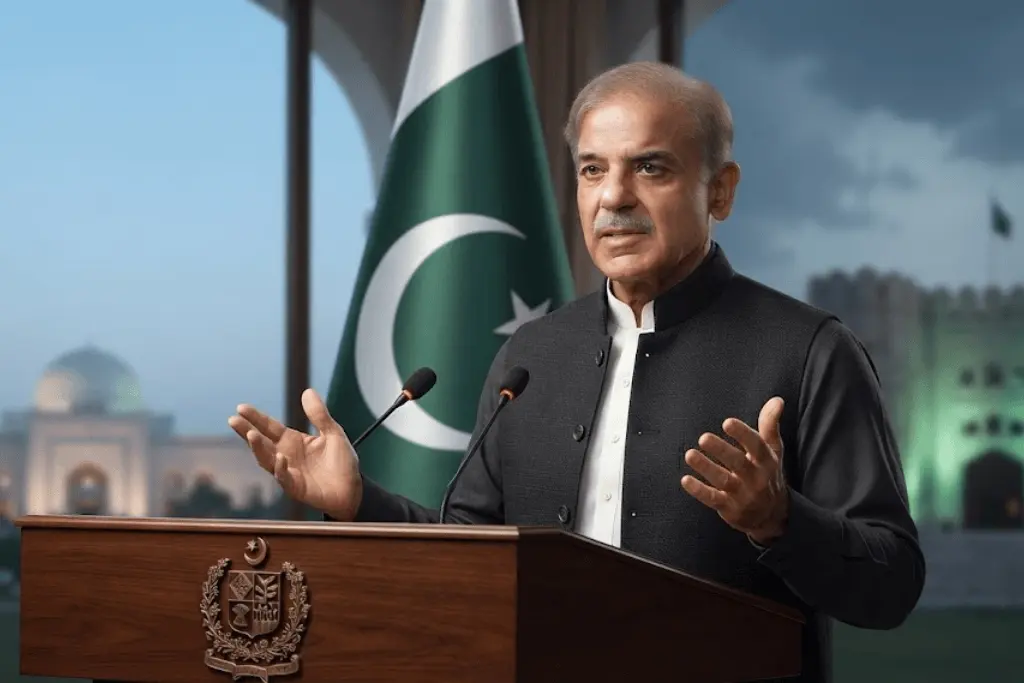
Prime Minister Shehbaz Sharif delivered a message of peace and national resilience, highlighting Pakistan peace policy on Independence Day on August 14, 2026. Pakistan desires peace but will respond firmly if its sovereignty or security is challenged, the Prime Minister said while inaugurating the Yadgar-i-Fatah monument in Islamabad.
The statement equated national security and diplomacy, portraying peace as a strategic goal, not a sign of weakness. The address also highlighted the government’s focus on protecting Pakistan’s territorial integrity, national interests and vital resources.
https://www.instagram.com/p/DcBcr8djHwR
Pakistan’s Peace Message Packs A Strong Deterrent
The prime minister’s position was articulated as a principle that Pakistan’s desire for peace should not be taken as an inability to respond. The message demanded peace with honour and dignity, but with a strong stance on national defence.
It allows Pakistan to present diplomacy and deterrence as mutually reinforcing elements of national policy. Dialogue and peaceful relations are still important objectives, but credible defensive capabilities are presented as safeguards against threats to national interests.
Water Rights Become Major National Security Issue
Water was a major theme in the prime minister’s remarks, with Sharif calling the issue a red line for Pakistan. The statement framed the water resources issue in a broader context of national sovereignty and security.
The emphasis shows how important water resources are to Pakistan’s agriculture, economy and population. Water management and river flows have long been an important component of relations between Pakistan and India. The issue is particularly sensitive at times of political or military tension.
India Continues To Dominate Pakistan’s Security Calculus
During the prime minister’s speech, there was a direct warning about possible threats from India. Sharif said any challenge to Pakistan’s sovereignty, defence, or water rights could lead to an even more powerful response than the military conflict witnessed in May 2025, according to the information provided.
The statement clearly had a deterrent quality, alluding to the earlier confrontation. It demonstrated that Pakistan’s leadership feels it is capable of responding decisively to future military pressure.
Government Also Concentrates On Border Security Of Afghanistan
Pakistan’s security concerns are not just around relations with India, but the western border with Afghanistan is also on the radar. Sharif asked the Afghan authorities to stop their land from being used for terrorist activities against Pakistan.
The call underscores Islamabad’s worries about cross-border militancy and the possible consequences of instability in Afghanistan on Pakistan’s security environment. Recent border clashes have made discussions on border management and counterterrorism cooperation even more pressing.
Pakistan Stresses Importance Of Strategic Alliances For Security
Sharif also said new strategic and defence partnerships had been signed with regional allies. These arrangements have assumed growing importance as Pakistan seeks to enhance regional cooperation in a complex security environment.
The emphasis on partnerships is also reflective of the larger objective of improving Pakistan’s strategic position. Security cooperation, economic connectivity and diplomatic engagement can all help to bolster regional stability.
Yadgar-I-Fatah Ceremony Gaining National Importance
The prime minister was speaking at the inauguration of the Yadgar-i-Fatah monument in Islamabad, which lends a strong commemorative context to the security message. The monument and Independence Day celebrations were a backdrop for celebrating national resilience and defence.
The event linked Pakistan’s historical evolution with prevailing security priorities. National commemorations are often used to reinforce sovereignty, unity and the sacrifices made in defence of the country. As Pakistan seeks to improve its economic performance and attract investment, a stable security environment is especially important. Peaceful relations can be the basis for greater regional connectivity and trade cooperation.
Unity Is Crucial To Pakistan’s National Strategy
And the Fourth of July setting put national unity at the centre of the larger message. Political institutions, civilian authorities, security agencies and the public must work together to meet security challenges.
Institutional continuity can strengthen Pakistan’s capacity for emergency response through a unified national approach. Pakistan’s ability to defend sovereignty is dependent not only on military capacities but also on strong institutions, economic stability and social cohesion.
The Independence Day address thus presented a wide concept of national strength. National security is a broader concept that covers defence readiness, diplomacy, resource protection, and economic development.
Pakistan Calls For Peace, Protection Of National Interests
In his Independence Day message, Prime Minister Shehbaz Sharif painted Pakistan as a nation that seeks peaceful relations but is also ready to defend its sovereignty. The themes of the address were dignity, security and dialogue.
The warnings on sovereignty, defence and water rights reflected the government’s determination to defend what it considered basic national interests. The call for peace at the same time showed that confrontation is not being advocated as the preferred option.