Farhan Qureshi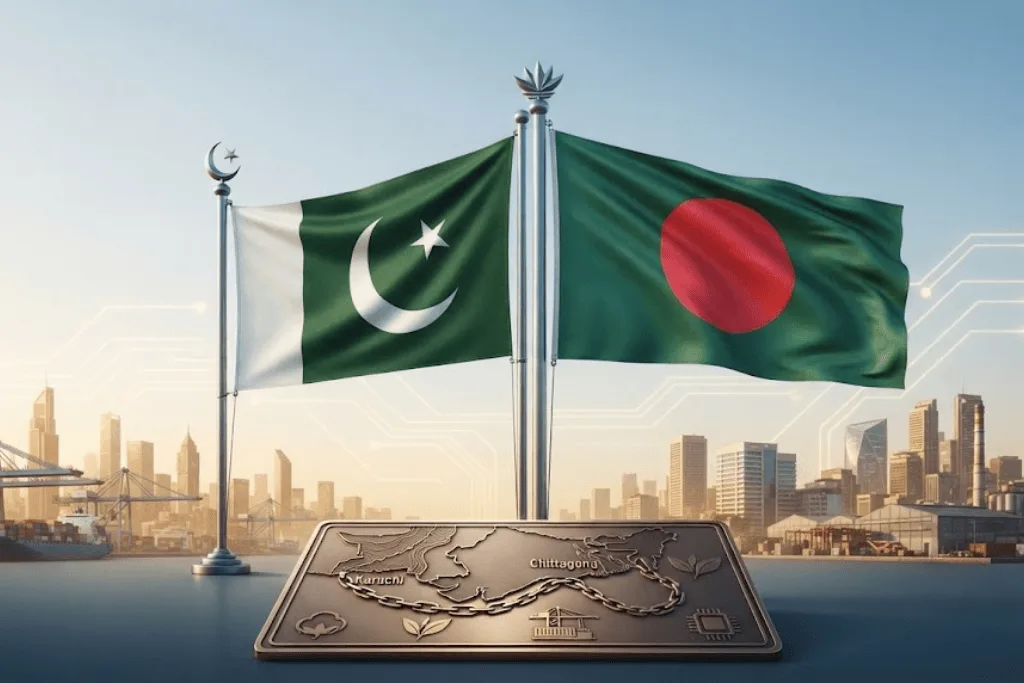
The re-establishment of direct sea links, the resumption of Joint Economic Commission meetings, and new agreements in various sectors reflect growing interest in Pakistan Bangladesh trade and greater economic cooperation. The developments provide opportunities for exporters, manufacturers, investors and logistics providers and help to underpin broader regional economic stability.
Pakistan, Bangladesh Embark On New Chapter Of Economic Cooperation
The recent diplomatic engagement is a sign of a common will to consolidate commercial relations through structured cooperation. Economic priorities have increasingly come to the fore as both governments seek to unlock untapped trade potential across South Asia.
Officials in the trade ministries of both sides have stressed the need to remove logistical bottlenecks, to improve customs coordination and to encourage more private sector participation. The renewed momentum also underscores the importance of economic diplomacy in driving sustainable regional development.
The return of high-level economic dialogue exemplifies how pragmatic commercial interests can create new possibilities even after long periods of limited interaction. Deeper institutional cooperation will serve to bolster long-run business confidence.
Faster, More Efficient Commerce With Direct Maritime Trade
One of the most notable developments has been the re-establishment of direct shipping routes between Karachi and ports of Bangladesh, and the improved maritime link reduces transit time and transportation costs for both exporters and importers. Enhanced maritime cooperation further strengthens Pakistan’s role as a key trading gateway in South Asia and the wider region.
Agriculture Trade Continues To Be A Major Growth Engine
Agriculture is one of the strongest pillars of the bilateral trade between Pakistan and Bangladesh. Rice and raw cotton exports from Pakistan are of considerable support for Bangladesh’s food needs and industrial production.
Pakistan’s farm sector is getting more opportunities to export, and Bangladeshi industries are assured of getting raw materials. It’s a mutually beneficial relationship that creates economic value for all, not direct competition.
Bangladesh is a world-famous textile manufacturing country, and the arrival of large quantities of cotton helps. Rice exports are also a key component for stable food supplies and a means of linking agricultural producers to international markets commercially.
Long-Term Potential Of Collaboration In Textile Industry
Pakistan and Bangladesh’s textile sectors have complementary strengths that present great potential for collaboration. Pakistan continues to be a significant producer of cotton and textile raw materials, while Bangladesh has developed one of the world’s largest garment manufacturing industries.
Better collaboration facilitates better integration of Pakistani raw materials into Bangladeshi manufacturing supply chains. This approach would enhance the competitiveness of the international apparel markets and promote industrial growth in both economies.
Manufacturing And Industrial Cooperation Keep Growing In Jute
Both countries are eager to ramp up bilateral trade and have now focused on the traditional jute sector. Enhanced provisions for duty-free access have led to increased movement of jute products between the two markets.
Industrial cooperation is not only in textiles and agriculture, but also in manufacturing, packaging, processing and value-added production. Companies in these sectors could face lower trade barriers and enjoy stronger commercial links.
Joint Economic Commission Resumes Institutional Cooperation
The ninth meeting of the Pakistan-Bangladesh Joint Economic Commission is a milestone in bilateral relations. The meeting was the first official sitting in about 20 years and highlighted a fresh political will to expand economic collaboration.
The Commission provides the institutional framework for the resolution of trade issues, the identification of investment opportunities and the monitoring of the implementation of agreed initiatives. Ongoing dialogue helps ensure policy continuity while tackling new business issues.
New Agreements Bolster Business Confidence
We recently signed six major memorandums of understanding which provide an important basis for future commercial expansion following recent engagements. The agreements are on promotion of trade, customs facilitation, institutional cooperation and better coordination among the relevant agencies.
Simplifying customs procedures can reduce administrative delays and increase the efficiency of cross-border trade. Institutional cooperation among trade promotion organisations provides opportunities for business delegations, investment forums and commercial exhibitions. These initiatives allow direct interaction between companies operating in both markets.
The agreements signal that both governments are moving from diplomatic discussions to concrete steps on economic initiatives.
Opportunities To Invest In Emerging Sectors
Beyond the traditional trade in goods, the expansion of bilateral cooperation creates opportunities for several industries. Future areas of growth include energy collaboration, banking services, tourism, information technology, logistics and digital commerce. Information technology partnerships can spur digital innovation, cooperative software development and knowledge sharing that foster modern economic growth.
Economic Vision Underpinned By Regional Connectivity
Pakistan’s focus on regional economic integration is in line with wider initiatives to boost trade relations across South Asia. More connectivity with neighbouring countries means more trade options and less dependence on far-away markets.
Improved transport infrastructure, efficient logistics and greater institutional cooperation have put Pakistan in a position to expand its regional economic footprint. The growing trade with Bangladesh is consistent with broader efforts to increase regional trade.
Prospects Of Trade Relations Between Pakistan And Bangladesh
The present momentum is promising for the expansion of bilateral commerce in the years ahead. The implementation of the ongoing direct shipping services, institutional cooperation and the recently signed agreements can build a stronger foundation for sustainable economic growth.
The private sector will still be required to translate policy promises into tangible business results. Enhanced bilateral engagement will benefit exporters, manufacturers, logistics providers and investors alike.