Farhan Qureshi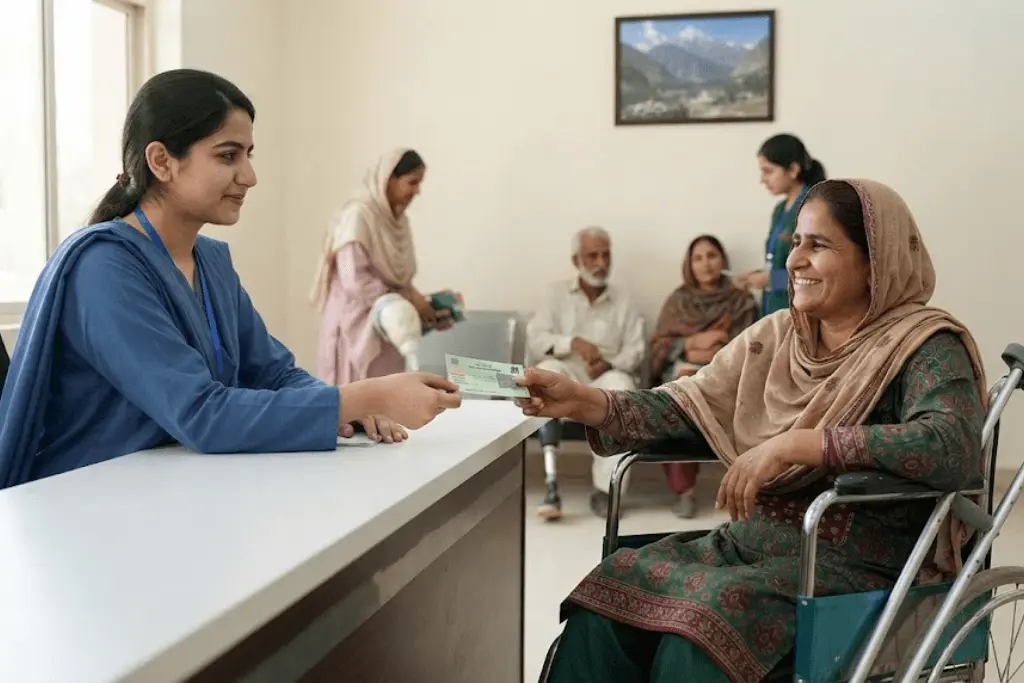
The Khyber Pakhtunkhwa provincial government has announced KP government free OPD slips at hospitals for persons with disabilities and other measures to improve access to public services. Advisor to Chief Minister for Social Welfare, Ushr and Zakat and Women Development Malik Liaqat Ali Khan announced this during a special Open Court held at Shangla.
The initiative is part of broader efforts to address issues experienced by people with disabilities in government departments, hospitals, educational institutions and public transport. The Open Court enabled residents with disabilities to directly register their grievances before the adviser and district administration.
The government has also announced reserved seats in public transport and a 50 per cent concession in fares. They are also taking steps for the rehabilitation of disabled persons, and a rehabilitation centre has been activated at Shangla, and the social welfare department has started work to collect comprehensive data on persons with disabilities in the district.
Kp Provides Free Hospital Opd Slips To Persons With Disability
Malik Liaqat Ali Khan said persons with disabilities would not be required to pay any fees for OPD slips at the hospitals anymore. The measure aims to eliminate one of the routine financial and administrative hurdles that come with accessing healthcare services through government facilities.
The announcement was made at the special Open Court held by the Social Welfare Department in District Shangla. The session was attended by a large number of persons with disabilities from different parts of the district, and they raised concerns relating to healthcare, education, government services, and accessibility.
The adviser asked the concerned officials to ensure that the disabled do not face undue hardships in accessing the government facilities. During the session, some issues were taken up, while other issues were given priority for further action by the concerned departments.
Shangla Residents Point Out Shortcomings In Disability Services
In the Open Court, participants pointed out the difficulties faced by them due to lack of facilities for persons with disabilities in Shangla. Concerns spanned from daily necessities to access to essential services offered by government institutions.
Participants highlighted in particular the lack of educational facilities for children with disabilities. Issues relating to blind and deaf children were also mentioned, as were concerns about educational arrangements for children at Darul Aman.
Availability of social welfare support cards was another key concern. Residents complained about Himmat Cards, Sahara Cards and Ehsaas Cards and stressed the need for easy access to assistance programs for the deserving sections of society.
Government Orders Improved Accessibility At Public Places
Another issue that was taken up in the session was accessibility to government hospitals and offices. Participants observed that lack of facilities and accessibility arrangements continue to present major challenges for persons with disabilities to access government services.
The adviser asked the administration and concerned departments to take practical steps to improve access. The emphasis on government facilities is a reflection of the broader need for public buildings and services to be accessible to people with different mobility, hearing, visual and other accessibility needs.
The measures announced in Shangla combine financial relief with better accessibility, recognising that access is not just a function of affordability but also of appropriate infrastructure and administrative arrangements. So, effective implementation at the district level will continue to be important to convert the announcements into practical improvements.
Half-Fare And Reserved Seats On Public Transport
The KP government has also announced steps to improve access to public transport for people with disabilities. Malik Liaqat has instructed the district administration to hold a special meeting with transporters and make practical arrangements for reserved seats in public transport vehicles.
The proposed arrangement provides a 50 per cent concession on fares to persons with disabilities. By reserving seats and providing reduced fares, two different problems that people face in their daily travel can be solved, especially for those who have to use public transport to go to hospitals, government offices, schools and other places they need to get to.
The requirement to involve transporters at district level indicates that the implementation will involve coordination of government authorities and transport operators. The administration has been asked to ensure that the announced arrangements are practically available in public transport services in the district.
Rehabilitation Centre Turns Lively In Shangla
Another part of the government’s disability welfare measures is the activation of a rehabilitation centre in Shangla. Rehabilitation services can provide valuable support to people who require help to improve mobility, independence and participation in everyday activities.
The centre provides a local service for residents who may find it difficult to access rehabilitation facilities outside the district. Activation is also part of the larger effort to expand basic facilities for persons with disabilities within government-backed welfare structures.
The announcement came amid discussions on healthcare, education and transport, adding a wider social welfare dimension to the Shangla initiative. The emphasis continues to be on enhancing access to essential services, instead of limiting support to a single government department.
Special Drive To Gather Disability Data In Shangla
The Social Welfare Department announced a special drive for the collection of comprehensive data on persons with disabilities in Shangla. The availability of reliable data at the district level can help authorities understand the scale of demand for health care, education, rehabilitation, financial assistance and accessibility services.
Better data can also help identify people who might not be getting all the support they could from government today. Registration and information-gathering activities can be used by departments to better plan welfare programs and target resources more effectively at communities with greater service needs.
So the campaign has ramifications that extend beyond record-keeping. Improved understanding of disability related needs can inform future planning and help government departments to determine whether existing facilities are reaching the intended beneficiaries.
Disability Employment And Education Issues Still Matter
The Open Court participants also demanded effective implementation of the two per cent quota for persons with disabilities in government jobs. Access to employment was identified as an important area to address alongside education and access to public services.
The demand reflects the larger role that employment opportunities play in enabling economic participation and independence. Better implementation of existing provisions could provide eligible persons with disabilities with greater access to public sector employment.
Education was also a major concern, especially for children with disabilities. Moreover, there are no special facilities for blind, deaf and other children. Therefore, there is a need for accessible educational arrangements throughout the districts, including areas like Shangla where special services are still limited.
KP Social Welfare Programs With New Initiatives To Continue
During the visit to Shangla, the team also reviewed other projects of the Social Welfare Department. Officials said Rs60,000 had been distributed among 305 out of 321 widows under the Widow Fund, while ration had been provided to 102 out of 193 deserving people under the Mustaqbil Ration Card program.
These figures give an indication of the welfare support being delivered through existing programs in the district. The initiatives target different vulnerable groups and run alongside the newly announced measures for persons with disabilities.
Hence, the broader welfare approach in Shangla includes financial assistance, food support, rehabilitation and access to public services. Regular evaluation of these programs can help to identify remaining gaps and enable more effective delivery at a local level.
Visit To Shangla, Inauguration Of Child Protection Unit
The adviser also formally inaugurated the Child Protection Unit at the Social Welfare Office in District Shangla, with support from UNICEF, during his visit. Officials briefed him on the unit, the services and measures being taken to strengthen child protection.
The unit’s establishment provides an additional specialised service in the district’s social welfare infrastructure. Child protection services provide an important institutional mechanism for addressing risks to children and coordinating support through relevant authorities.
The announcements made during the visit to Shangla place disability welfare, social assistance and child protection within a broader public-service framework. The decision on free OPD slips, transport measures, rehabilitation support and the data campaign now opens up a number of areas for the district authorities to take forward through coordinated implementation. Visit The Pakistan for more updates.