Adeel Hassan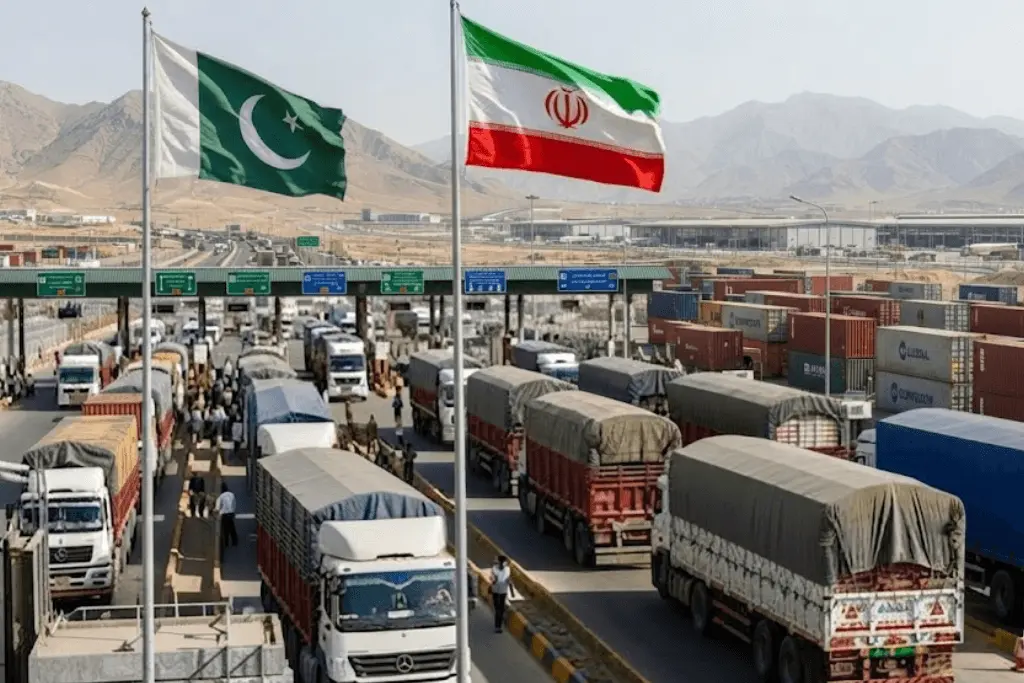
Pakistan, Iran enter new phase of economic engagement. Pakistan and Iran are entering a new phase of economic engagement, with Pakistan Iran trade expected to grow through stronger border connectivity, upgraded crossings, and expanded regional cooperation. Along with both countries are pursuing stronger trade, better transport connectivity and expanded border commerce. Two-way trade currently amounts to about $3 billion a year. But policymakers have an ambitious goal of pushing that to $10 billion through improved infrastructure and closer economic coordination.
Pakistan, Iran Set Ambitious $10 Billion Trade Target
Pakistan and Iran have agreed to work on boosting their annual bilateral trade from around $3 billion to $10 billion in the next few years. Trade officials from both countries have stressed that reaching the goal will require improvements in logistics, customs procedures, transport infrastructure and access to cross-border markets. Continued diplomatic engagement has generated momentum for implementation of these initiatives.
The strategy of expansion aims not only to increase the volume of trade but also to improve the diversity of products exchanged between the two neighbouring countries. Agriculture, energy, manufacturing and consumer goods are expected to remain important areas for cooperation.
Enhanced Border Infrastructure Spurs Growth In Trade Volumes
Upgrades are also underway at the Mirjaveh-Taftan crossing to improve customs operations, reduce waiting times and improve the overall efficiency of transport for exporters and importers.
Improved border facilities lower transportation costs, shorten delivery times and enhance the competitiveness of firms involved in bilateral trade.
Agricultural Trade Becomes A Major Growth Area
Planning is underway for new cold storage facilities in border areas to facilitate the transportation of fresh fruits, vegetables, livestock products and other perishable commodities. Better storage capacity can reduce post-harvest losses and maintain the quality of the product when transported across borders.
In the agricultural sector of Pakistan, there is a huge export potential in the products that are complementary to the Iranian market demand. Imports from Iran could also help to bolster food supply chains and commercial trade.
Better agricultural trade can also bring more private investment in food processing, logistics, warehousing and transportation services in border regions.
The two countries are working to strengthen agricultural cooperation to improve food security, boost regional trade and create sustainable economic opportunities.
New Transport Corridors Boost Regional Connectivity
Pakistan’s strategic location provides it with an important role in regional trade, and new overland transport links are expected to enhance this role. The development of land transport routes also gives companies more flexibility because they are no longer dependent solely on sea transport. A diversified logistics approach will help increase the resilience of the supply chain in the event of regional disruptions.
Also, better connectivity with modern highways and border facilities will encourage more investment in freight services, logistics companies and supporting infrastructure.
These transport initiatives are consistent with Pakistan’s larger goal to build stronger regional trade networks linking South Asia, Central Asia and the Middle East.
Joint Transport Committee Enhances Bilateral Coordination
The other important pillar of Pakistan-Iran economic engagement has been institutional cooperation. The Pakistan-Iran Joint Transport Committee’s reactivation is a structured mechanism to resolve transport and logistics challenges.
The committee will be expected to coordinate improvements in rail cooperation, road transport systems, customs procedures and cross-border cargo movement. Regular dialogue allows both governments to pinpoint the bottlenecks and to devise practical solutions.
Better coordination can help cut down administrative delays, while improving the predictability of trading conditions for exporters and logistics operators.
Border Markets Offer Opportunities For Local Communities
Border markets remain an important element of economic cooperation between Pakistan and Iran, and these commercial centres offer opportunities for local traders and encourage legal cross-border business activities.
There are expanded barter trade arrangements in border areas that help facilitate commerce between nearby communities where traditional trading relationships have existed for generations; such arrangements also help to create local employment and economic development.
Strategic Importance Of Pakistan’s Economy
Expanding trade with Iran helps Pakistan achieve its broader economic goals by opening up new export opportunities and enhancing regional commercial integration.
Improved connectivity opens up access to neighbouring markets for Pakistani businesses and provides incentives for investment in transport, logistics, warehousing and industrial development.
Future Prospects For Pakistan-Iran Economic Cooperation
The rekindling of Pakistan-Iran economic relations is an expression of a shared vision for improved regional connectivity through modern infrastructure and institutional cooperation.
Realisation of the $10 billion bilateral trade target will require sustained investment, efficient customs procedures, improved transport capacity and sustained interaction between public agencies and private companies.
Better border crossings, increased agricultural trade, better logistics corridors and active joint transport coordination provide a solid basis for future growth.
With the implementation, it could create jobs, boost investment and strengthen regional supply chains, thus cementing Pakistan’s place as a key player in regional trade and leading to greater commercial exchanges. Continued cooperation with Iran thus represents an important opportunity to support long-term economic development, while also promoting greater connectivity across the wider region.