Sana Khalid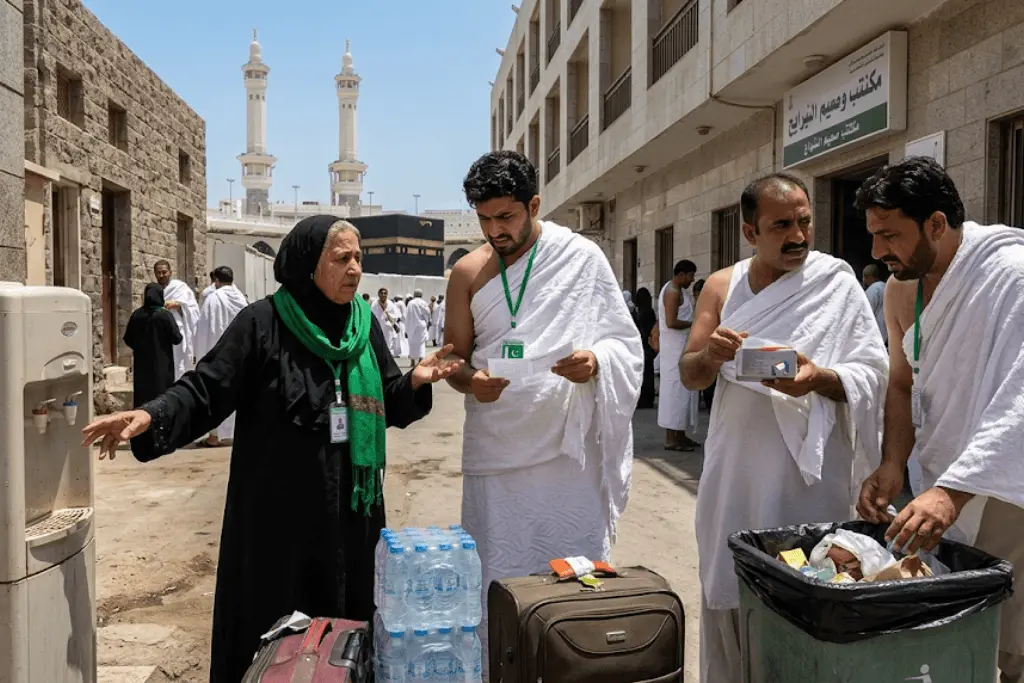
Pakistani pilgrims Hajj 2026 have raised concerns regarding accommodation quality, transportation delays, food standards, and crowd management in parts of Saudi Arabia. The complaints gained widespread attention after videos, images, and personal accounts from Mina and Makkah circulated across Pakistani social media platforms, triggering public discussion about Hajj arrangements and service standards.
Despite the operational difficulties, Pakistani authorities continued coordination efforts with Saudi officials to improve facilities and assist pilgrims during the sacred pilgrimage. Senior government representatives also visited camps and accommodation sites to review conditions directly and address urgent concerns raised by Pakistani citizens.
The situation highlighted the scale and complexity of managing millions of pilgrims gathered from across the world while also increasing pressure on authorities to strengthen future Hajj planning and monitoring systems.
Accommodation Issues Become Major Concern
Accommodation conditions became one of the biggest concerns reported by Pakistani pilgrims during Hajj 2026. Several pilgrims staying in Mina and Makkah described overcrowded rooms, poorly maintained buildings, insufficient sanitation, and limited space inside camps and residential facilities.
Particular concern emerged from reports regarding malfunctioning air-conditioning systems inside tents during extremely hot weather conditions. In locations such as Maktab 120 and 125, pilgrims reported intense heat inside crowded tents after cooling systems reportedly stopped functioning properly. Elderly individuals, women, and pilgrims with health conditions faced additional discomfort due to the severe temperatures.
Many pilgrims expressed frustration because government Hajj packages reportedly cost around PKR 1.2 million, leading travellers to expect stronger accommodation standards and smoother logistical arrangements. Families in Pakistan also shared concerns online after watching viral clips showing overcrowding and poor facility management inside some camps.
The accommodation complaints sparked widespread debate across digital platforms, with many users calling for stricter accountability and improved inspections before future pilgrimage seasons.
Food Quality Complaints Trigger Public Reaction
Food services provided to pilgrims also became a major topic of criticism during Hajj 2026. Several Pakistani pilgrims reported receiving delayed meals, low-quality food, and unsatisfactory catering arrangements in different camps.
Some social media posts claimed meals were poorly prepared or unsuitable for elderly pilgrims travelling long distances under extreme heat. Concerns over hygiene and consistency further intensified criticism against certain catering contractors responsible for serving pilgrims in Mina and the surrounding areas.
Following growing public backlash, authorities reportedly reviewed catering operations and took action against some contractors after complaints increased online. Officials also increased monitoring efforts at food distribution points to reduce delays and improve meal quality for pilgrims.
Although food service challenges occur during many large-scale international gatherings, the viral spread of complaints during Hajj 2026 placed additional pressure on organisers to respond quickly and restore confidence among Pakistani pilgrims.
Transportation Delays And Crowd Management Problems
Transportation management emerged as another major challenge during the pilgrimage period. Pilgrims reported delays in shuttle buses and transport services operating between accommodation camps and holy sites, particularly during peak movement hours.
Some travellers claimed buses arrived late or failed to reach designated pickup points on time, forcing many pilgrims to walk long distances under direct sunlight. The intense Saudi heat created serious physical strain, especially for elderly pilgrims and individuals with existing medical conditions.
Crowd congestion around Mina washrooms, pedestrian routes, and gathering points also contributed to operational difficulties. Pilgrims described long waiting times and overcrowded movement corridors, particularly during major Hajj rituals involving large-scale crowd movement.
Despite these challenges, Pakistani officials continued working alongside Saudi authorities to improve transportation coordination and manage movement across camps and pilgrimage sites. Additional personnel were reportedly deployed to assist elderly pilgrims and support emergency response teams during high-pressure periods.
Private Hajj Scheme Challenges Add Pressure
In addition to concerns regarding on-ground facilities, several travellers under private Hajj schemes reportedly faced visa processing delays and booking disruptions before departure. Technical issues involving travel management systems and documentation procedures created uncertainty for some pilgrims attempting to complete final travel arrangements.
These disruptions increased public criticism because many private pilgrims had paid significant amounts for premium services and expected smoother travel coordination. Families affected by delays used social media platforms to demand clearer communication and faster administrative support.
Authorities acknowledged several operational complications linked to the large-scale pilgrimage process and continued efforts to resolve pending cases during the Hajj season.
Government Officials Respond To Complaints
The growing complaints prompted visible responses from Pakistani government representatives during Hajj operations. Religious Affairs Minister Sardar Muhammad Yousaf faced direct questions from pilgrims regarding accommodation quality, food services, and transport management.
Meanwhile, Interior Minister Mohsin Naqvi conducted visits to Pakistani Hajj camps in Mina to inspect conditions and review service arrangements. Officials reportedly met with pilgrims, listened to complaints, and directed teams to improve support services where possible.
Authorities also maintained complaint registration systems to help pilgrims report accommodation issues, missing facilities, transportation delays, and health concerns. Additional monitoring teams were assigned to inspect camps and coordinate with Saudi authorities during the busiest pilgrimage days.
The government emphasised that Hajj remains one of the world’s largest logistical operations, involving millions of pilgrims from numerous countries arriving within a limited timeframe. Officials stated that coordination efforts remained ongoing to improve services and resolve operational gaps during the remaining pilgrimage days.
Social Media Reaction And Public Discussion
Videos and photographs shared online significantly amplified public discussion regarding Hajj arrangements for Pakistani pilgrims. Many families expressed concern after watching footage showing overcrowded tents, exhausted travellers, and delayed transport services.
At the same time, several social media users acknowledged the extraordinary scale of Hajj operations and praised volunteers, medical staff, and support teams assisting pilgrims during difficult weather conditions. Religious scholars also encouraged patience, cooperation, and compassion among pilgrims during the physically demanding pilgrimage.
The widespread online reaction highlighted growing public expectations regarding transparency, service quality, and accountability for future Hajj management systems.
Focus Shifts Toward Improving Future Hajj Operations
The concerns raised during Hajj 2026 are expected to increase focus on future reforms involving accommodation management, contractor oversight, transport coordination, and digital complaint systems for Pakistani pilgrims.
Authorities are likely to review operational procedures, inspection standards, and service agreements ahead of future pilgrimage seasons to ensure stronger monitoring and improved facilities. The experience also reinforced the importance of early planning, efficient crowd management, and rapid response systems during one of the world’s largest annual religious gatherings.
Despite the reported challenges, Pakistani pilgrims continued participating in Hajj rituals with devotion and spiritual commitment, while authorities maintained efforts to improve conditions and support citizens throughout the pilgrimage journey.