Farhan Qureshi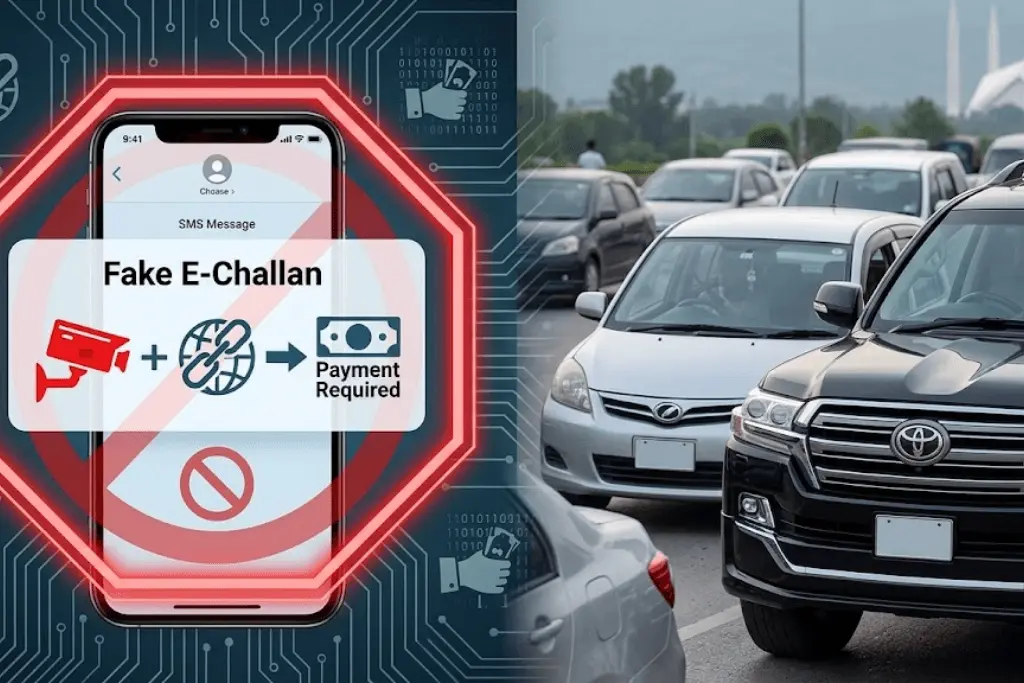
Cyber fraud is on the rise again in Islamabad, where scammers send fake SMS messages in the Islamabad e-challan scam 2026 to trick people who don’t know any better. On April 22, 2026, there was a big rise in reports of phishing attempts, when scammers pretended to be traffic police and tricked people into giving up sensitive financial information. The authorities then issued a strong warning.
The scam is part of a trend around the world where hackers use official systems to make scams that look real. Pakistan’s quick response in the form of awareness and cybercrime support infrastructure shows that more and more people are interested in online security, as more and more people use digital services, it’s important to know how to spot and stop these kinds of scams.
How the Fake E-Challan Scam Works
Usually, the scam starts with an SMS message from a random 11-digit mobile number and an official message claiming to be from a traffic authority, and the person who sent the message says that the person who got it has an overdue traffic ticket. And that needs to be paid within a few days, or else they will be punished, like having their car taken away or being arrested.
The text message has a link that looks a lot like the links that government agencies and other groups use. The fake URLs often have small differences. For instance, strange domain names like .cfd or tiny links that at first glance seem real. They can go to fake websites with official logos and see “pending fines” that aren’t real, based on the vehicle number they enter when they click.
The actual threat lies in the attempts of users to pay the fine. Such phishing sites request the user to provide debit or credit card information, such as CVV and OTP. When their accounts are accessed, the scammers get complete access to financial information, and in most cases, they might commence unauthorised transactions within a few minutes.
Official traffic police departments have stressed that they never send payment links out through SMS. Any warning intending to legitimise urgent payment online with a hook is a palpable alert.
How to Verify Your E-Challan Safely
To remain safe, it is recommended that citizens observe one simple yet important rule: not to respond to links they get on SMS and say that it is an e-challan notice. Rather, you should always check fines on official government portals.
Violations should be verified by a direct visit to the official e-challan portal or by calling the respective traffic police helplines by users. Trusted messages are usually code verified (such as 9915 or 8070) with the correct ownership information of the vehicle, but do not coerce a person to pay.
In case of an alert message, disregard it and report to the necessary cybercrime authorities. Cybercrime helplines and reporting in Pakistan are working hard with attempts to monitor and close down these fraud schemes to enhance confidence among people in digital governance.
As in the case of the potentially already clicked on the suspicious link, swiftness must be taken. Further damage can be prevented by contacting the national cybercrime helpline, blocking bank cards, and reporting them to the financial institutions. Experts emphasise the need to take action within the first hour so that a financial loss may be limited.
What Makes This Scam So Dangerous in Today’s Digital Environment
The unique feature of this counterfeit e-challan scam was to take advantage of both a sense of urgency and trusting authorities. As an increasing number of government services in Pakistan are transitioned online, citizens are becoming used to receiving digital notifications, resulting in it becoming easier to spoof official communications. The realistic design of the websites used, official logos, and even realistic-looking fine makes a false impression of authenticity, which can mislead even the most alert users.
Further, the incorporation of immediate payment systems implies that one can be financially harmed in a few minutes after exposing vulnerabilities. This further necessitates the importance of early detection as well as education. With Pakistan still on the road to digitising its populace services, user awareness will be critical in addition to the safeguarding provided by technology, so that convenience would not be compromised at the expense of security.
Why Cyber Awareness Is Pakistan’s First Line of Defence
The emergence of online fraud highlights the significance of social awareness as an effective defence strategy. Although governments are striving to improve surveillance and close down fraud networks, professional criminals can still be stopped by well-informed citizens as the most effective defence against Internet crimes. Educational campaigns, early alerts and responsible usage of the internet would lower the chances of such scams flourishing to a large extent.
It’s a good sign that the digital world is getting safer that the Pakistani government acted quickly. This includes law enforcement, technology, and public advice, and this group of people watching out for each other will become an important part of keeping people safe. Thus, making the country’s cybersecurity stronger as more services move online.