Ali Raza Khan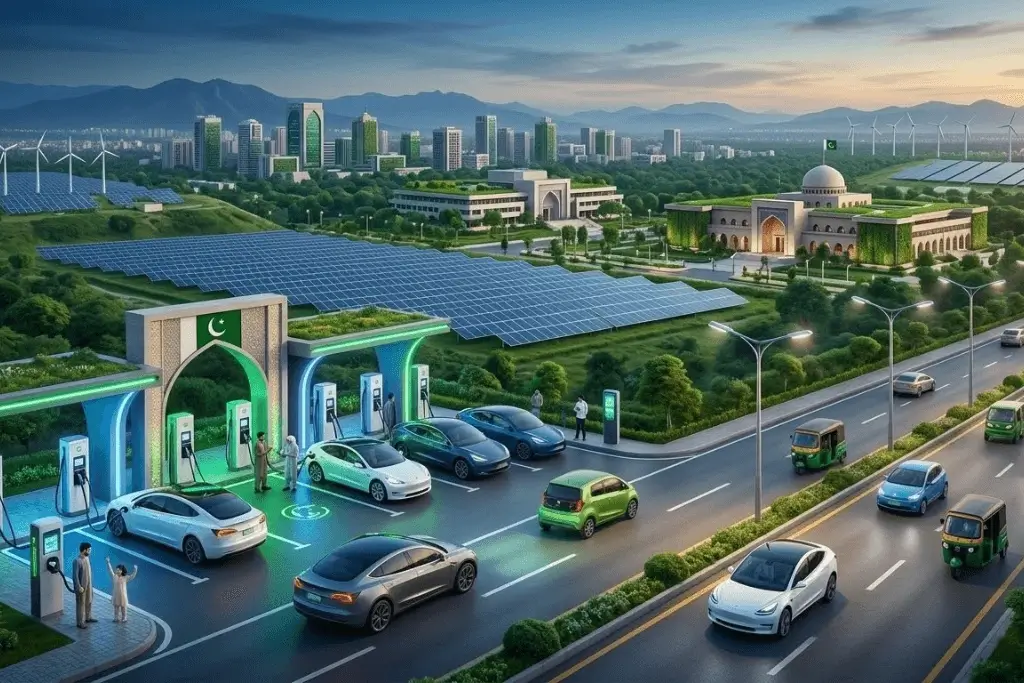
Electric Vehicles in Pakistan are accelerating the country’s transition to reduce fuel imports, cut carbon emissions, and modernize the transport sector. With rising fuel prices and growing environmental concerns, the government is actively promoting EV adoption through new policies, incentives, and infrastructure development.
Electric Vehicles in Pakistan Policy
The government introduced the National Electric Vehicle Policy (NEVP) to encourage the use of electric mobility across the country. The policy aims to gradually replace traditional petrol and diesel vehicles with electric alternatives.
Key targets of the policy include:
- 30% of all new vehicles to be electric by 2030
- 90% electric vehicle adoption by 2040
The policy focuses on promoting electric motorcycles, cars, buses, and rickshaws, which are expected to significantly reduce fuel consumption and urban pollution.
Why Pakistan Is Promoting EVs
Pakistan imports a large portion of its fuel, making the economy vulnerable to global oil price fluctuations. By encouraging electric vehicles, the government hopes to reduce this dependence and stabilise energy costs.
EV adoption could bring several benefits:
- Lower fuel import bills
- Reduced air pollution in major cities
- Lower transportation costs for consumers
- Development of a local EV manufacturing industry
Environmental experts also note that electric vehicles can help Pakistan meet its climate commitments and reduce greenhouse gas emissions.
Incentives for EV Buyers
To boost EV adoption, the government has introduced several incentives for manufacturers and consumers.
These include:
- Reduced import duties on EV components
- Lower registration fees for electric vehicles
- Tax benefits for EV manufacturers
- Subsidies for electric bikes and rickshaws
Growing Local EV Industry
Pakistan’s EV sector is beginning to attract investment from local and international companies. Several Pakistani startups and established manufacturers are now producing electric motorcycles, scooters, and three-wheelers.
Electric bikes are expected to play a crucial role in the EV transition because motorcycles account for the majority of vehicles on Pakistani roads.
Challenges to EV Adoption
Despite strong government support, several challenges remain.
One of the biggest hurdles is the limited charging infrastructure across the country. Many cities currently lack sufficient EV charging stations, which makes long-distance travel difficult for EV owners.
Other challenges include:
- High upfront cost of electric vehicles
- Limited public awareness about EV benefits
- Battery technology and maintenance concerns
Future of Electric Mobility in Pakistan
Industry experts believe Pakistan’s EV market could grow rapidly over the next decade as technology improves and production costs fall.
With strong policy support and increasing global interest in clean transportation, Pakistan may soon witness a significant shift toward electric mobility, particularly in the two-wheeler and public transport segments.
Conclusion
Pakistan’s push for electric vehicles represents a major step toward a cleaner and more sustainable transportation system. While challenges remain, government policies, incentives, and growing industry participation could help accelerate the EV revolution in the coming years.