Adeel Hassan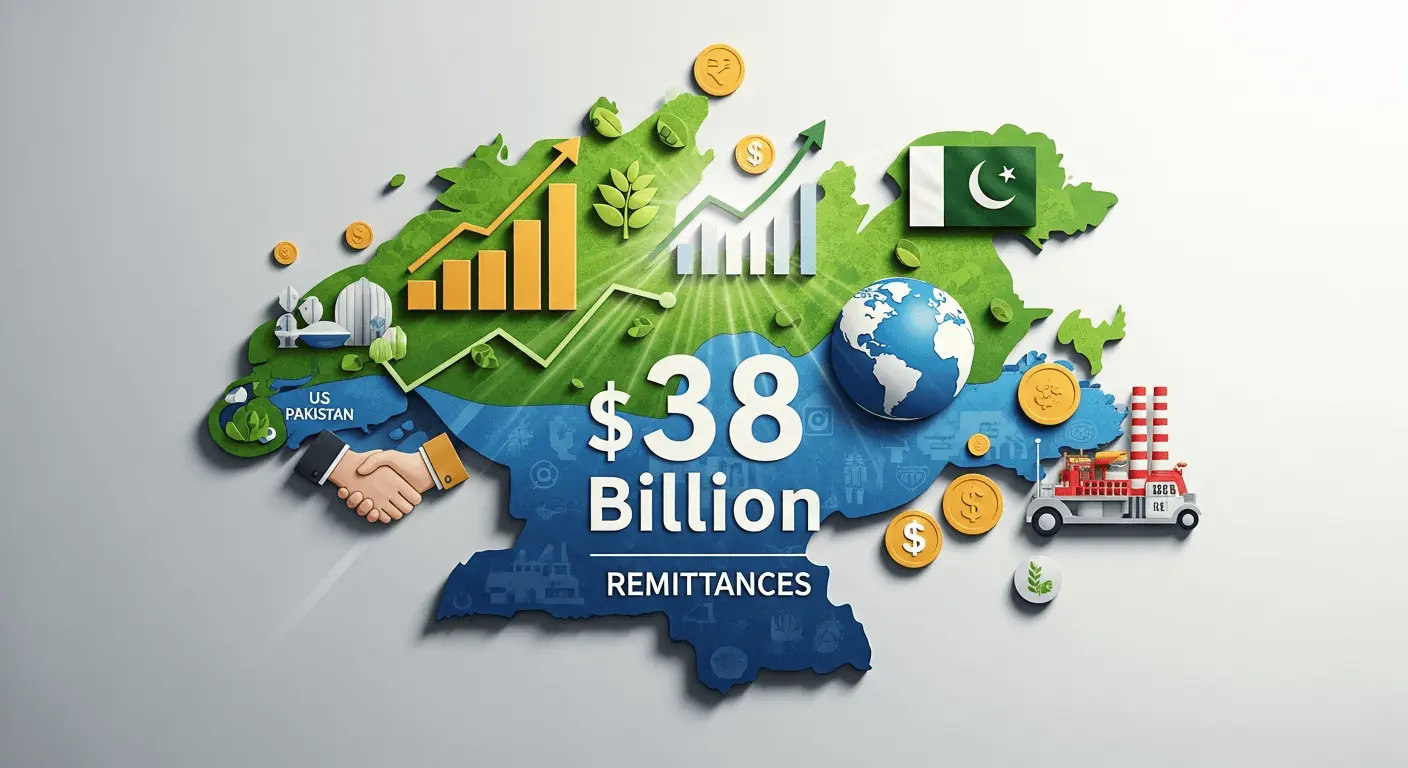
Why Remittances Matter for Pakistan’s Economic Stability
Pakistan Remittances $38 Billion keep cash flowing across the country when other inflows turn patchy. Families rely on them for routine spending, but the bigger effect sits at national level. The steady stream helps Pakistan manage external payments, smooth pressure on the currency, and keep confidence in the wider system. Quiet money, loud impact.
What Remittances Mean for Pakistan’s Financial System
Remittances are personal transfers sent by overseas workers into local accounts, cash pickup points, or digital wallets. Banks record them, regulators track them, and the market reacts. A rise pushes more dollars into official channels. That improves visibility and reduces the space for informal cash routes. And yes, it also makes policy planning less of a guessing game.
Pakistan’s Record $38 Billion Remittance Inflows Explained
The $38 billion figure points to a strong year of inbound transfers tied to overseas employment, tighter monitoring of unofficial routes, and better digital transfer access. Many transfers arrive in smaller, frequent chunks, not one big yearly sum. A worker sends Rs 20,000 equivalent for school fees, then another transfer for medicines. Multiply that by millions. The total climbs fast.
Key Countries Sending the Highest Remittances to Pakistan
A large share of remittances comes through Gulf economies due to long-standing labour migration. Saudi Arabia and the UAE sit high on the list, with solid flows linked to construction, logistics, retail, and services. The United Kingdom and the United States also remain major corridors, often tied to longer-settled diaspora families sending regular support.
How Remittances Strengthen Pakistan’s Foreign Exchange Reserves
Foreign exchange reserves rise when more dollars enter formal banking routes and stay there. Remittances support that pool, which helps cover imports and external payments. It also reduces panic in currency markets. Traders watch reserve levels closely. When reserves look steadier, pricing pressure can cool down a notch. Not always, but often enough.
Impact of Remittances on Household Income and National Consumption
In homes across Pakistan, remittances show up in very ordinary ways. Cooking oil and flour bought without bargaining for credit. A motorcycle instalment paid before the due date. A private tuition bill cleared. Consumption rises, local shops see higher footfall, and small service businesses get more work. Feels small at street level. Adds up at national level.
Government Policies Driving Higher Remittance Inflows
Policy has focused on pushing transfers into formal rails, improving speed, and reducing leakage into informal channels. Digital access matters here, plus clear compliance rules that banks can follow without drama. Some steps look boring, but boring systems run better.
| Policy Area | What Changed | Practical Result |
| Digital transfer channels | More app-based and instant routes | Faster credit into recipient accounts |
| Banking facilitation | Simplified processes at branches | Fewer delays, fewer repeated visits |
| Enforcement | Tighter checks on informal cash networks | More transfers routed through official channels |
Challenges That Could Slow Pakistan’s Remittance Growth
Remittances depend on jobs overseas, and overseas job markets do not stay stable forever. A slowdown in host economies can reduce working hours and new hiring. Transfer costs can also creep up, and exchange-rate gaps can nudge people back toward informal routes.
A few pressure points keep coming up:
- visa restrictions and contract delays
- layoffs in construction cycles
- higher transfer fees during peak seasons
- compliance friction that makes small senders tired
Remittances Compared With Pakistan’s Other Economic Pillars
Exports bring earnings tied to global demand, pricing, and supply chain reliability. Foreign investment depends on confidence, policy clarity, and risk appetite. Remittances look different. They run on personal duty and family need, so they often stay resilient even in rough patches. That reliability is why planners keep them in the centre of the conversation, even if it feels uncomfortable.
Future Outlook for Pakistan’s Remittance Growth
The near-term outlook depends on overseas labour demand, formal channel convenience, and exchange-rate stability. Digital transfer habits are sticky once families trust them. And trust builds slowly, then suddenly looks normal. Skill upgrades also matter. When more workers move into higher-paying roles abroad, average transfer size rises without pushing people into extra overtime.
Why Remittances Remain a Crucial Lifeline for Pakistan
Remittances boost Pakistan’s economy with $38 billion annual inflows, and the number carries weight because it arrives steadily, week after week. It supports reserves, eases external pressure, and lifts household spending in thousands of neighbourhood markets. There is no magic in it, only routine discipline. Overseas workers earn, save, and send. Families receive, spend, and stabilize. And the economy gets a cushion that exports and investment cannot always provide on time. Check out the details and interesting bits here!
FAQs
1) Why do remittances matter so much for Pakistan’s economy and the rupee?
Remittances bring foreign currency into the banking system, so reserves look healthier and exchange-rate pressure usually stays lower.
2) Which kinds of overseas jobs usually send the most money back to Pakistan?
Gulf-based construction and services send large volumes, and steady flows also come from transport, retail, healthcare support, and technical roles.
3) How do remittances change daily life for families in Pakistan, beyond groceries?
They often pay school fees, hospital bills, rent arrears, and loan installments, and sometimes fund a small shop or home repairs.
4) Why do remittances stay more stable than exports or foreign investment at times?
Because most senders transfer money on fixed routines for family needs, not on market mood or business cycles.
5) What can cause remittance inflows to slow down even when migration stays high?
Work contracts can shrink, fees can rise, and if official rates look unattractive, some senders may avoid formal transfer channels.