Farhan Qureshi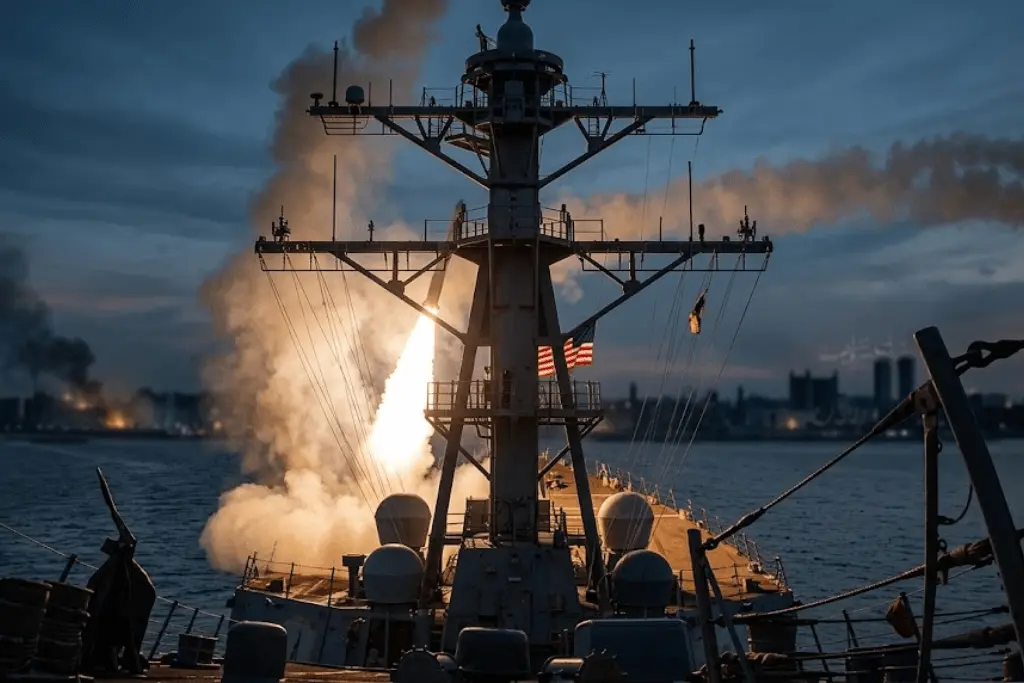
The United States and Iran are in another dangerous phase of confrontation after US strikes Iran triggered the largest barrage exchanged between both sides since July. US forces attacked Iranian military targets along the southern coast, and Iran retaliated with strikes on US-linked facilities in Jordan, Bahrain, Iraq and Kuwait. The renewed violence has raised fears that a conflict that had appeared contained could again spill over into the wider Middle East.
Iran And America Exchange Punches Across The Region
The most recent round of fighting started when the Americans hit several Iranian military targets. The US account named air defence systems, radar installations, maritime assets, mine-laying capabilities and communications infrastructure as targets. Some of the strikes occurred near the strategically important Strait of Hormuz, a concern because of the security of one of the world’s key shipping lanes.
Iran retaliated, striking American military bases and assets in a range of countries. Iranian officials said there were strikes in Bahrain, Jordan, Kuwait and Iraq, while Gulf governments said they intercepted drones and other attacks. Kuwait also reported a fire at a residential complex after a drone incident, while Bahrain said it had intercepted and destroyed Iranian drones.
Strait Of Hormuz: Heart Of Global Energy Security
The Strait of Hormuz is one of the most sensitive points of the renewed crisis, given its importance to international energy markets. Before the war, it was a major route for global oil and liquefied natural gas shipments, and any sustained disruption to the waterway could pose a threat to energy security and international trade.
New Conflict Brings New Economic Pressure
The major attacks’ return comes after weeks in which both Washington and Tehran had mostly held fire. So the latest barrage is a major deterioration in the situation and raises questions about whether the conflict could return to the intensity seen earlier in the year.
Should the hostilities persist, the economic consequences could become more significant. Higher energy prices, higher insurance costs for commercial shipping and uncertainty over major trade routes can put pressure across emerging markets. Countries that rely on imported fuel are especially vulnerable when geopolitical instability drives up the cost of commodities internationally.
Civilian Casualties Create Humanitarian Issues
Iran has blamed the US for an attack on a wedding celebration in Sirik that killed four people, including a four-year-old child and wounded dozens. Iranian authorities later gave a higher overall casualty figure from the latest wave of US strikes. Reuters could not independently verify the details of the wedding incident.
The escalation places Pakistan in a tricky regional context given its geographical proximity to Iran and its deep ties across the Gulf. Pakistan also enjoys close economic, security and diplomatic relations with the countries involved in the wider confrontation. This makes stability in the Middle East especially important for Islamabad.
The renewed fighting brings to the fore the significance of energy security in Pakistan’s economic planning. Uncertainty about major production and shipping corridors can rapidly translate into turmoil in international energy prices when the security equation involves the Strait of Hormuz.
Pakistan can offset some of these risks with a broader energy strategy. More use of domestic resources, development of renewable energy, better electricity infrastructure and diversified import arrangements can enhance resilience to international disruptions. This is even more important as geopolitical crises are exposing how quickly outside events can affect the domestic economic scene.
If Fighting Spreads, It Could Disrupt Regional Trade
The economic fallout of the US-Iran confrontation doesn’t stop at energy. If military activity were to spread, it could disrupt shipping routes, insurance markets, aviation networks and supply chains. Difficult access to major sea routes may lead to increased transportation costs and longer delivery times for businesses in Asia.
The latest escalation provides Pakistan another chance to reinforce its diplomatic identity as a country that supports dialogue and regional stability. Pakistan can play an important diplomatic role without getting directly involved in the war. Such positions create a difficult negotiating environment and increase the likelihood of further retaliation.
This new crisis is a reminder of the importance of Pakistan’s economic resilience to diplomatic stability. External shocks can put pressure on currencies, energy costs, import bills and inflation, especially when geopolitical tensions impact key commodity markets. If you have strong domestic economic foundations, you are more protected against such developments.
The Broader Conflict Will Have Implications For South Asia
A prolonged US-Iran confrontation could have wider repercussions for South Asia through the channels of energy prices, remittances, trade and transportation. Gulf states remain major destinations for South Asian workers, and their economies are closely linked to the global energy market. This could thus affect households and businesses well beyond the front lines of the conflict if there is any prolonged disruption.