Farhan Qureshi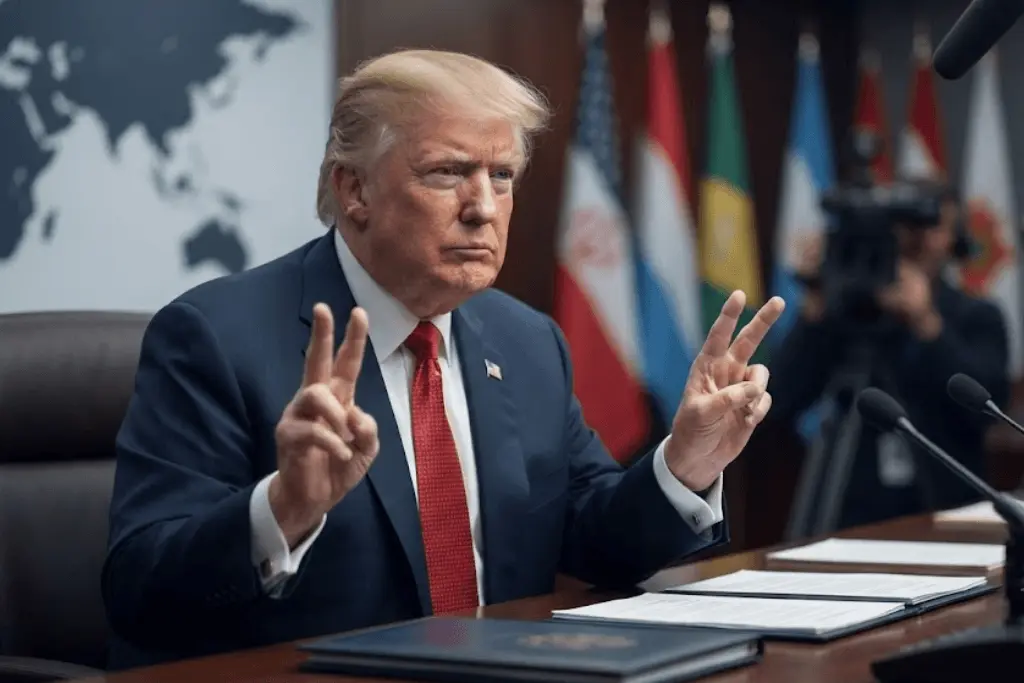
Trump Says US Iran Talks Enter Another Important Phase; U.S. President Donald Trump said Wednesday that US Iran talks between the United States and Iran are in another important phase, and he is confident that negotiations are going in a good direction. And in the interim, Washington has increased the pressure, warning that diplomacy is Iran’s last chance to strike a deal before tougher action is taken.
The talks have attracted global attention because of their possible implications for regional stability, international trade, energy markets and maritime security. Developments in the vicinity of the Strait of Hormuz are of particular importance because it is one of the world’s most heavily travelled shipping lanes.
Alongside Oman and Qatar, Pakistan remains one of the regional countries backing the diplomatic engagement. The country’s participation is consistent with its long-held preference for dialogue and peaceful resolution of conflicts in the Middle East.
Donald Trump Upbeat But Keeps Pressure On Iran
President Donald Trump said negotiations are going well and that diplomatic talks could eventually lead to reopening maritime traffic through the Strait of Hormuz under better security terms.
These discussions are an important opportunity for both sides to avoid further escalation, he said. He also said that a temporary understanding on maritime transit and Iran’s nuclear activities is still a possible goal in the ongoing diplomatic efforts.
But Trump also said the window for diplomacy was closing. He said the current negotiations are Iran’s last chance to reach an accord before facing much tougher military consequences if the talks collapse. During this phase, the U.S. approach to negotiations continues to be one of diplomatic engagement and strategic pressure.
Iran Disagrees On The Nature Of The Talks
Iranian officials publicly denied they were holding direct talks with Washington at this time. Instead, Tehran has insisted that it is communicating indirectly, using established regional intermediaries.
Iranian officials say the talks now are mostly on technical maritime issues, not on broader political talks or overall agreements on bilateral relations.
Iran has continued to stress that dialogue through intermediary countries is not the same as formal direct diplomatic contact with the United States. The difference is a reflection of the different public stories that both governments are trying to tell about the status of negotiations.
Pakistan Increases Its Diplomatic Role With Regional Mediators
Along with Oman and Qatar, Pakistan has become one of the countries that has helped to provide a channel of communication between Washington and Tehran. Regional diplomatic engagement has concentrated on the transmission of proposals, message exchange and efforts to support the reduction of tensions.
Pakistan’s involvement is part of its broader foreign policy agenda to promote dialogue and regional stability, not confrontation. Islamabad has always been in favour of diplomatic solutions to complex international issues affecting the Middle East.
Hormuz Strait Remains Key To Ongoing Negotiations
Any disruption in the Strait could affect more than just the Middle East, with implications for global energy supplies, commercial shipping, insurance markets and international trade. Hence, the restoration of safe maritime passage continues to be a priority for various regional and international actors.
The United States said ongoing talks could help enhance navigation arrangements if diplomacy continues to move forward. But Iran has insisted that technical discussions about the seas are separate from broader political discussions.
For countries like Pakistan, safe maritime trade routes are crucial as the regional economic activity is largely reliant on uninterrupted commercial shipping in the Arabian Sea and the neighbouring waters.
Diplomatic Engagement Continues Amid Military Pressure
In the meantime, the United States has sustained a military readiness posture as a key part of its overall approach while negotiations proceed. President Trump said a massive military operation was considered before, but diplomatic appeals from regional partners prompted more negotiations.
US officials said the military pressure was meant to bolster diplomatic leverage, not to replace negotiations entirely. American officials have argued that sustained strategic pressure increases incentives for a negotiated settlement. The dual-track approach is indicative of how diplomacy and military deterrence are working in tandem in the present phase of US-Iran relations.
Pakistan Gives Priority To Regional Stability
Commerce, energy transport and wider economic co-operation are built on stability in surrounding waters. Pakistan’s role in mediation efforts with Oman and Qatar underlines its commitment to dialogue-based resolution of conflicts. Engagement also fits into a larger goal for Islamabad of fostering stability in the wider region while balancing relations with the rest of the world.
Diplomatic Successes Could Influence Broader Regional Relations
The future direction of US-Iran talks will likely have implications for the security situation in the Middle East as well as broader international diplomatic relations. Progress toward a deal could ease short-term tensions over maritime security, and prompt more dialogue on other regional issues.
In contrast, a failure to make diplomatic progress may heighten the prospect of a new confrontation after President Trump threatened a robust military response. Such developments would have implications beyond the immediate parties to them. Pakistan’s participation in mediation initiatives also shows its eagerness to make a positive contribution to efforts aimed at preventing wider conflict.
As negotiations proceed, the balance of diplomatic moves, strategic pressure and regional mediation will be important in ensuring that the current talks yield meaningful outcomes. Pakistan’s role, along with Oman and Qatar, shows the growing importance of regional diplomacy to help the two opposing sides talk to each other, while reiterating the overall goal of maintaining stability in one of the world’s most strategically important regions.