Urooj Niazi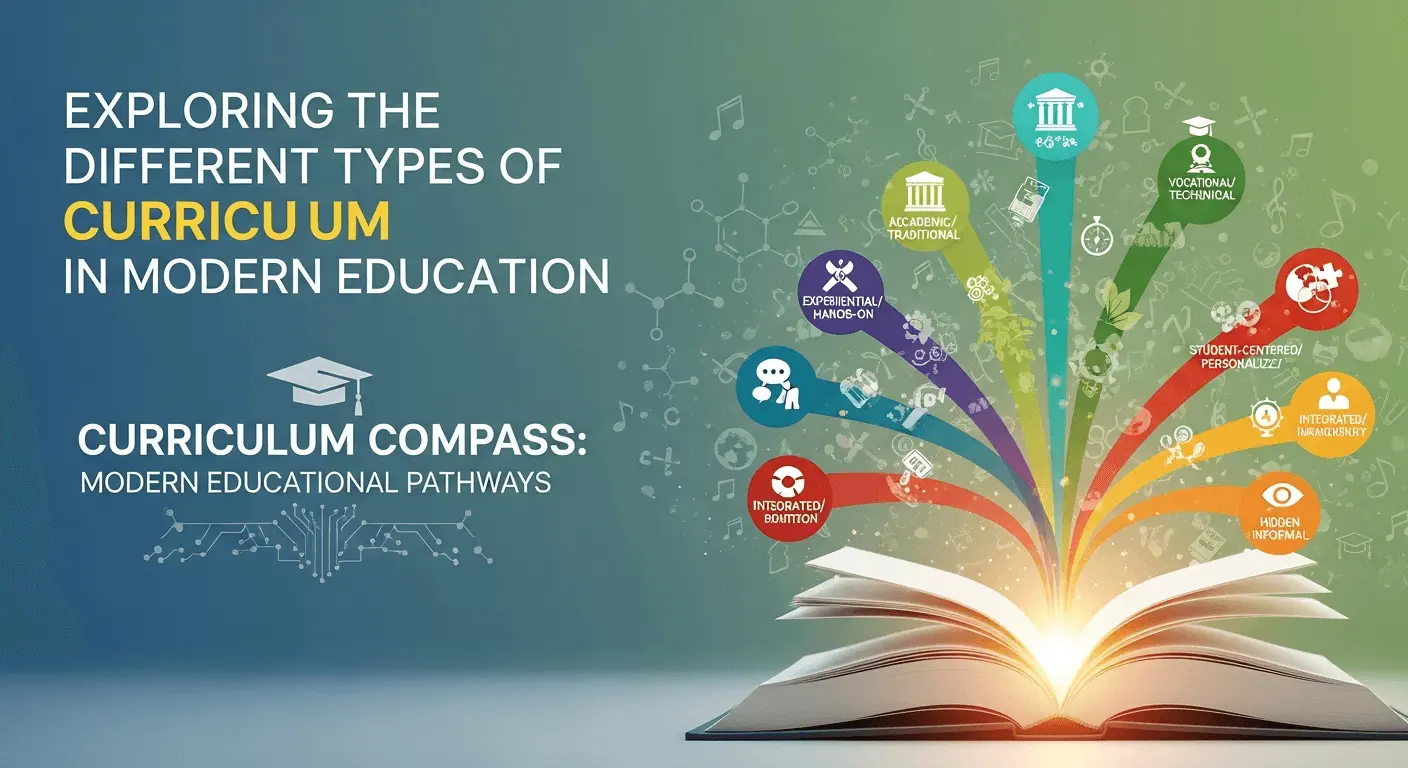
Curriculum is a set of well thought learning structures that are designed around education systems all over the world. The knowledge of the types of curriculum is imperative to educators, students, and parents since it determines how knowledge, skills, and values are taught. Curriculum is not only the definition of what is taught but it is also the explanation of how learning occurs in classrooms or even elsewhere. Traditionally constructed subject-centered to contemporary ones based on the needs and learning objectives of a specific society, these types of curriculum differ depending on the educational requirements of a particular community. This article is going to discuss the significant forms of curriculum, their features, and the significance of these types of curricula in creating successful learning processes in the modern educational context.
What Is Curriculum?
A curriculum is a design that offers an outline of education goals, material, instruction procedures, and evaluation plans. It is a guide used by the teachers and institutions to steer the students towards the intended learning outcomes. Over the years, new forms of curriculum have developed to suit the changing educational philosophy, technology and the needs of the learners.
Major Types of Curriculum
1. Subject-Centered Curriculum
One of the most conventional forms of curriculum is the subject-centered curriculum. It is specialized in the area of individual courses like mathematics, science, history and language. They learn one subject at a time and the content mastery is highly encouraged. The curriculum is quite popular in school due to its structured nature and academic objectives that are measurable.
2. Learner-Centered Curriculum
The learner-centered curriculum is one of the new forms of the curriculum, which focuses on the students and their interests, abilities, and styles of learning. Teachers are enablers and not educators. This method promotes critical thinking, creativity and participation whereby learning turns out to be interesting and significant.
3. Activity-Based Curriculum
The activity-based curriculum focuses on the learning process by applying activities, projects and real life experiences. It is one of the forms of curriculum that contributes to experience learning assisting students in implementing theoretical knowledge in practice. It works particularly at lower education stages.
4. Integrated Curriculum
An integrated curriculum is one that integrates several subjects to form themes of learning. This method links concepts in different disciplines as opposed to teaching them in isolation. This is one of the kinds of curriculum that facilitate holistic knowledge and make learners understand the applicability of learning in real life situations.
5. Hidden Curriculum
The hidden curriculum is the example of the lessons, values, and behaviors that students are indirectly taught in school. Though not recorded, this is a critical detail of the kinds of curriculum since it affects the development of social skills, attitudes, and morality of students.
Importance of Understanding Types of Curriculum
Learning about various forms of curriculum assists the educator to select the appropriate instructional methods and enhance the overall learning. It also enables the institutions to come up with flexible education systems that are able to accommodate different learners. In the case of students, the knowledge of the curriculum forms is more adaptive and lifelong learners. Visit this site for more details.