Sana Khalid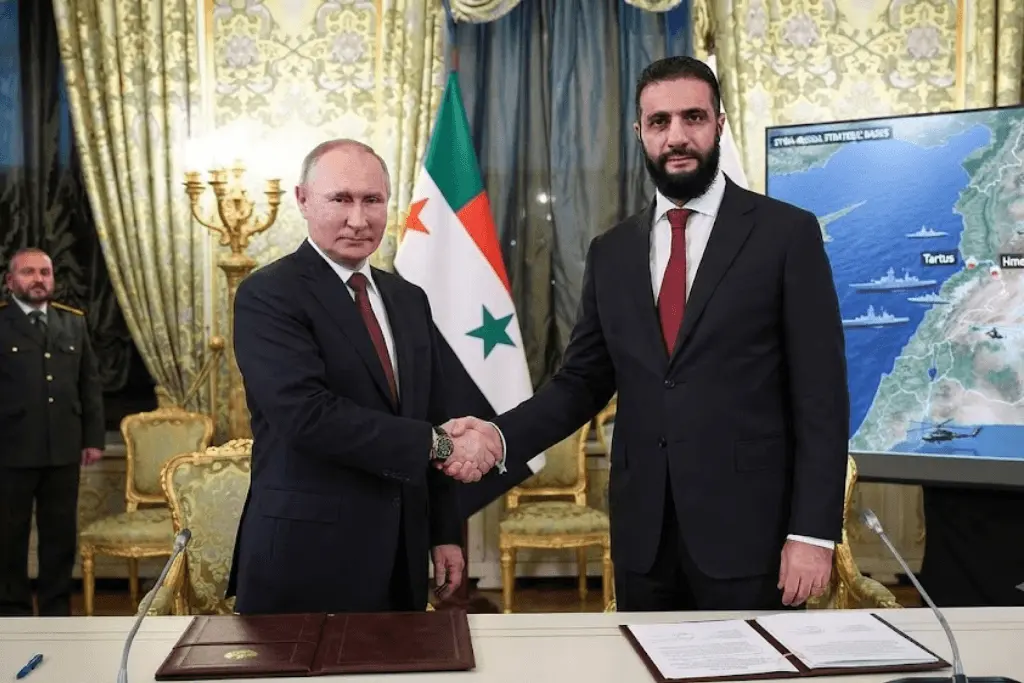
Syria and Russia have struck a major Syria Russia deal about the future of two strategically important Russian military facilities on Syria’s Mediterranean coast. The memorandum of understanding signed on August 9, 2026, creates a new framework for Hmeimim Air Base and the Tartus naval facility after months of negotiations.
The agreement is a substantial change in the military ties between Damascus and Moscow. The deal does not give Russia exclusive control of the facilities, but rather increases Syrian control over the facilities, while continuing a role for Russia in military cooperation.
Syria, Russia Reach Deal On Strategic Bases
The new memorandum alters the operational framework for Hmeimim and Tartus. Under the agreement, Syria is to take civil control of large sections of both sites within three months.
Hmeimim, near Latakia, has been a major part of Russia’s military footprint in Syria. Meanwhile, Tartus has given Russia a crucial naval foothold in the Mediterranean and has bolstered Moscow’s broader regional military logistics.
Hmeimim Airbase Handed Over To Civilian Administration
The Hmeimim air base has become one of the most recognisable symbols of Russia’s military intervention in Syria. As a key Russian operating location, the base has been an important part of Moscow’s regional military strategy.
The new agreement will reportedly transfer the civilian administration of the airport to Syrian authorities. The change will be in three months, and that is a short period of time to transfer administrative duties.
New Administrative Structure For Port Of Tartus
No less important is the maritime position of Tartus. The facility has served as Russia’s primary naval base in the Mediterranean, offering logistical and operational support to Russian naval operations.
Under the deal, Syrians gain control of the fourth commercial berth in Tartus. The civilian facility is expected to be incorporated into the Syrian national civil administration.
Three-Month Transition Makes For Clear Test
Implementation is one of the most critical parts of the agreement given the three-month deadline. The transfer of administrative responsibility for strategically sensitive facilities must be coordinated between military, civilian and security institutions.
Syria will have to put in place effective mechanisms to manage civilian operations, at the same time ensuring that military cooperation continues without creating overlapping responsibilities.
Deal Closes 18-Month Negotiation Process
The memorandum follows 18 months of negotiations between Damascus and Moscow. The talks started after the political changeover following the ousting of Bashar al-Assad in December 2024.
The change of leadership in Syria altered the relationship between Syria and Russia. Moscow was one of Assad’s main international backers, and the new Syrian authorities had to reconfigure existing international partnerships.
Ahmad Al-Sharaa’s Foreign Policy In All Directions
President Bashar al-Assad of Syria has been working on building a wider diplomatic and economic network following the country’s political transition.
Engagement with Russia remains important as Moscow continues to exert military, diplomatic and historical influence in Syria. More Syrian control over national infrastructure could enhance Damascus’s ability to project itself as an independent actor in regional affairs.
Impact On Mediterranean Security
The eastern Mediterranean is linked to broader security issues relating to the Middle East, maritime transport and access routes to Europe. Thus, military infrastructure along the coast can have implications for regional calculations well outside the borders of Syria. Such a transfer from exclusive Russian military control to joint arrangements could alter perceptions of the regional balance.
Civilian Integration Can Aid Syria’s Recovery
The civilian aspect of the deal is particularly key to Syria’s long-term healing. Years of conflict have damaged infrastructure, disrupted economic activity and put enormous pressure on public institutions.
Inclusion of strategic facilities in national civilian administration might contribute to wider efforts to restore state capacity. Still, the accord gives a possible framework for transforming infrastructure that had been built with military thinking into assets of wider national significance.
Russia’s Military Cooperation Keeps Strategic Leverage
The deal does not mean the end of Russian influence in Syria. Joint training and qualification centres will ensure a military link between the two countries. Cooperation on training could help Russia retain institutional ties to Syrian security institutions, while helping to build military capacity. For Moscow, it could be a pragmatic way to maintain regional clout following the political transition in Syria.
Bashar Al-Assad Remains A Sticking Point
Military bases have been created, but Damascus and Moscow remain far apart on the political front. The arrangement also presents potential opportunities for civilian infrastructure, trade and economic recovery, if the transition proves successful.
The overall importance will depend on how it is executed in the months ahead. The three-month transition gives a chance to see if the new model will work in practice.
If successfully implemented, the agreement could grant Syria more control over strategically important assets, while enabling Russia to keep a meaningful regional partnership. Visit The Pakistan for more updates.