Farhan Qureshi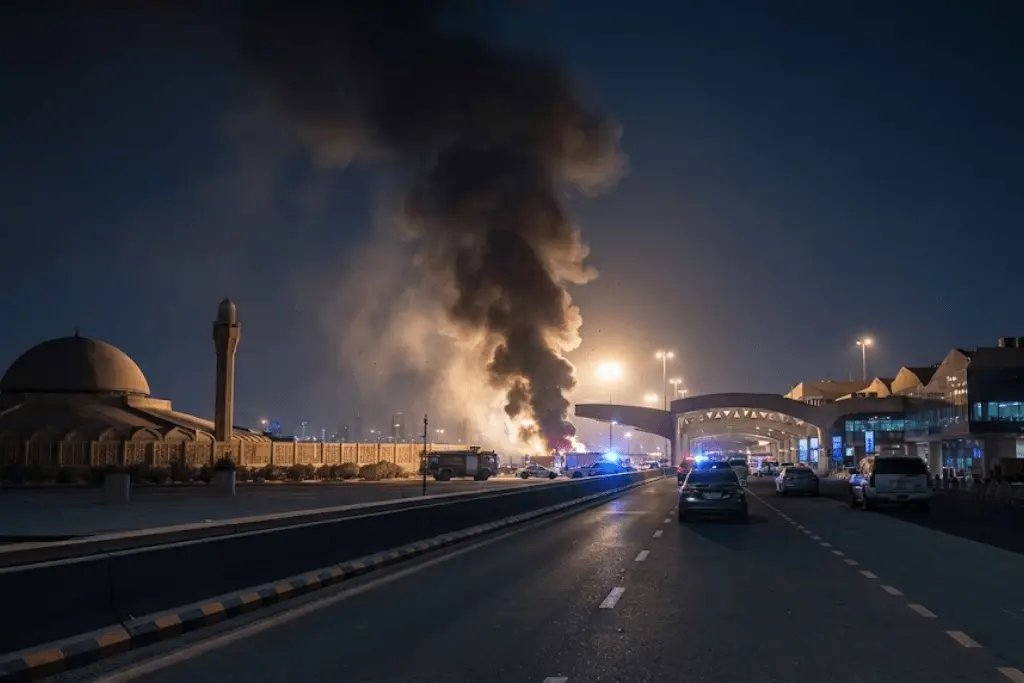
Saudi authorities warned of a hostile aerial threat at night, and on September 19, Riyadh airport smoke was seen as a large column of black smoke rose near King Khalid International Airport in Riyadh. Explosions were reported in the capital before an all-clear was announced as firefighters dealt with a blaze involving a fuel storage tank with the Saudi Aramco logo. Saudi authorities reported no casualties.
The incident followed claims by Yemen’s Houthi movement that missiles and drones had been fired toward sensitive locations in Riyadh and against Aramco facilities in Yanbu. Saudi authorities confirmed a ballistic missile toward Riyadh had been intercepted and destroyed, while other attacks in other parts of the kingdom were said to have been thwarted by Saudi air defences.
Houthi Claims And Saudi Response Still Separate
The Houthis said they launched attacks with ballistic and cruise missiles and drones, and described the operation as in response to Saudi military action in Yemen. The group also claimed an operation on an Aramco facility in Yanbu, but individual claims of damage were not independently verified. The Saudi account was on the interception of a ballistic missile targeting Riyadh and stopped further assaults.
The difference between the two accounts remains relevant because the fire near King Khalid International Airport has not been conclusively attributed publicly to a direct missile impact. Reuters said there were explosions and overnight alerts, and smoke could be seen around the airport, while other reports said firefighters were working at a fuel depot in the area. At first, Saudi authorities did not give the public a detailed explanation of what caused the fire.
Riyadh Airport Disruption Ignites Wider Aviation Fears
King Khalid International Airport is a major gateway for Saudi Arabia, linking Riyadh with the international business, tourism and pilgrimage networks. The credible threat of a missile, even absent any confirmed direct damage to airport runways or terminal facilities, can necessitate the holding of aircraft, delay of departures, rerouting of flights or temporary suspension of operations. These disruptions can continue throughout the wider aviation system long after the immediate security alert is over.
The disruption is also significant for Pakistan as Saudi Arabia is an important destination for Pakistani workers, business travellers and religious pilgrims. The latest incident adds an aviation-security dimension to the already close economic and people-to-people relationship between Pakistan and Saudi Arabia.
Pakistan Reaffirms Support For Saudi Arabia’s Security
Pakistan has made it clear that it stands by Saudi Arabia’s sovereignty, territorial integrity and security amid heightened Houthi attacks. Pakistani officials have also stressed the significance of upholding diplomatic engagement while preserving regional stability.
The security dimension has gained special importance after the Makkah Joint Defence Agreement between Pakistan, Saudi Arabia and Türkiye. The pact establishes the basis for increased defence co-operation, with an attack on one member regarded as an attack on the participating states under the agreement. The Riyadh incident has thus refocused the question of what the pact really does in practice without definitively establishing that Pakistan has committed itself militarily to the Yemen conflict.
Saudi Security Threats Boost Pakistan’s Significance
The latest Riyadh incident comes as Saudi Arabia is under pressure on various fronts, including missile threats, drone attacks, energy infrastructure risks and disruptions to maritime routes. The Houthis have increased their military operations in Yemen and said they have targeted Saudi locations, adding to the security challenge faced by Riyadh. The broader conflict has also raised concerns about oil supplies and commercial shipping through strategically important waterways.
Islamabad has an interest in both maintaining Saudi security and not making relations throughout the wider region worse. Pakistan’s defence cooperation and diplomatic outreach make it an important player in conversations related to regional stability.
New Pressure On Regional Energy And Maritime Security
It is impossible to separate what happened at Riyadh airport from the broader security context of Saudi energy infrastructure and maritime routes. Houthi operations more frequently involved missiles, drones and attacks affecting sites related to oil and shipping. The Red Sea and Bab el-Mandeb are particularly important, as disruptions in these areas can affect global trade and fuel transportation.
Saudi Arabia has already experienced some incidents involving critical energy infrastructure, and the broader conflict in the Middle East has placed more pressure on global fuel markets. There has been some level of diplomatic and security support from international partners. For example, Britain has agreed to provide defensive air-to-air refuelling support at the request of Saudi Arabia, and Türkiye has said it is ready to help under its defence pact with Saudi Arabia.
Diplomatic Engagement Of Pakistan Continues To Be Important
The latest escalation gives Pakistan yet another reason to maintain diplomatic communications, in addition to its security obligations. Previously, Islamabad has sought to portray itself as a nation able to hold talks with other regional powers like Saudi Arabia and Iran. Such diplomatic space can support efforts to prevent attacks from developing into a broader regional confrontation.
Pakistan’s backing of Saudi Arabia has been clear; officials have avoided portraying the country as trying to spark a broader military confrontation. Pakistani statements have emphasised sovereignty, security and legal self-defence, and diplomatic contacts have continued. The policy allows Islamabad to maintain its close ties with Riyadh and also to focus on de-escalation and stability in the region.