Sana Khalid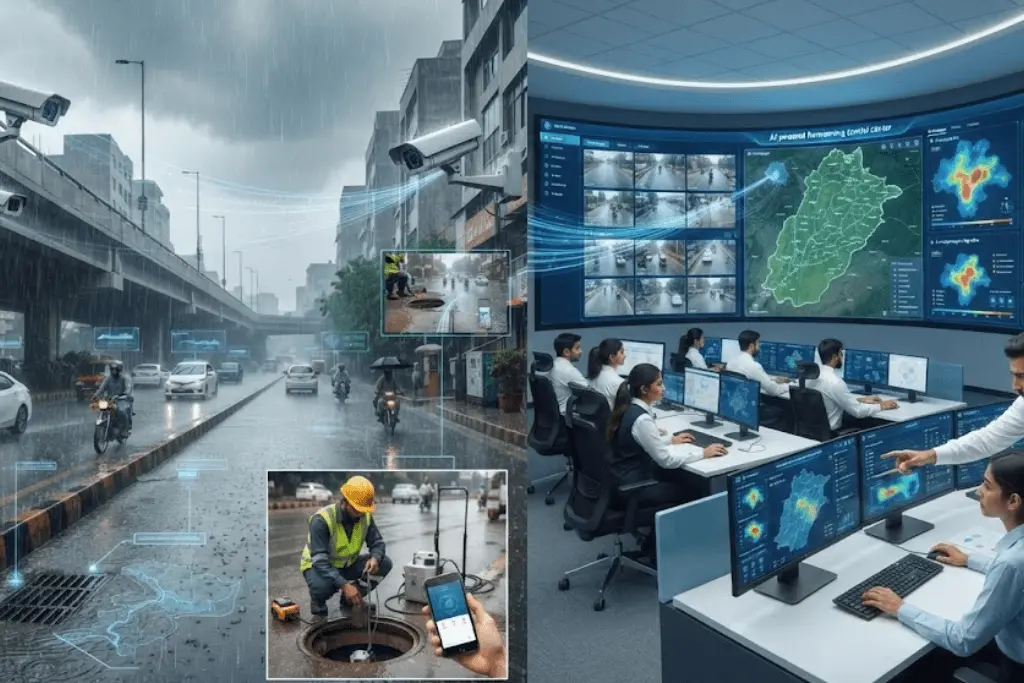
The Punjab AI rainwater monitoring system provides 24/7 surveillance through around 300 high-definition cameras connected to 43 Smart Safe City Centres, enabling authorities to monitor waterlogging and respond to emergencies in real time. Artificial intelligence can identify stagnant water and rising water levels, so that the relevant authorities can be alerted and coordinate drainage and rescue operations faster.
Punjab: AI Rainwater System Boosts Monsoon Readiness
The AI-based monitoring system is a technology-based approach for management of seasonal rains in Punjab. These cameras have artificial intelligence analysing the video for signs of standing water and rising water levels.
300 Cameras To Monitor Rainwater Around The Clock
Approx. 300 modern cameras are a key part of the monitoring network. The high-res cameras are meant to give authorities detailed visual information from sites that could be at risk during heavy rains.
But those cameras are part of a larger Safe City system, not standalone pieces of hardware. They are connected to 43 Smart Safe City Centres that allow information monitoring and coordination through centralised systems.
43 Smart Safe City Centres Provide Responses
The 43 Smart Safe City Centres form an important operational component of the monitoring arrangements. These centres can be used as observation points of the information monitored and evaluated by the cameras and other digital systems.
Central monitoring can help to detect problems as they occur across multiple sites. Heavy rainfall can improve situational awareness by viewing several vulnerable areas at the same time.
AI Alerts Will Enable Wasa To React Faster
When water collects or rises at monitored locations, artificial intelligence can detect this, and the monitoring system can automatically send an alarm to the Water and Sanitation Agency. WASA is a key stakeholder in drainage and water management. Rapid transfer of information is key in times of heavy rainfall. Early alerts can help operational teams understand where drainage resources are most urgently needed.
Critical Rain Emergency Information Can Be Received By Rescue 1122
Another important component of Punjab’s emergency response system is Rescue 1122. AI-generated data on extreme water accumulation can help coordinate locations of public safety issues.
More Than 1,000 Machines Aid Water Removal
The AI monitoring system is supported by more than 1,000 modern drainage machines and deployed response resources. Digital monitoring identifies when a waterlogging problem occurs, and these machines provide the physical capacity needed.
Heavy Rain: Special Attention For Underpasses
Underpasses are one of the most vulnerable places because heavy rainfall means that water can easily accumulate in places with limited drainage capacity. Vehicles, pedestrians and emergency responders face a serious hazard in flooded underpasses.
Real-Time Monitoring Can Reduce Traffic Disruption
Monitoring driven by AI can help authorities spot where water is collecting and which roads or underpasses may need immediate attention. A quicker response can shorten the time of large traffic disruptions.
Monsoon: What Punjab Residents Need To Know
Despite the advanced monitoring infrastructure, residents should still follow basic rain safety precautions. Artificial intelligence systems can assist the government to respond better, but they cannot eliminate all the risks created by exceptionally heavy rainfall.
Emergency Helpline 15 Still Important For Immediate Assistance
Wherever necessary, residents requiring urgent assistance can make use of emergency helpline 15 during heavy rainfall. Automated systems can detect many conditions using cameras, but not all emergencies will necessarily occur in a monitored location. Residents may find downed infrastructure, stranded folks, dangerous electrical situations or other hazards that need to be reported directly.
AI Monitoring Assists Punjab In Taking Proactive Steps
AI-powered rainwater monitoring is one of the examples of how Punjab is using technology to enhance public services and seasonal preparedness. The system integrates digital surveillance with physical drainage and emergency response.
Punjab’s Monsoon Response Blends Tech And Ground Teams
The power of the system lies in a combination of artificial intelligence, human expertise, and physical resources. Cameras and algorithms can detect waterlogging, but field teams, drainage machinery and emergency responders are still vital.
AI Rainwater Monitoring For Smarter Future Urban Planning
Beyond its immediate response to the monsoon, however, the system may have long-term benefits. All this information collected from several rainfall events can help authorities identify the always waterlogged areas.
AI Rainwater System In Punjab Offers A Better Safety Net For Monsoon
AI-powered rainwater monitoring system in Punjab is a major step towards tech-driven monsoon management in Pakistan. Some 300 high-resolution cameras and 43 Smart Safe City Centres are keeping a constant watch, aided by artificial intelligence to detect stagnant water and rising levels.
The system has been further strengthened by operational coordination with WASA and Rescue 1122 and deployment of over 1,000 drainage machines and response resources. This mix marries early detection with practical intervention.