Farhan Qureshi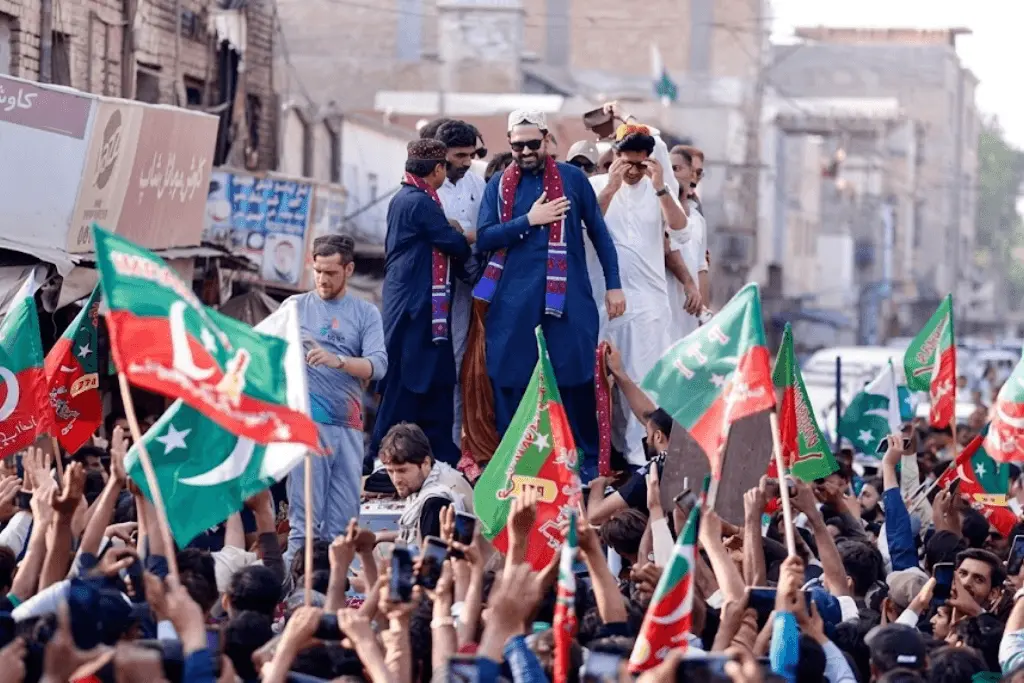
PTI leaders in Shangla
The PTI Sindh mobilisation in interior Sindh is mounting political pressure on the Pakistan Peoples Party, which has maintained a strong political presence in the province for decades. Recent public meetings and campaigning in a number of cities have provided PTI with a chance to broaden its footprint beyond the party’s traditional areas.
PTI leaders, including Khyber Pakhtunkhwa Chief Minister Sohail Afridi and Secretary General Salman Akram Raja, have joined the mobilisation efforts in Larkana, Shikarpur, Shahdadkot and Naushehro Feroze. The campaign has aimed at solidifying popular support and activating the political base for nationwide protests on September 27.
The developments show that the political landscape of Sindh is open for more competition. PPP is well entrenched in party structures and elections, but PTI’s growing street power could push the larger discussion around governance, public services and political representation to the provincial level.
PTI Campaign: Interior Sindh A Key Battleground
Interior Sindh has historically been one of the strongest areas of support for the PPP and the Bhutto-Zardari political tradition. Thus, PTI’s decision to increase mobilisation in these areas is important beyond the rallies, as the party tries to build a stronger organisational and public presence.
In places such as Larkana and Shikarpur, PTI’s huge crowds provide an opportunity for the party to directly reach out to communities that have historically been an important part of the PPP’s political base. The campaign provides PTI leaders a chance to highlight local issues along with national political demands.
More competition in Sindh may lead to more attention to public expectations. Political parties aiming for greater support may find themselves under increasing pressure to address infrastructure, municipal services, job creation and development needs in urban and rural communities.
Call For Sept 27 Protest Expands PTI’s Political Campaign
The PTI’s campaign of mobilisation is closely linked to the party’s call for countrywide protests on September 27. The party is demanding the release of former Prime Minister Imran Khan, proper medical treatment for him and withdrawal of cases against political prisoners, and is seeking support from the public for these demands.
The protest campaign provides PTI a national issue on which to organise mobilisation at the provincial level. The public meetings in Sindh provide an opportunity for party leaders to connect local political issues with broader issues of political rights and treatment of opposition leaders.
The extent of mobilisation will remain a key indicator of PTI’s ability to convert popular excitement into long-term political organisation. Ongoing local-level involvement will be key to whether the party’s increasingly visible street presence turns into a more permanent electoral threat.
PTI Slams Ppp Over Governance, Public Services
PTI leaders have been highly critical of the PPP-led provincial government, particularly on the provision of basic public services and infrastructure. Focusing the criticism on issues that matter to ordinary citizens has allowed PTI to build its campaign around governance and development.
Roads, water, sanitation, health care, education and local infrastructure are among the many needs of communities across Sindh, a significant political issue for public services. Opposition parties can mobilise support if dissatisfaction over these issues is linked to a broader demand for administrative reform.
The criticism puts the PPP under pressure to show the effect of the provincial policies at the community level. For PTI, the challenge would be to turn the criticism into credible policy proposals that can meet the complex economic, social and administrative needs of Sindh.
Sindh Political Debate On Administrative Reshuffle
The political tussle in Sindh is part of a larger debate on administrative restructuring and possible new provinces in Pakistan. Provincial boundaries and decentralisation are particularly sensitive issues given Sindh’s political history and Karachi’s economic importance.
The PPP has opposed any suggestion to divide Sindh or to change its boundaries. The party’s position that the province should remain united has been further reinforced by the recent resolution of the Sindh Assembly against the division of the province.
The debate takes on a new dimension in the backdrop of PTI’s increasing political activism. The debate on decentralisation can create room for parties to present different approaches to governance, particularly as regards the relations between provincial institutions, local governments and major urban centres.
PPP Still Has Deep Political Roots In Rural Sindh
Despite the recent mobilisation of PTI, the PPP still enjoys significant political power in rural Sindh. The party has a well-established organisational network and a close association with the political heritage of the Bhutto family, which gives it a strong foundation that cannot be easily shaken by short-term campaigning.
The PPP’s influence also mirrors years of political activism in the province. Its continued presence in the electoral arena is a reflection of the depth of connection it has with many communities, particularly in rural areas where local political networks are still relevant.
Thus, the challenge for PTI is more of a new political contest rather than an immediate change in the electoral scene of Sindh. For PTI to convert the recent public mobilisation into sustained political gains, sustained grassroots organisation, candidate selection and engagement with local issues will be important.
More Competition Could Increase Political Accountability
Increased competition between PTI and PPP can help in enhancing political accountability in Sindh. As the challenge to established parties intensifies, public expectations about governance, service delivery and development may become more prominent in political campaigns.
Competitive political participation can offer voters the chance to compare different policies and leadership styles, which is important for the development of democracy in Pakistan. Healthy competition, especially one that is articulated in a peaceful democratic way, can raise the level of public engagement and institutional engagement.
PTI’s Challenge In Sindh May Reshape Future Of Politics
The increasing support and mobilisation of the PTI in Sindh is indicative of a significant development in the changing political landscape of Pakistan. The party’s foothold in interior Sindh breaks the long-standing dominance of the PPP and adds more competition to areas where the Bhutto-Zardari political tradition has been deeply entrenched.
The September 27 campaign of protests may provide another test of the PTI’s organisational strength and reach to the public. To build a lasting political base across Sindh, the party will need to engage on a sustained basis, not just through individual demonstrations.
Meanwhile, the PPP still enjoys considerable organisational advantages and long-standing public support. Emerging competition could, however, mean greater attention to governance, public services and development and an opportunity for political debate to focus more sharply on the needs of Sindh’s communities.
Peaceful political competition and stronger public participation could benefit Pakistan’s democratic system. The shifting calculus in Sindh could contribute to a more competitive political environment while keeping governance and development at the centre of public discussion, with PTI expanding its activities and PPP trying to hold on to its traditional base.