Urooj Niazi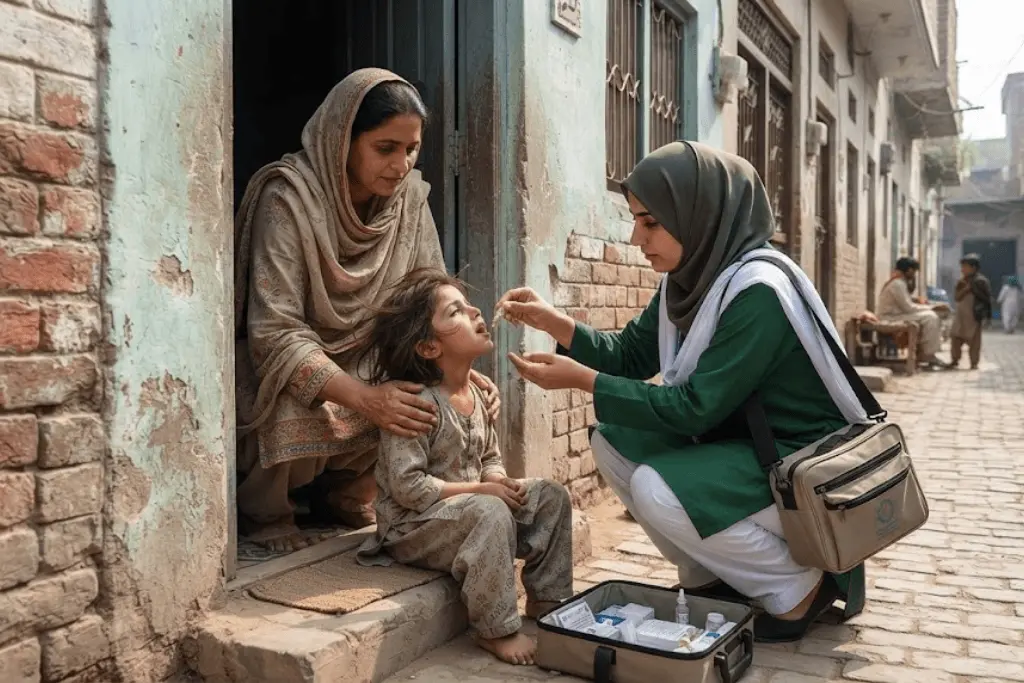
The sub-national campaign reached 31 million children in 115 districts, with over 273,000 frontline workers undertaking Pakistan polio vaccination through door-to-door vaccination activities from 21 to 27 September. The campaign has vaccinated more than 27.7 million children according to the last reported update, a significant step forward on the national target. The operation is part of a broader eradication strategy that includes multiple vaccination rounds, disease surveillance, community mobilisation and targeted work in areas where transmission continues to persist.
The scale of the campaign also reflects Pakistan’s long-term trajectory. The country has reduced reported polio cases by 99.8% in about three decades, from an estimated 20,000 cases a year in the early 1990s to 31 cases in 2025, the Global Polio Eradication Initiative said.
Pakistan Remains A Critical Front In Global Polio Eradication
Countries where wild poliovirus transmission continues are Pakistan and Afghanistan. Progress in both countries is important to the global eradication effort. By early 2026, the World Health Organisation was still detecting cross-border transmission between the two countries, highlighting the importance of coordinated vaccination and surveillance activities in shared epidemiological corridors.
However, Pakistan’s latest surveillance picture shows a much smaller burden than that of the past decades. The Global Polio Eradication Initiative on 23 September reported four cases of WPV1 in Pakistan in 2026 compared to 31 cases in 2025. In this most recent reporting period, one positive environmental sample was also reported, highlighting the importance of surveillance even as reported cases decline.
The remaining transmission is targeted to specific geographic and population groups, which requires broad national coverage. South Khyber Pakhtunkhwa and Karachi have repeatedly been identified by WHO and global eradication experts as requiring sustained attention. Cross-border movement adds further operational complexity.
Pakistan’s Strategy Continues To Rely On Frontline Workers
Pakistan’s polio program relies heavily on frontline workers who go into communities to reach children who might otherwise be outside the health system. Local knowledge and trusted relationships can help vaccination teams explain the importance of repeated doses and address concerns that may prevent children from receiving the vaccine.
The frontline workers have done more than just administer oral polio vaccine. The campaign infrastructure can be used for broader child health protection, as vaccination teams can identify missed children, report health concerns and strengthen links between families and the wider public health system.
Vaccination Teams Continue To Face Security Threats
Security continues to be one of the most difficult operational issues facing Pakistan’s eradication program. On September 22, two police officers who were protecting polio workers were shot and killed by gunmen in Balochistan’s Nushki district. The vaccination workers themselves were unharmed.
The incident highlights the risks for staff who may have to work in areas where the security situation may make access for children difficult. The WHO emergency committee also expressed concern about attacks on health workers and emphasised that the safety of health workers is crucial for the continuation of vaccination activities and for eradication.
So, security measures are still an important part of planning for public health. Protecting vaccination teams can help ensure the campaign continues uninterrupted, and better coordination between health authorities, local administrations and security agencies can help ensure access to communities where routine services are difficult to deliver.
More Community Engagement Needed To Address Vaccine Hesitancy
The ability to vaccinate large numbers of children does not depend solely on the availability of vaccines. Community confidence, accurate information and family cooperation remain key to successful immunisation campaigns, especially in areas where misinformation has led to resistance.
In certain communities, health workers have faced additional challenges with false claims about polio vaccination circulating. This is especially problematic when multiple rounds of vaccination are needed, and families mistakenly believe that previous doses make subsequent doses unnecessary.
Hence, Pakistan’s response should be sustained communication rather than campaign-period messaging. Trusted local figures like female health workers, religious leaders, teachers and community organisations can contribute to building a better public understanding of vaccination and help families separate verified health information from rumours.
Routine Immunisation Should Back Polio Campaigns
Polio vaccination campaigns are a key emergency and eradication tool, but comprehensive child health protection also requires stronger routine immunisation. The Global Polio Eradication Initiative has emphasised that the final phase of eradication depends on reaching under-vaccinated and unvaccinated children in high-risk areas.
Regular immunisation protects against a wider range of childhood diseases and helps health authorities keep in contact with families. Therefore, linking polio activities with wider vaccination and primary healthcare services can strengthen the overall health system rather than treating polio as an isolated disease program.
The approach is particularly relevant for children in remote communities, in insecure areas and for populations that move frequently. Maintaining vaccination records, tracking missed children and providing services through local health facilities can help bridge gaps between campaign rounds.
Transit Points Reach Mobile Children
Another issue is population movement, with children moving in and out of districts, or across borders, at the time of vaccination campaigns. Pakistan’s elimination program has therefore depended on fixed transit points such as border crossings, transport hubs and other locations where mobile populations can be accessed.
These points can supplement door-to-door vaccination by offering additional opportunities to vaccinate children who were not at home during a campaign. This is particularly important in a country where seasonal movements, migrations and travel can make it difficult to maintain consistently high levels of vaccination coverage.
Surveillance Can Help Pakistan Fill The Remaining Gaps
Along with vaccination, robust disease surveillance is needed, as the absence of reported cases does not mean that transmission has stopped. Polio virus circulation can be detected through environmental surveillance, even when no child has been identified with paralysis, thereby enabling health authorities to investigate and respond to possible transmission earlier. The Technical Advisory Group for Pakistan and Afghanistan has also set epidemiological milestones for September 2026, December 2026 and June 2027 to guide program decisions and assess residual risks.
Pakistan Can Link Polio Progress To Broader Child Health
The polio program in Pakistan provides an existing network that can underpin broader gains in child health. Teams for vaccination, structures for mobilising communities, disease surveillance and local health contacts can help to build stronger services for immunisation, nutrition awareness, maternal and child health and the early identification of other health risks.
The dramatic drop in polio cases in the country is a demonstration of the power of sustained vaccination and public health mobilisation. Progress now demands attention to the remaining transmission reservoirs and ensuring that children who are routinely missed are brought into the wider healthcare system.
So the September campaign is more than just one round of vaccination. The scale of this, plus the need for ongoing surveillance and security, highlights the need to sustain public health capacity between campaigns and to strengthen routine services to ensure that children remain protected against preventable diseases.
Sustained Investment Can Help Pakistan’s Final Push For Polio
Pakistan has made great progress against polio, but the remaining transmission still requires continued focus on vaccination coverage, surveillance, community engagement and worker safety. The country has already shown that sustained public health mobilisation can reduce the disease burden dramatically, with cases down by more than 99% from historic levels.
The next phase is about filling in the last gaps, not losing steam. High-quality campaigns in core transmission areas, strong routine immunisation, better protection of frontline workers and improved engagement with mobile communities are all ways to protect the gains made over decades.
The larger goal is to ensure that polio eradication strengthens the whole child health system in Pakistan. Continued collaboration between federal and provincial governments, international partners, communities and health workers can help maintain the final interruption of transmission and leave stronger surveillance, vaccination and primary health care networks for children across the country.