Farhan Qureshi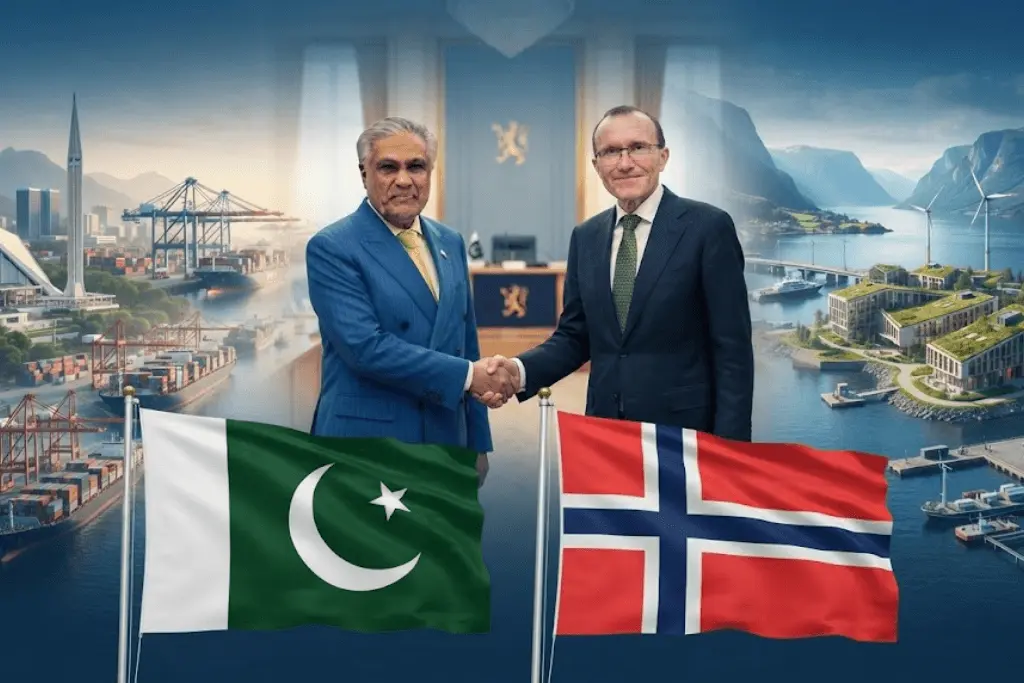
Pakistan and Norway have agreed to strengthen bilateral cooperation in defence, trade, investment, technology, climate change and maritime affairs, giving new impetus to Pakistan Norway relations.
The visit was the highest-level engagement between Pakistan and Norway in a decade, with meetings with Foreign Minister Ishaq Dar, Prime Minister Shehbaz Sharif and Chief of Defence Forces Field Marshal Syed Asim Munir.
Trade And Investment Become More Important
Economic cooperation was one of the important aspects of the Pakistan-Norway talks. Both sides agreed to expand cooperation in trade and investment in an effort to deepen the overall bilateral relationship.
The Pakistani diaspora can also act as an economic and social bridge between the two countries. No specific new defence agreements, equipment arrangements or military projects are identified in the information provided. The confirmed development is the wider agreement to increase cooperation in defence and related areas.
Climate Cooperation Opens New Partnership Opportunities
Climate change and resilience were also high on the agenda during the Pakistan-Norway discussions. Prime Minister Shehbaz Sharif appreciated the Norwegian cooperation in climate resilience, as well as education, skilled labour and technology.
Pakistan and Norway have taken their relationship beyond the normal diplomatic and political issues, linking climate change with trade, technology and investment. Such cooperation helps in development priorities in the longer term.
Expansion Of Technology And IT Cooperation
Areas identified for enhanced bilateral cooperation included sharing of technology and information technology. The focus offers a chance for Pakistan and Norway to build stronger ties between technology institutions, companies and skilled professionals.
There is still general agreement at this stage, and no particular technology project has been identified in the information provided. The practical initiatives that will flow from the commitment will be determined in future bilateral discussions.
Maritime Cooperation Growing Strategic Importance
Particular attention was paid to maritime affairs, due to Norway’s vast experience in international maritime affairs and the growing importance of developments around the Strait of Hormuz.
Espen Barth Eide said Norway could have a constructive role in talks on international maritime law and the situation around the strategic waterway. Norway’s maritime experience was mentioned in the comments along with Pakistan’s continued diplomatic endeavours in the region.
Norway Backs Pakistan’s Regional Peace Efforts
Oslo has experience in international peace negotiations and has channels of communication with Tehran and Washington, Eide said. Diplomatic access of such a nature may help Pakistan in its efforts to promote dialogue and reduce tensions in the region.
The foreign minister of Norway called the situation in the Middle East extremely dangerous for world peace and the world economy. To bring the near-closure of the Strait of Hormuz to the attention of the international community, not only as a problem for the countries engaged in the conflict.
Pakistan, Norway Reaffirm Commitment To Multilateralism
The two countries reaffirmed their commitment to multilateralism and international law under the United Nations Charter. The common emphasis is part of a broader diplomatic inclination to settle international disputes by means of established institutions and peaceful methods.
Norway also reiterated its traditional support for a two-state solution and its ongoing efforts toward the establishment of an independent Palestinian state. Pakistan welcomed Norway’s position and appreciated Oslo’s principled position on the Palestinian issue.
Kashmir, Afghanistan Also Part Of Talks
The bilateral engagement touched upon regional issues, including Kashmir and Afghanistan. Ishaq Dar briefed the Norwegian foreign minister about Pakistan’s stance on the Kashmir dispute and other regional issues.
The talks, according to the details shared, also covered India’s unilateral suspension of the Indus Waters Treaty, brokered by the World Bank. Pakistan’s raising of these issues was within the larger context of Pakistan’s efforts to communicate regional security and diplomatic concerns to its international partners.
Irregular Migration Develops Into A Common Priority
Pakistan and Norway also agreed to cooperate in curbing irregular migration. This issue adds a practical dimension to bilateral cooperation, especially with movement of people between South Asia and Europe.
Cooperation on irregular migration can include closer institutional coordination and tackling of illegal migration routes. These measures can help to better manage cross-border movement while complementing legal migration pathways.
Shehbaz Sharif, Eide Discuss Broader Partnership
Prime Minister Shehbaz Sharif and Espen Barth Eide discussed bilateral ties, regional developments and international issues during the visit. The prime minister said he was glad to note the friendly and cordial relations between Pakistan and Norway.
Sharif thanked Norway for its cooperation in education, skilled labour, climate resilience and technology. These are pragmatic sectors where bilateral relations can advance beyond diplomatic engagement.
Pakistan-Norway Relations In A Broader Phase
The visit of the Norwegian foreign minister has opened a larger phase of Pakistan-Norway cooperation on economic, security, environmental, technological and maritime issues. The wide range of topics discussed is a sign of a more and more diversified bilateral agenda.
Trade and investment can provide the economic base, while technology and IT cooperation can provide opportunities for innovation and skills development. Climate cooperation can build resilience and defense and maritime engagement can feed into wider security discussions.
Stronger Pakistan-Norway Ties May Bolster Regional Stability
The recent diplomatic contact between Pakistan and Norway shows a relationship that goes beyond traditional bilateral cooperation and enters into a broader partnership via economic development and international peace initiatives.