Sana Khalid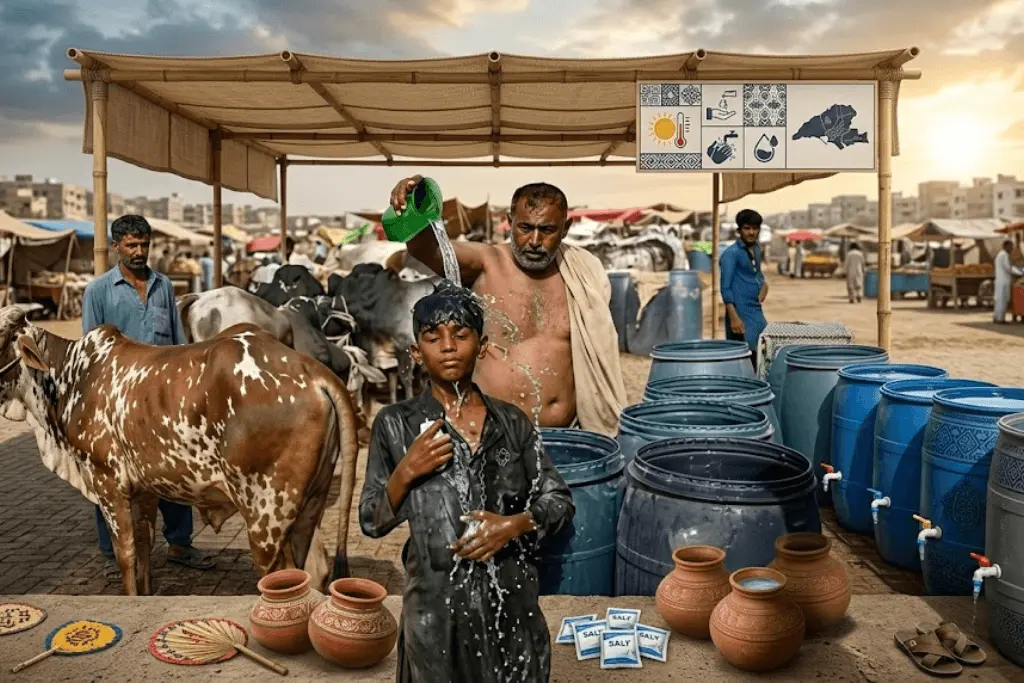
Pakistan heatwave 2026 conditions are creating serious climatic stress, with millions vulnerable to rising temperatures, dry spells and extreme weather events across the country. The summer season’s challenge has evolved into a climate and public health issue for major cities, manufacturing plants and sensitive populations.
This May 2026, Sindh, southern Punjab and urban parts of Balochistan are facing abnormal heat conditions. Officials keep warning about dehydration, which can lead to serious heat stroke and overburden hospitals.
Karachi is still one of the most affected urban centres because of its dense population, coastal humidity and rapid growth of urban infrastructure.
Karachi’s “Feel-Like” Temperatures Continue Climbing
Karachi has experienced dangerously high temperatures during recent heat waves, with some areas hitting highs above 44 degrees Celsius during the day. But the health risk is elevated beyond the temperatures, in part because humidity makes it feel even hotter for residents.
Moisture from the coast traps heat in the atmosphere as a result of which apparent temperatures often exceed 46°C during the height of the afternoon. The city’s population is exposed continuously to exhausting weather conditions, combined with limited nighttime cooling.
Karachi has also witnessed an increase in warmer nights. Urban areas do not cool down naturally after sunset because of traffic congestion and limited airflow. Concrete infrastructure results in extended heat retention throughout residential neighbourhoods.
More and more climate researchers are attributing these trends to a long-term warming trend rather than to isolated seasonal events.
Urban Expansion Is Intensifying Karachi’s Heat Island Effect
The intensifying heat stress in Karachi is driven, in part, by the urban heat island effect. Over the past two decades, the proliferation of roads, buildings and concrete infrastructure has dramatically cut down green spaces and natural cooling zones across the city.
Industrial districts and low-income neighbourhoods remain most vulnerable. During the peak of summer, factory, warehouse and textile facility workers are often exposed to poorly ventilated indoor environments.
In some water-scarce communities, where access to cooling is limited, people are forced to use improvised measures, such as wetting walls and rooftops, simply to reduce their indoor temperatures at night.
Energy Demand and Load-Shedding Add to the Crisis
The country is currently going through heat waves, which have led to a surge in demand for energy, putting further pressure on the country’s electricity infrastructure. The extreme weather has air conditioners, fans and cooling appliances working overtime, putting extra strain on the national grid.
In Karachi and many other cities, heat spikes are often accompanied by load-shedding and power outages, leaving households without cooling systems during the hottest hours of the day.
Heatwaves Continue Impacting Public Health Across Pakistan
During severe weather, hospitals and emergency departments in Pakistan see a regular increase in the number of patients coming with heat-related medical problems. The number of people attending hospitals with dehydration, heat exhaustion, heatstroke and heart problems during long spells of hot weather is increasing.
Vulnerable populations, such as the elderly citizens, children, outdoor workers and daily wage labourers who are exposed to direct sunlight for long hours, are still most at risk.
Low-income communities are often the most vulnerable, as they have less access to air conditioning, reliable electricity and continuous water supply. Public health experts also say heat-related deaths are sometimes undercounted because the deaths are recorded under secondary medical complications such as cardiac arrest or organ failure.
The intensifying heatwaves are thus increasingly becoming a climate problem and a major healthcare issue across the country.
Climate Change Is Making Extreme Heat More Frequent
Long-term climate change patterns are making extreme heat events in South Asia more common, say climate researchers and meteorological agencies.
Severe pre-monsoon heatwaves are now far more likely than they were in previous decades, according to international climate bodies. Pakistan’s geographic, dense population and economic vulnerabilities make it acutely sensitive to rising temperatures and climate instability.
The Pakistan Meteorological Department continues to issue warnings of dangerous weather conditions, especially in Sindh and southern areas, where prolonged heat could worsen environmental stress, including drought conditions and water shortages.
In response, Pakistan is ramping up climate awareness campaigns, disaster preparedness systems and public weather monitoring infrastructure to ramp up resilience to future heat-related emergencies.
Authorities Continue Advising Heat Safety Measures
Pakistani authorities keep cautioning people to take precautions during the extreme heat. Officials urge the public to stay out of the sun between 11 a.m. and 4 p.m., drink plenty of fluids, and avoid unnecessary outdoor activity during the hottest part of the day.
Pakistan’s increasing emphasis on public awareness, weather preparedness and urban resilience has become more important than ever as climate realities change and communities face higher risk from future heat stress emergencies.
Visit The Pakistan for more updates.