Farhan Qureshi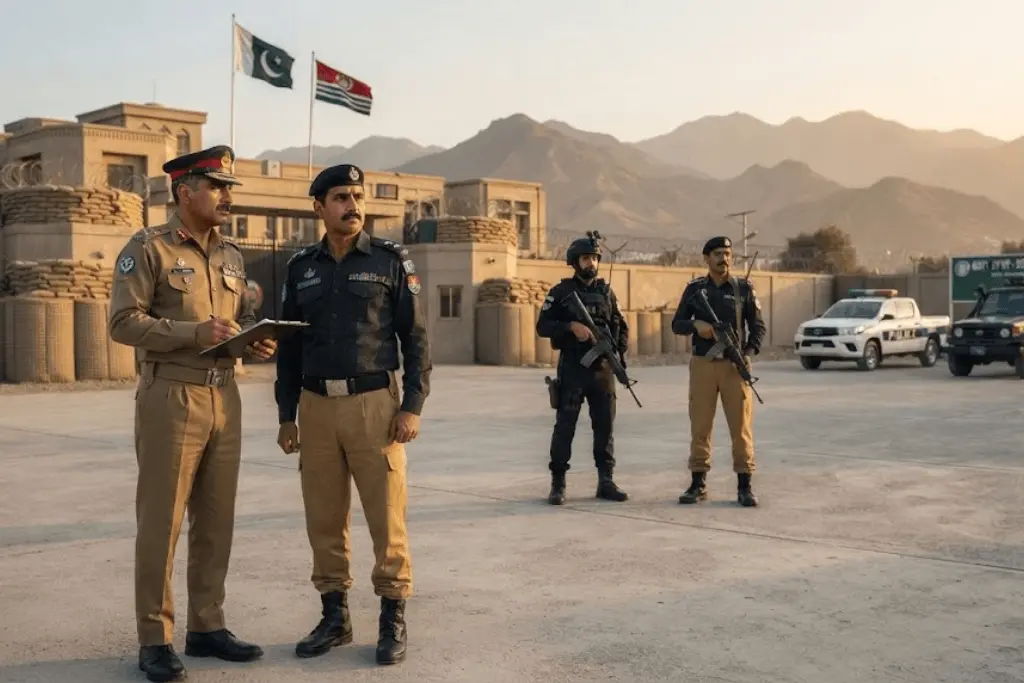
Governors Rule debate
As the federal government reviews the deteriorating security situation in Khyber Pakhtunkhwa and rising political tensions, Pakistan emergency KP is being considered as the government weighs declaring a state of emergency in the province. On September 30, Parliamentary Affairs Minister Tariq Fazal Chaudhry said the federal government was seriously considering emergency measures under Article 232 of the Constitution.
Security Situation Remains The Top Concern For Federal Government
Security is the No. 1 reason why federal officials are considering emergency measures in Khyber Pakhtunkhwa. Tariq Fazal Chaudhry said that discussion under Article 232 was about growing terrorism and concerns regarding the provincial administration’s ability to control the situation.
The security challenge in Khyber Pakhtunkhwa has national implications because the province shares a border with Afghanistan and has witnessed recurring militant violence. Consequently, federal authorities have continued to stress the importance of coordination between national security institutions and provincial authorities as a key element of efforts to protect communities and maintain public order.
Article 232 Provides Constitutional Framework For Emergency
232. Where the security of Pakistan or any part thereof is threatened by war, external aggression or internal disturbance beyond the power of a provincial government to control, a Proclamation of Emergency may be made. The provision thus creates a specific constitutional mechanism, not an informal transfer of authority.
The Constitution demands that, in the case of internal disturbance that is beyond the control of the provincial government, a resolution from the concerned provincial assembly is necessary. If the President acts on his own, the proclamation must be laid before both Houses of Parliament for approval within ten days.
Separate Constitutional Option: Governor’s Rule Still
Discussions about Khyber Pakhtunkhwa have also heavily featured the imposition of governor’s rule. Both governor’s rule and emergency provisions have been invoked in recent statements by the federal government, but both arise out of different constitutional circumstances and have different procedures.
Article 234 provides for a situation in which the government of a province cannot be continued in accordance with the Constitution. Under that provision, the President is eligible to assume or direct the governor to assume specified functions of the provincial government, subject to the constitutional approval process.
October 4 Islamabad March Adds To Political Pressure
The emergency debate comes against the backdrop of the PTI’s preparations for a march to Islamabad on October 4. The party has described the planned activity as a political protest and tied it to demands including the release of party founder Imran Khan.
Federal authorities have warned the planned mobilisation could lead to further security and public order problems, while PTI leadership has dismissed calls to call off the protest. PTI Chairman Barrister Gohar Khan said the march would remain peaceful and argued that political engagement should be pursued instead of governor’s rule or emergency measures.
Federal Govt Consults Political Allies On KP
The federal government has also sought consultations from political allies on the situation in Khyber Pakhtunkhwa. Representatives of Pakistan Muslim League-Nawaz and Pakistan Peoples Party met and discussed the province’s security and political condition, including the option of emergency measures.
If formally asked to give its views on the governor’s rule, the PPP would do so in accordance with the Constitution and law, said PPP Secretary General Nayyar Hussain Bukhari. He also said that the law and order situation was very disturbing and that political dialogue was a way of addressing national issues.
Need For Better Coordination On Provincial Security Challenges
The situation has also demonstrated the importance of cooperation between federal and provincial institutions in the fight against terrorism. Khyber Pakhtunkhwa’s geographical location and cross-border security challenges make the need for coordination more pronounced, especially regarding civilian protection and counter-terrorism operations.
A coordinated approach can bring together intelligence, policing, border management and development efforts and ensure security policies are grounded in reality. Good public safety is achievable with strong provincial institutions and good federal support.
Political Dialogue Is Still Part Of The Constitutional Process
Political dialogue has also been a major part of the debate. The PPP leadership said that national issues could be resolved through meaningful engagement, while the PTI leadership has demanded political solutions to the tensions over the planned march and the arrest of the party leaders.
The federal government has also been consulting with coalition partners rather than making a final emergency decision. It provides for political and constitutional discussion prior to any formal declaration or other significant administrative step.
Pakistan’s Path Ahead Will Be Determined By Constitutional Processes
Any step toward an emergency in Khyber Pakhtunkhwa would require a careful consideration of the constitutional framework, particularly Article 232 and the related requirements of parliamentary approval. The process establishes legal protections for the use of extraordinary federal powers and sets out how authority may be exercised in an emergency.
Article 234 also provides a separate framework on the breakdown of constitutional machinery in a province, including the provisions relating to the assumption of provincial functions and parliamentary approval. The difference between the two constitutional provisions means that the legal basis for any federal intervention would be relevant in determining the scope and duration of that intervention.