Urooj Niazi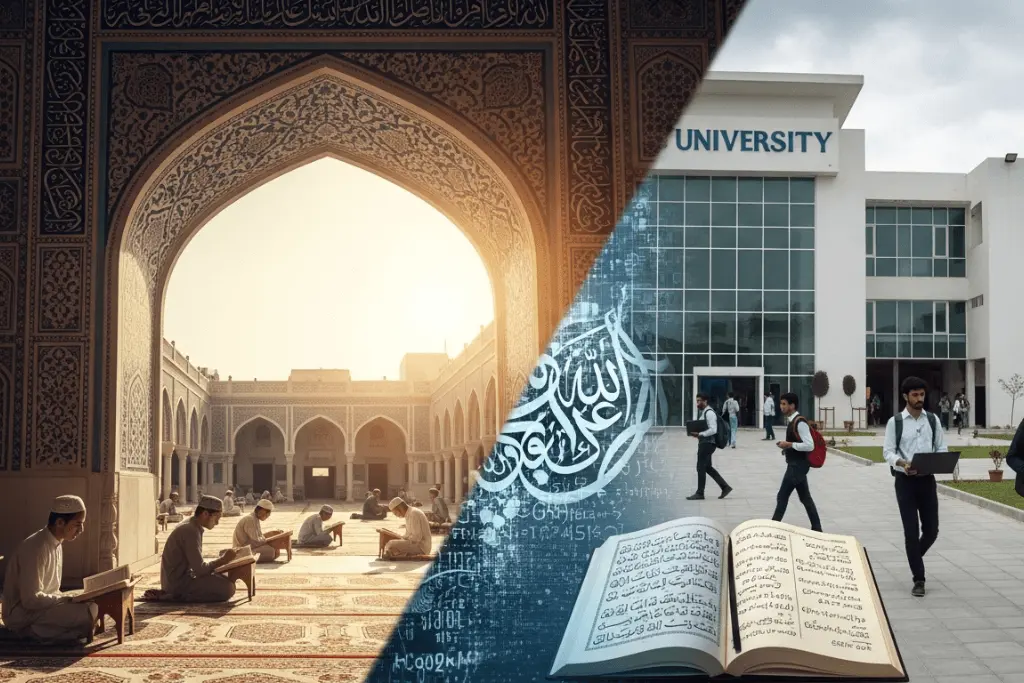
It is not new that Pakistan educational institutions promise to combine religious values with modern education to create intellectually confident people capable of debating the world. Such integration is still more superficial despite being repeated in madrasas and universities. Pakistan schools tend to emphasize on the inclusion of English, computer literacy or college courses without being preoccupied with philosophy, morality, science and contemporary thinking. With the increasing ideological, technological and social issues, the failure of the Pakistani educational institutions to come up with a real integration of faith and modern knowledge has become more evident, and it is getting serious questions regarding the future of holistic learning in Pakistan.
Cosmetic Reforms, Deeper Gaps
The scholars believe that Pakistani education facilities do not have a consistent paradigm, which combines religious tradition and contemporary intellectual platforms. Although history records successful cases of mastering both fields by Muslim scholars, the current educational institutions in Pakistan have shifted their emphasis on employability at the expense of intellectual synthesis. Analysts emphasize that until modern disciplines are based on the ethical and philosophical thinking, then Pakistani educational institutions will remain underperforming. As long as significant reforms are not formed, the distance between faith and modern knowledge will still exist. Click here to get more updates.