Farhan Qureshi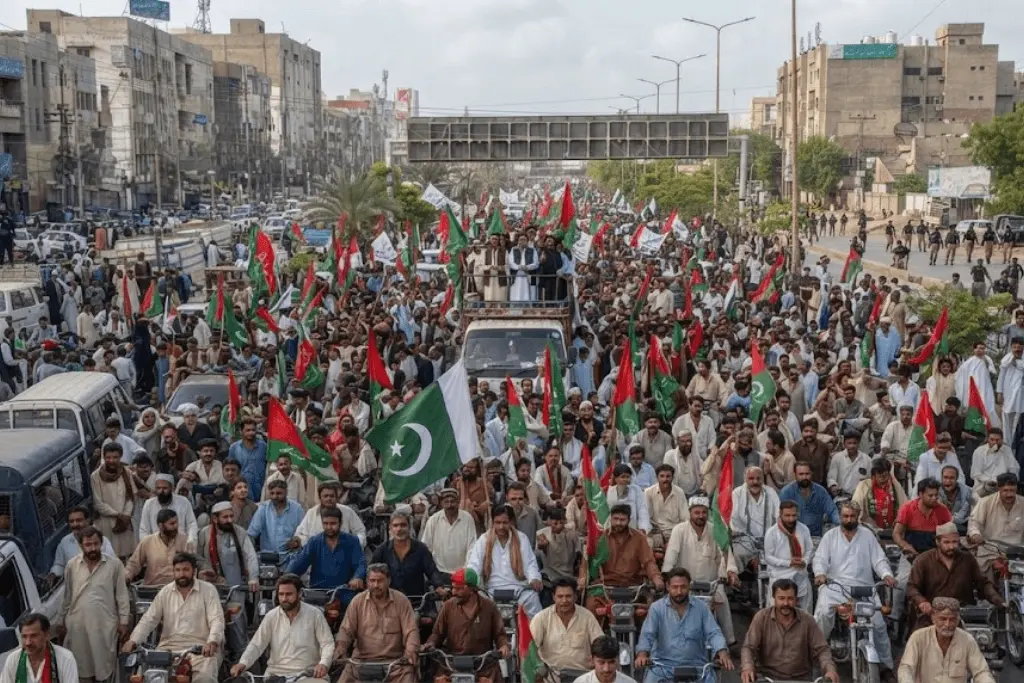
The Muttahida Qaumi Movement-Pakistan has stepped up its campaign for the creation of MQM-P new province, pushing the issue to the forefront of a revived political mobilisation. The party is of the view that the present four-province structure in Pakistan is not enough to meet the demands of population growth, administrative pressure and better delivery of public services.
MQM-P Chairman and Federal Education Minister Dr Khalid Maqbool Siddiqui and senior leaders Dr Farooq Sattar and Mustafa Kamal are preparing to take the demand directly to the streets. The move comes after repeated attempts to raise the issue in parliamentary and political forums.
Urban Sindh: The Heart Of Mqm-P’s Political Agenda
MQM-P’s push for a separate administrative province continues to focus on urban Sindh, particularly Karachi. The party says the size of the population, the economic importance and the administrative difficulties of the area justify a new debate about its constitutional and governance structure.
Karachi is one of the most important commercial and industrial centres of Pakistan, contributing significantly to national trade, revenue generation, employment and financial activity. Proponents of the MQM-P proposal say the city needs an administrative set-up that can respond better to its population, infrastructure needs and public service pressures.
Party Views Province Creation As Administrative Reform
MQM-P has often said that the demand for new provinces should not be seen only through the prism of ethnic and linguistic divisions. The party seeks to justify administrative restructuring as a response to demographic growth, uneven development and the difficulties of managing large geographical areas through centralised provincial systems.
The argument is based on the assumption that smaller and more empowered administrative units might bring government institutions closer to citizens. Better local access to education, health care, transport, sanitation and municipal services could support more balanced development across Pakistan.
Farooq Sattar Calls For Public Referendum In Country
Dr Farooq Sattar has proposed a nationwide public referendum on the creation of new administrative zones. The proposal would submit the question of provincial restructuring to the citizens, and could add a wider public dimension to a debate that has traditionally been confined to political and constitutional circles.
A referendum would allow for public debate on the benefits and difficulties of new provinces. Citizens could evaluate questions of administrative efficiency, financial resources, representation, regional development and the future distribution of political power.
MQM-P Wants Administrative Units Empowered In Pakistan
The core demand of urban Sindh remains, but MQM-P has projected the proposal as a national administrative reform scheme. The chiefs of parties have talked of the possibility of restructuring the administrative units of Pakistan and giving them more power.
It has been suggested that the debate should not be confined to Karachi or Sindh. Cities and regions like Lahore, Peshawar, Multan and Larkana have been brought into it. This could provide an opportunity for a broader national discussion on how administrative systems can better reflect population size, economic activity and regional needs.
Political Opposition Brings New Debate In Sindh
The Pakistan Peoples Party-led Sindh government has given stiff resistance to MQM-P’s renewed campaign. The provincial government of Sindh is opposed to the creation of a separate urban Sindh province. The Sindh Assembly has passed a resolution stating it would resist any effort to divide the geographical boundaries of Sindh.
The controversy has further heightened the political tensions between the MQM-P and the PPP, especially over the future of Karachi and the sharing of administrative powers. Another sign of the depth of the disagreement was the walkout of members of the MQM-P and Jamaat-i-Islami during the proceedings of the legislature.
Federal Leaders Divided On Restructuring
Statements at the federal level have further complicated the discussion. Interior Minister Mohsin Naqvi has backed the idea of constitutional restructuring for dealing with governance systems branded as ineffective or weakened, while Prime Minister’s Adviser on Political Affairs Rana Sanaullah has said the final decision rests with Parliament.
The requirement of a two-thirds majority in Parliament for the creation of new provinces is a high hurdle. This requirement is intended to ensure that major territorial and administrative changes are supported by a broad political consensus, and are not simply imposed by a narrow parliamentary majority.
The Debate Over Pakistan’s New Province Reveals Governance Problems
The MQM-P campaign has revived the national debate on larger governance issues. With a growing population and expanding cities in Pakistan and uneven infrastructure needs, the existing administrative arrangements have come under pressure, making issues of decentralisation and public service delivery of increasing importance.
A properly designed restructuring plan could improve the regional representation and accessibility of government services. But new provinces would also need financial resources, administrative institutions, legislative structures and clear arrangements for the distribution of assets, employees and responsibilities.
MQM-P Mobilisation May Impact Pakistan Political Debates
MQM-P’s decision to show political strength through public mobilisation is likely to keep the new provinces issue alive in Pakistan’s political discourse. The campaign is an opportunity for the party to showcase its administrative arguments to a larger audience, and test public support for constitutional restructuring.
The future of the proposal will depend on political negotiations, public opinion and the ability to build consensus between provincial and federal institutions. A national dialogue might help distinguish real administrative necessities from partisan rivalry and make space for reforms that serve the citizens of different regions.