Farhan Qureshi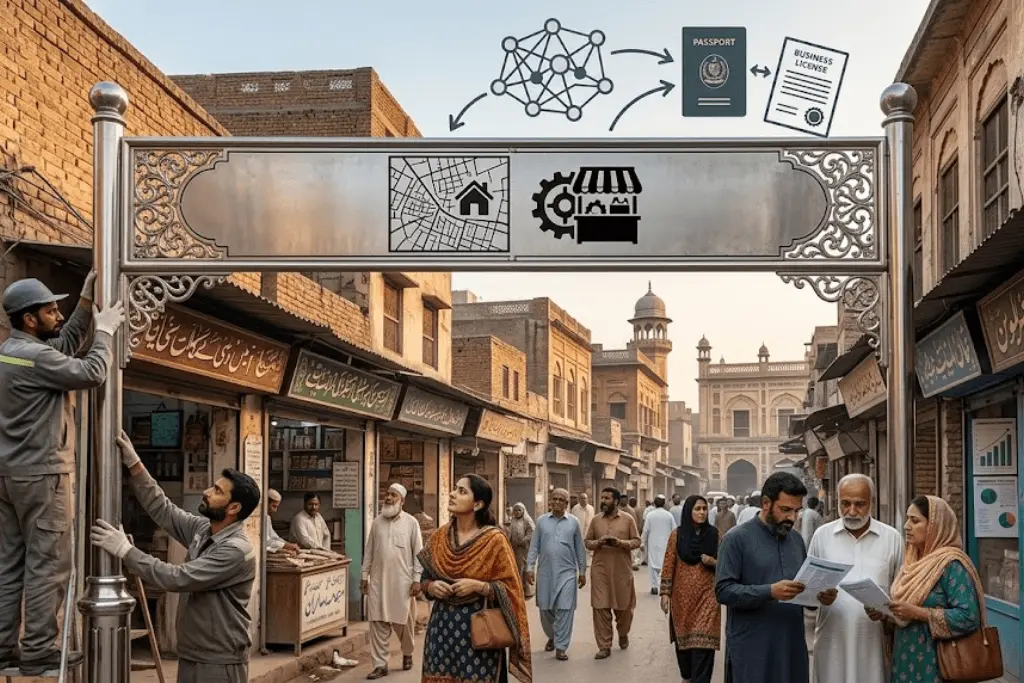
The Punjab government has started Lahore name changes 2026 by restoring several historic pre-Partition and colonial-era names on roads, intersections and neighbourhoods across the city.
The project seeks to re-establish the city’s historical identity by bringing back the names of Lahore’s architectural, cultural and urban heritage that existed before Partition. Authorities have already begun to implement the new names on official records, signboards, and in municipal references.
The change has drawn a lot of public attention because it affects property addresses, business registrations, utility documentation and navigation systems in various parts of Lahore.
People living and doing business in the renamed zones may have to update official records so that future documentation does not mismatch.
Several Major Lahore Neighbourhoods Officially Renamed
Some of the most prominent of these include the restoration of some old residential neighbourhood names that were in existence before Partition.
Islampura has now been officially reverted to Krishan Nagar, re-establishing one of Lahore’s historically acknowledged community identities. Similarly, Sunnat Nagar has been changed to its previous name, Sant Nagar.
Mustafaabad has also formally restored its traditional name, Dharampura, which has been a name inextricably linked to Lahore’s more traditional urban makeup and diversity of culture.
These are not mere symbolic changes, as government records, addressing systems and municipal references are expected to gradually use the restored names over time.
As such, property owners, landlords, tenants and commercial establishments operating within these areas may have to update official documents in the coming months.
Historic Roads and Landmarks Also Receive Original Titles
Under the latest restoration initiative, several of Lahore’s most famous roads, chowks and public landmarks are also being restored to their earlier historical identities.
Babri Masjid Chowk was renamed as Jain Mandir Chowk, and Maulana Zafar Ali Khan Chowk was officially restored to the popular Lakshmi Chowk title.
Sir Aga Khan Chowk is now called Davis Road, and Jail Road is back to being known as Allama Iqbal Road.
Other notable restorations are:
- Fatima Jinnah Road is returning to Queens Road
- Shahrah-i-Abdul Hameed bin Badees reverting to Empress Road
- Hameed Nizami Road is changing back to Temple Street
- Nishtar Road reverting to Brandreth Road
Additionally, Bagh-e-Jinnah is also restoring its historic colonial-era link with the name Lawrence Gardens.
Lahore’s long-standing reputation as one of South Asia’s most historically layered and architecturally rich cities is reflected in the restoration project.
Businesses and Property Owners May Need Documentation Updates
The name changes are expected to have administrative implications for businesses, investors and residents operating in the newly redesignated zones.
Authorities are asking for business and property owners to check utility bills, company registrations, business licenses, letterhead and bank records related to the addresses affected.
Failure to keep official documents up-to-date can cause problems with mail delivery, municipal approvals, tax records or regulatory correspondence.
After the implementation is fully rolled out, the businesses registered with the Lahore Development Authority and municipal agencies may have to sync address records eventually with the updated naming framework.
Real estate professionals also anticipate temporary changes to property listings, online maps and navigation systems as the restored names become more widely adopted.
Lahore’s Historical Identity Gains Renewed Attention
The renaming exercise has also revived the debate about Lahore’s historical development and its multi-ethnic urban legacy. Historians and heritage activists have long contended that many of the city’s older names are a testament to significant chapters in Lahore’s architectural, literary and social evolution.
Many restored names like Lakshmi Chowk, Dharampura and Krishan Nagar are still very much etched in the local memory even after decades of administrative renaming after Partition.
So, for many observers, the restoration project is being seen as an effort to maintain historical continuity while recognising Lahore’s layered cultural identity.
In recent years, Pakistan’s growing interest in heritage conservation and urban restoration has focused increasingly on historical districts, colonial architecture and old city landmarks.
Municipal Transition Expected to Continue Gradually
Officials said the transition to updated names is expected to continue in small steps in municipal departments, utility providers, postal systems and mapping services.
As implementation unfolds across Lahore, road signs, government databases and navigation platforms will probably undergo phased adjustments.
Residents are therefore encouraged to pay close attention to upcoming announcements regarding the documentation requirements and address verification processes associated with the new names of these sites.
Renaming Lahore’s old names is a sign of Pakistan’s ongoing commitment to preserving urban heritage and highlights the city’s lasting cultural importance in the country’s historical setting.